
Reliable Frequency Converter Supplier in China
If you are seeking frequency converter solutions, please contact Yibaling. Let us serve as your electrical equipment manufacturer and supplier, offering a wide range of products—including transformers and voltage regulators—along with comprehensive, one-stop OEM services.
Company Profile
Zhejiang Yibaling Power Equipment Co., Ltd. is a professional manufacturer of frequency converter.
Its products comply with the national compulsory product certification (CCC), the EU CE safety certification, and the ISO9001 quality management system certification standards. In addition, we have over 3 years of experience in manufacturing frequency converter for export.
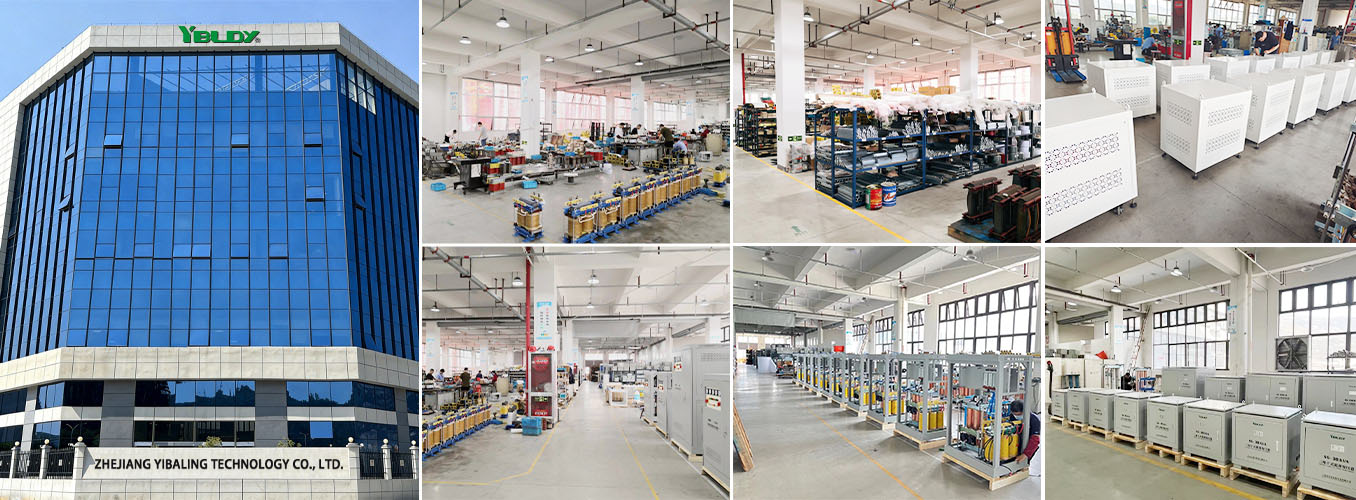
Yibaling's factory has over 20 engineers and technicians and a staff of over 60 people. The factory covers a complete production line from winding, silicon steel sheet cutting to transformer manufacturing. Through strict control of the entire production line, effective quality and cost management have been achieved.
Why Choose Us?
1. High Quality
Our Yibaling factory is renowned for its diverse product lines and strict quality control throughout the entire process (from the selection of raw materials to the meticulous production procedures and to the delivery of high-quality products).2. Professional Team
Our company also has a professional team consisting of over 10 engineers and technical personnel, as well as a basic force of over 60 employees, which can cover every aspect from design to production and delivery. We are committed to providing customized services that fully meet your unique requirements for our clients.What is a frequency converter?
The frequency converter is the "intelligent stepless speed changer" for motors. Its core working principle is to change the power frequency supplied to the motor, thereby precisely controlling the motor speed.
Through advanced power electronic technology, it converts the fixed and "rough" power from the power grid into the "fine" adjustable power tailored for the motor, enabling the motor to upgrade from "simple and fast" fixed-speed operation to energy-saving, smooth, and precisely controllable intelligent operation.
It is one of the most crucial equipment in modern industrial automation and energy-saving renovations. It can be found in almost all AC power applications that require speed adjustment, energy saving, soft start, or precise control:
Industry: fans, water pumps, compressors, conveyor belts, machine tools, cranes, mixers, etc.
Civilian: central air conditioning, elevators, escalators.
Transportation: the core of electric drive for electric vehicles is the high-power frequency converter.
How does a frequency converter work?
The frequency converter is the "central hub for motor speed regulation". Its core working principle is to precisely control the rotational speed of an AC motor by changing the frequency of the output power supply.
Internally, it performs an intelligent "AC-DC-AC" transformation of electrical energy: first, it rectifies and filters the fixed-frequency AC power from the grid (such as 50Hz) into a smooth DC voltage.
Then, using semiconductor switches (IGBT) controlled by a microprocessor, it rapidly turns on and off at thousands of times per second according to the set speed command, converting the DC power into a three-phase AC power with frequency and voltage that can be coordinated to be output to the motor.
Product Functions
| Function Category | Core Function | Detailed Description and Technical Essence |
| Core Control Function | Precise Speed Regulation | By adjusting the output frequency (f) and synchronously regulating voltage (U), it achieves stepless, smooth control of motor speed (n) (following the principle n=60f/p). This forms the foundation for all applications. |
| Soft Start/Soft Stop | By smoothly increasing the frequency from 0Hz to the set value, the motor starts steadily at a low current (as low as 1.2-1.5 times the rated current), avoiding the 5-7 times surge current damage to the grid and machinery caused by traditional direct starting; soft stopping eliminates the “water hammer effect” or mechanical impact. | |
| Advanced Performance Optimization | Energy-Efficient Operation | For variable-torque loads like fans and pumps, flow/air volume is regulated by reducing speed. Power consumption decreases proportionally to the cube of speed, achieving significant energy savings (typically 20%-50%). |
| Torque Control and Boosting | Precisely controls motor output torque. Automatic torque boost compensates for voltage at low frequencies, preventing torque deficiency caused by stator resistance and ensuring motor load-carrying capacity at low speeds. | |
| Process Closed-Loop Control | By integrating a PID controller, real-time feedback signals of process variables (pressure, temperature, flow rate, etc.) are compared against setpoints. The motor speed is automatically adjusted to achieve precise process automation such as constant-pressure water supply and temperature control. | |
| System Protection and Intelligence | Comprehensive Motor Protection | Real-time monitoring safeguards the motor against damage from faults including overcurrent, overload, overvoltage, undervoltage, phase loss, overheating, and short circuits—equivalent to equipping the motor with an “intelligent bodyguard.” |
| Built-in Programmable Logic | High-end inverters integrate PLC functionality, enabling complex operations like multi-speed control, timed start/stop, and logic interlocking through simple logic programming, reducing reliance on external controllers. | |
| Communication and Networking | Standard RS485 interface supports industrial protocols including Modbus, Profibus, and EtherCAT, facilitating seamless integration with DCS, SCADA, and other higher-level systems for remote monitoring, parameter configuration, and data acquisition. | |
| Power Quality Enhancement | Power Factor Improvement | Capacitors in the inverter's DC bus smooth the input current waveform to near-sinusoidal characteristics, typically achieving input power factors above 0.95 without requiring additional power factor correction devices. |
| Harmonic Disturbance Reduction (Optional) | Standard inverters generate input-side harmonics. These can be suppressed by adding optional DC reactors or dedicated input-side harmonic filters to meet grid compliance requirements. |
- View as
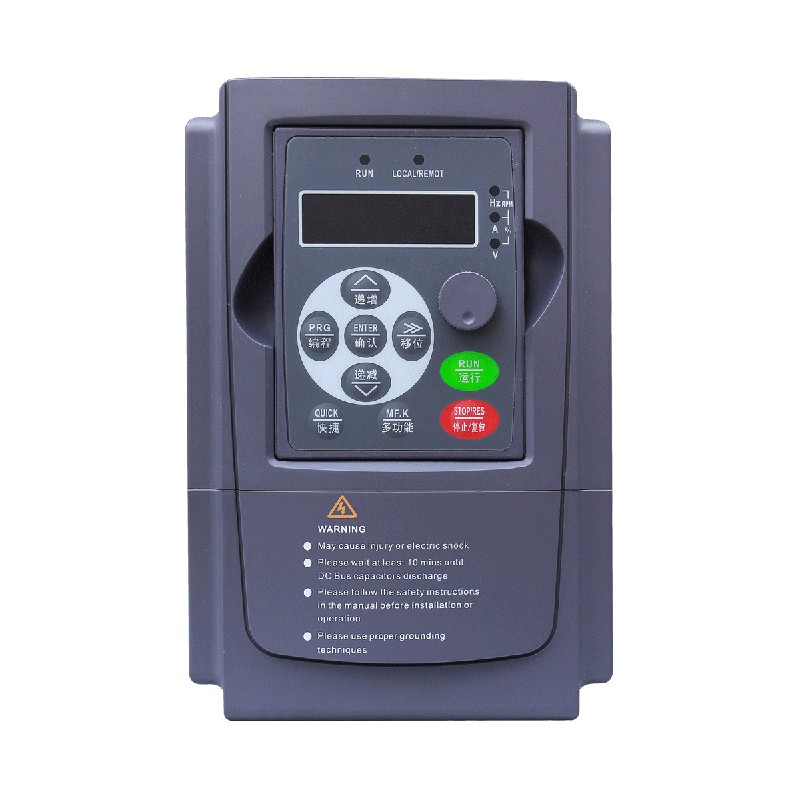
Heavy-duty Vector Frequency Converter
Zhejiang Yibaling Power Supply Equipment Co., Ltd. is a professional manufacturer and supplier of heavy-duty vector frequency converters in China. Our company has been specializing in the production and selling of this product for over twenty years, the products we have produced are highly favored by our customers. We also welcome you to purchase high-quality heavy-duty vector frequency converters from our factory.
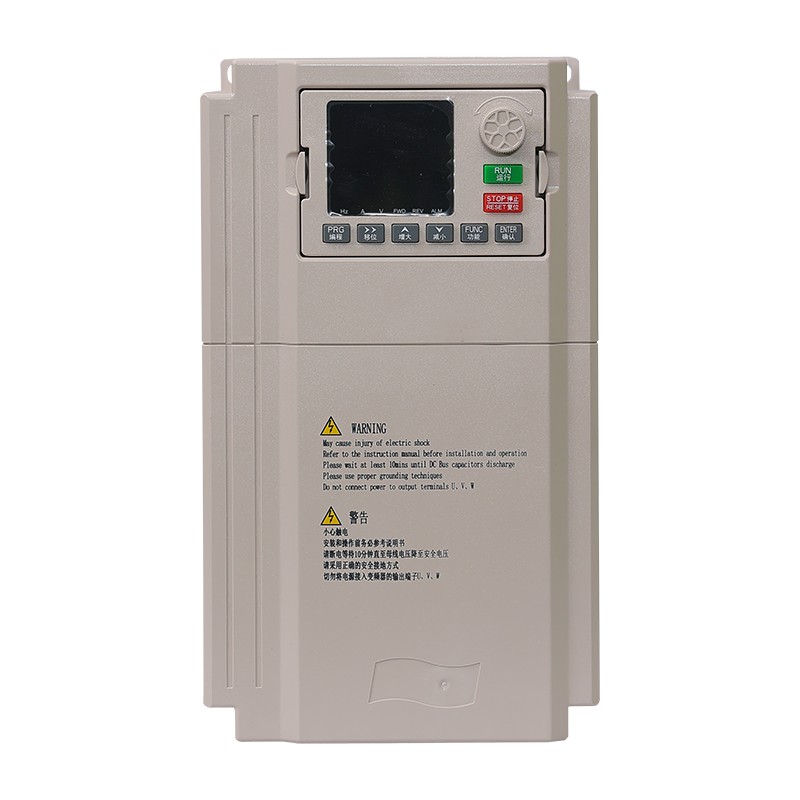
Special Frequency Converter for Fans and Pumps
Zhejiang Yibaling Power Supply Equipment Co., Ltd. is one of the large-scale factories in China specializing in Special Frequency Converter for Fans and Pumps. Our factory has been engaged in this industry for many years and the special frequency converters we produce are not only of high quality but also offer competitive prices. We welcome you to purchase high-quality product from our factory.
As a reliable Frequency Converter manufacturer and supplier in China, we have our factory. If you want to buy quality and durable products, please contact us.