
How to choose JBK5 Machine Tool Control Transformer?
Control Power Is a Finer Job Than JBK5 Machine Tool Control Transformer Looks
Spend enough years in machine tool electrical maintenance and you develop an instinct: control circuit problems are often trickier than main circuit ones. A main circuit trip or alarm gives you a clear direction. Control circuit issues show up as fragments — a contactor that won't pull in, indicator lights flickering randomly, a PLC resetting for no apparent reason. When you finally trace it down, three times out of ten the control transformer is the culprit: undersized capacity, aged insulation, or oxidized terminals running hot. The JBK5 series machine tool control transformer exists for exactly this job.
From JBK3 to JBK5 Machine Tool Control Transformer: What Changed
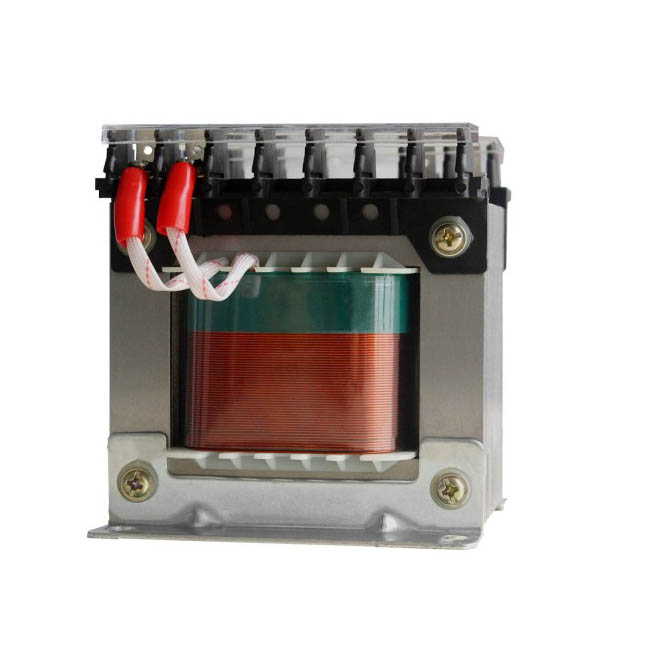
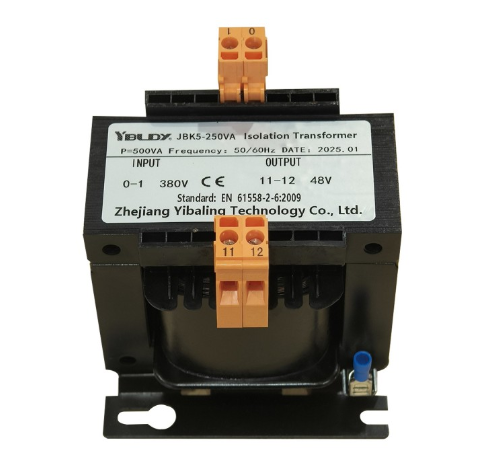
The JBK5 didn't appear out of nowhere. It's an upgraded model built on the JBK3 platform, developed by absorbing and adapting German technology from the mid-1990s. The most visible change is in the terminals: JBK3 had standalone terminals, while JBK5 integrates terminals into the bobbin, raising protection to IP2LX — fingers can't get in, preventing accidental contact. The density of cold-pressed terminals has also increased, making cabinet wiring cleaner than before.
The core mounting method changed too. For ratings of 800VA and below, silicon steel laminations are welded into a single unit using gas-shielded argon arc welding — between laminations and between laminations and base plate — eliminating the need for through-bolts. The benefit is a simpler structure with less noise and vibration than the older model. The base plate is formed in one piece, so mounting holes are more accurate than JBK3's — no filing to fit during cabinet installation.
What to Look at in the Specs
Capacities run from 40VA to 2500VA, with standard models covering 40, 63, 100, 160, 250, 400, 630, 800, 1000, 1600, and 2500VA. Input voltage is typically 220V or 380V, with dual-tap versions available. Output options are broader: control windings commonly at 110V, 127V, 220V, and signal windings at 6V, 12V, 24V, 36V.
Efficiency figures vary with capacity: 63VA is rated at 80%, 400VA to 1000VA around 85%, and 1600VA and above reach 90%. Insulation thermal class is F, power frequency withstand voltage is 2500V/60s, and insulation resistance between core and winding exceeds 100MΩ. These numbers look unremarkable, but Class F insulation means the transformer won't develop insulation problems just because cabinet temperatures run high.
One Detail That's Easy to Overlook
The JBK5 Machine Tool Control Transformer's secondary windings are wound separately — control windings and signal windings each handle their own circuit. This means a short circuit in the indicator light circuit won't drag down the control circuit voltage. With multiple output windings, one thing needs attention: the sum of all winding capacities equals the transformer's rated capacity. Not every winding can run at full load. For example, on a 250VA transformer, if the control winding uses 180VA, the signal winding can only take the remaining 70VA.
Applications and Selection
The JBK5 Machine Tool Control Transformer is used in machine tools and mechanical equipment for control power, work lighting, and indicator light power — that's the standard application. It complies with JB/T5555 and GB5226, and is interchangeable with comparable imported products.
When specifying, don't cut capacity too close. Contactor inrush current can be several times rated value — leaving adequate margin matters more than impressive specs. The standard ambient temperature range is -5°C to +40°C; if cabinet temperatures run high, ventilation needs to be adequate. Above 2000m altitude, derating is required.
Before installation, confirm grid voltage matches the nameplate, tighten terminals, and ensure reliable grounding. Let the transformer handle the rest.
Related News
- What ZSG Three-Phase Dry-Type Rectifier Transformer work?
- Which one is good S13 Oil-Immersed Distribution Transformer?
- How BK Machine Tool Transformer 220V works?
- Which one is good SBK Three-Phase Dry-Type Transformer?
- How to choose SBW Intelligent Servo Voltage Stabilizer?
- Where SCB13 Dry-Type Transformer Fit in Urban Grids?
Leave me a message