
How does SG 3 Phase Dry-Type Transformer work?
There's a piece of equipment sitting in thousands of machine cabinets, control panels, and electrical rooms across the country that nobody ever thinks about. It doesn't have a screen. It doesn't send alerts. It just sits there, doing the one job it was built for.
That's the SG series three-phase dry-type transformer.
What It Actually Does
The SG is a step-down or step-up transformer for three-phase power. Input goes in, output comes out, and the ratio is determined by the winding design. That's the short version.
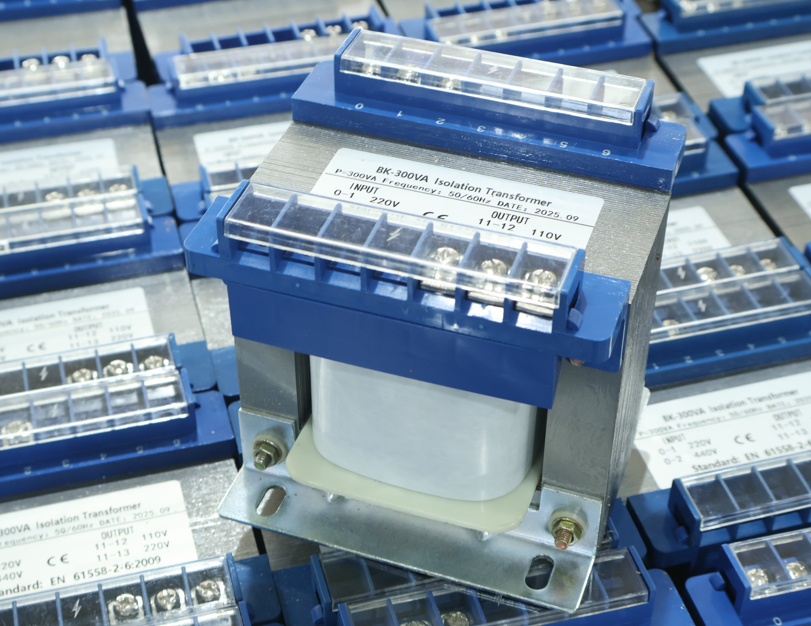
The longer version: it's an isolation transformer. Primary and secondary windings are wound separately, not sharing turns like an autotransformer. That means the control circuit on the secondary side is electrically separated from the grid. When the grid gets noisy—and it always does—the control side stays clean.
This matters more than most people realize. Modern machine tools, PLCs, and servo drives are sensitive to common-mode noise and voltage spikes. An isolation transformer doesn't fix a bad grid, but it does put a layer of separation between the grid and the thing you actually care about.
The Specs That Matter
SG transformers are typically rated for input voltages up to 1200V, with common configurations at 380V, 400V, 660V, and 690V on the primary side. Output voltages are whatever the application needs—220V, 200V, 110V, 36V, or anything in between.
The windings can be copper or aluminum, depending on what the customer wants. Copper costs more but runs cooler and lasts longer. Aluminum costs less but needs larger conductors to match the conductivity. Both are available.
Insulation class is usually F (155°C) or H (180°C). The H-class units are for harsher environments—hotter rooms, tighter enclosures, more overload headroom.
The core is cold-rolled silicon steel, typically 0.35mm thickness. Thinner laminations mean lower eddy current losses. The stacking is done tight, which cuts noise and vibration.
Open Frame vs. Enclosed
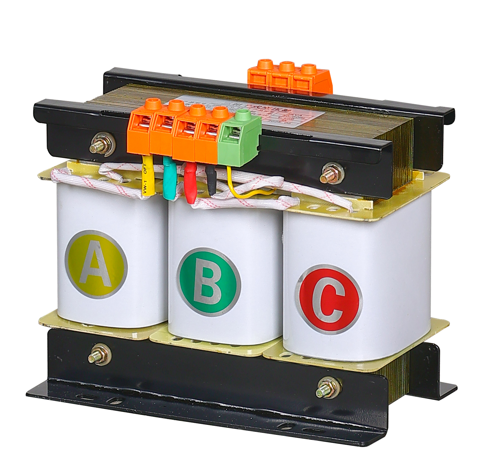
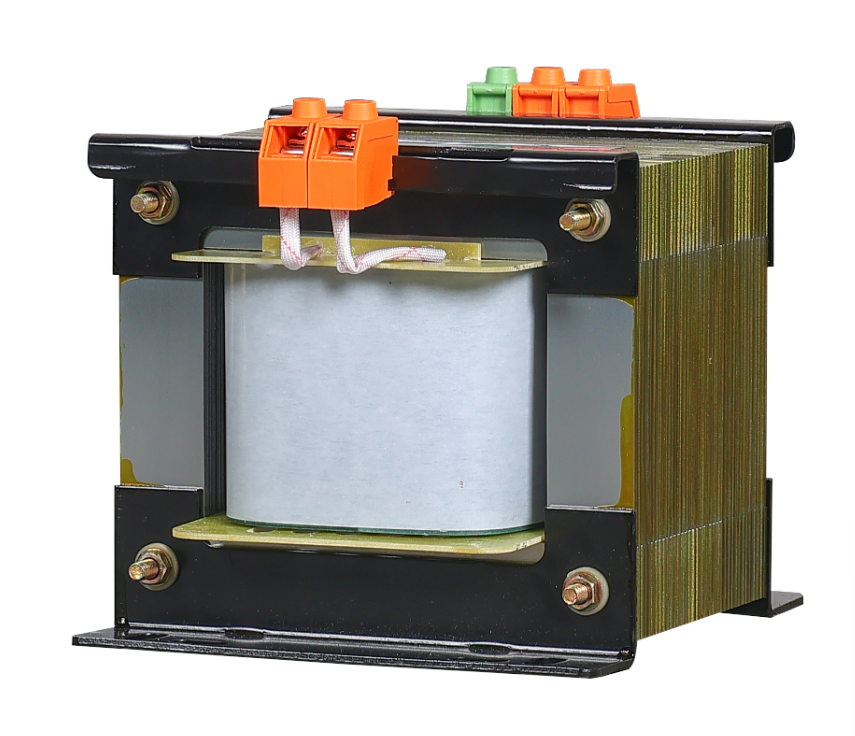
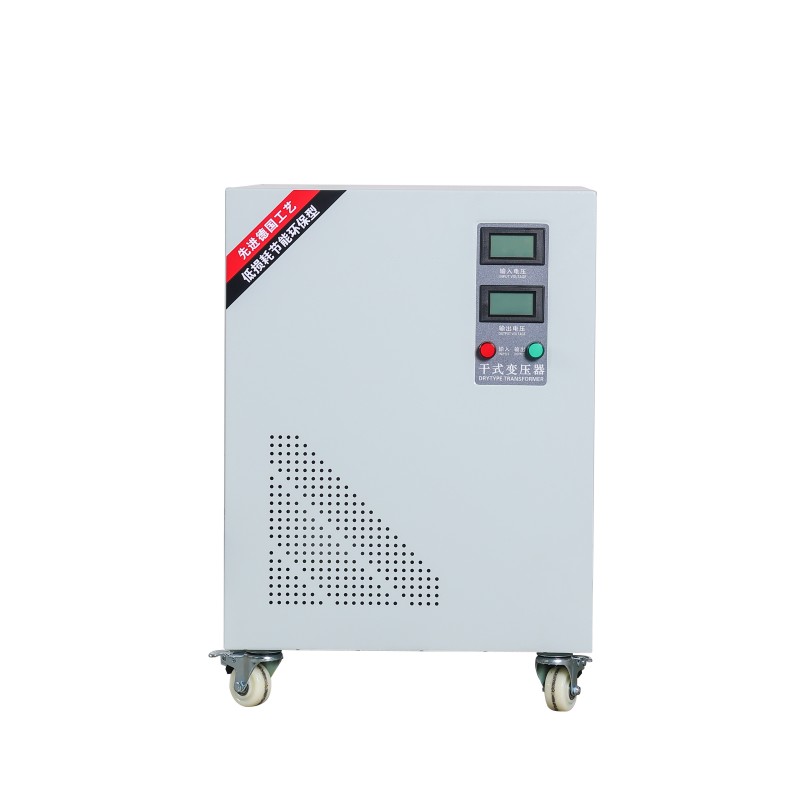
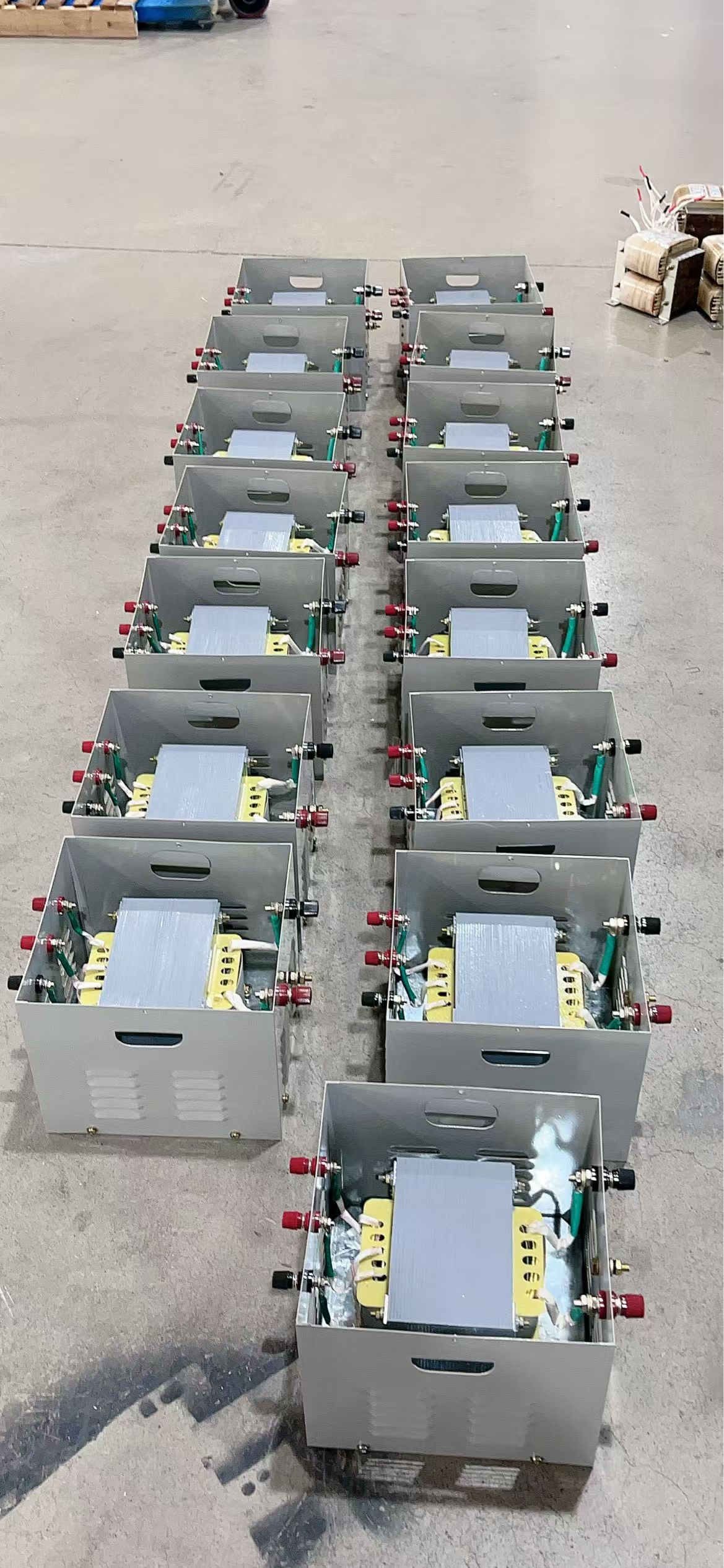
SG transformers come in two physical styles. The open-frame version is a bare core-and-coil assembly, meant to be mounted inside a larger cabinet or machine enclosure. The enclosed version has a steel housing with ventilation openings, terminal blocks, and sometimes a voltmeter and ammeter on the front panel.
Most industrial applications use the enclosed style. It protects the windings from dust, moisture, and accidental contact. The open-frame version is for OEMs who are building the transformer into their own equipment and don't need a second enclosure.
Where You'll Find SG 3 Phase Dry-Type Transformer?
The SG series shows up wherever a machine needs a different voltage than the grid provides. Imported equipment is the classic case. A European machine tool designed for 400V doesn't want to see 480V from the building supply. An SG transformer steps it down and isolates the control circuit at the same time.
Beyond machine tools, you'll find them in CNC equipment, injection molding machines, printing presses, medical devices, and test benches. The common thread is that the equipment is expensive, sensitive, or both, and the owner doesn't want to gamble on grid quality.
Some units are also used as lighting transformers for industrial facilities, or as rectifier transformers feeding DC power supplies.

The Honest Limitations
SG transformers aren't for every application. They're indoor equipment. They don't like extreme humidity, corrosive atmospheres, or explosive environments. The standard operating range is -5°C to +40°C, with altitude limits around 2000 meters.
They're also not the cheapest option. A dry-type isolation transformer costs more than a simple autotransformer because it has more copper, more insulation, and more iron. If you don't actually need isolation—if voltage matching is the only goal—an autotransformer will do the job for less.
But for the applications that need it, the SG does what it's supposed to do. It sits there, quietly, converting voltage and providing isolation, year after year. No oil to check, no gaskets to replace, no dissolved gas analysis to schedule. Just occasional dusting and a visual inspection.
The SG three-phase dry-type transformer isn't a product that generates excitement. It's a product that generates clean, isolated power for equipment that needs it. That's a less glamorous pitch, but it's the honest one.
For OEMs building control panels, for maintenance managers replacing failed imports, for anyone who needs 380V from a 480V supply or 220V from a 380V line—the SG is the straightforward answer.
No frills. No surprises. Just a transformer that does transformer things.
Previous :
Related News
Leave me a message