Need a clean, stable power supply for your control circuits? BK has you covered.
In factories, workshops, and automation systems, there's a small device that rarely gets noticed — until it stops working. When a CNC machine's PLC loses power, the contactors chatter, or the indicator lights go dim, production stops. And more often than not, the culprit is a control transformer that wasn't up to the job.
The BK series single phase control transformer is built to keep control circuits running — reliably, continuously, and safely.
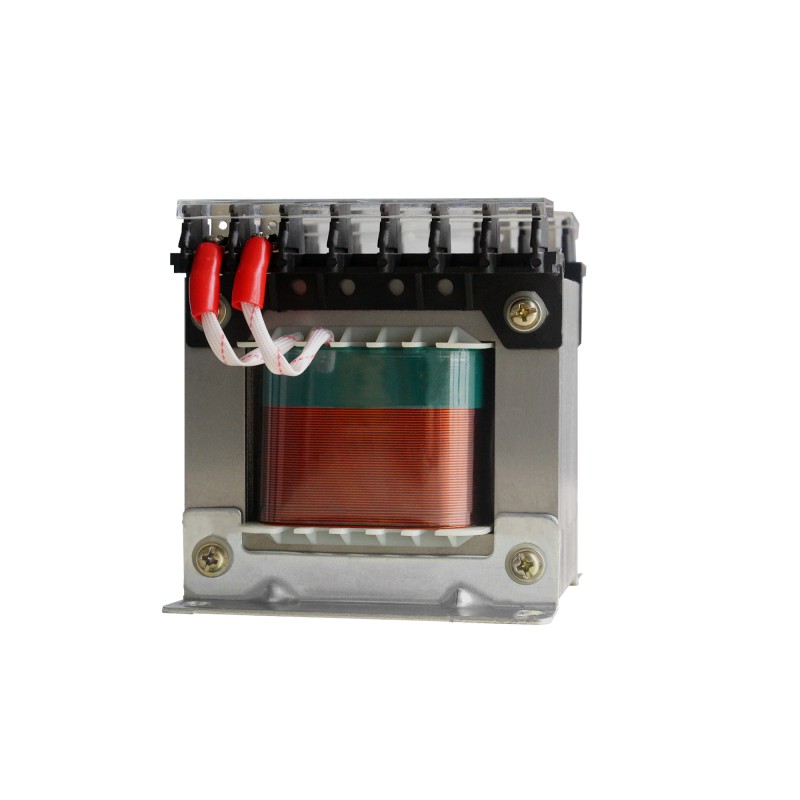
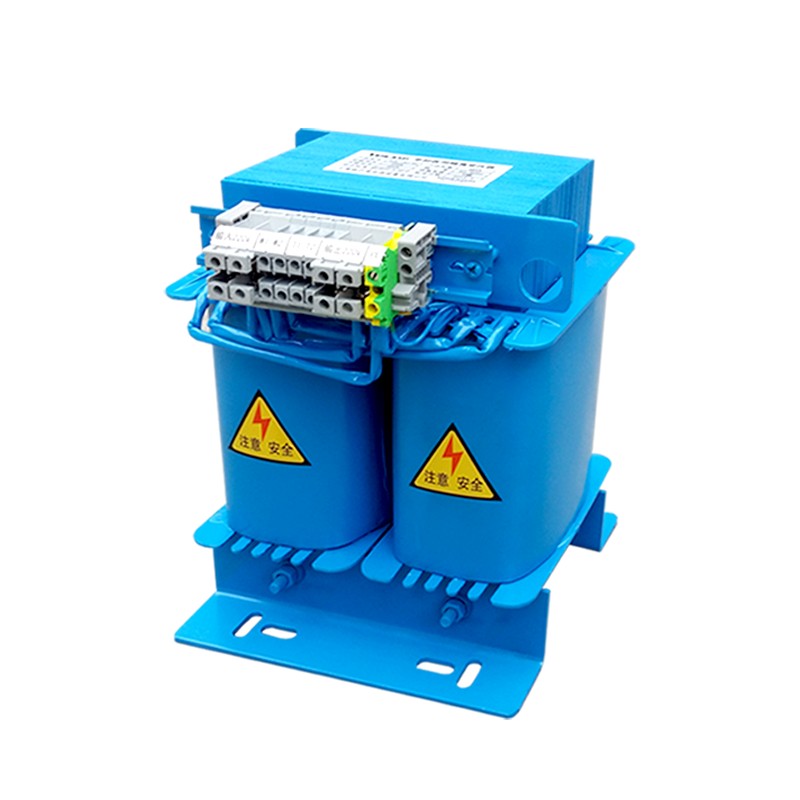
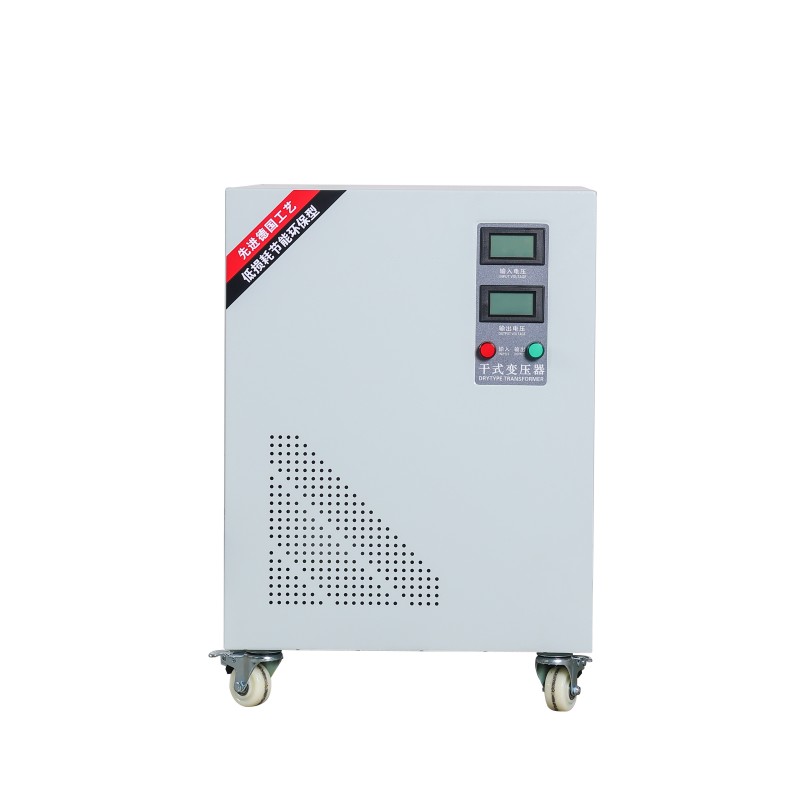
A BK series control transformer is a single phase dry type step down transformer designed specifically for control circuits, local lighting, and indicator systems in industrial and commercial applications. It takes the main supply voltage — typically 220V or 380V — and steps it down to the lower voltages that PLCs, relays, contactors, solenoids, and indicator lights actually need.
Unlike power transformers that feed heavy motors and heating elements, the BK transformer is purpose built for the "brain" side of the equipment. It provides a dedicated, clean, isolated power supply for control systems — keeping them stable even when the main power bus fluctuates.
Available capacities range from 25VA up to 100kVA, with input voltages from 220V to 500V and output voltages customizable from 6V to 220V. That means whether you're powering a single indicator light or a complex PLC system, there's a BK transformer that fits.
The principle is straightforward: electromagnetic induction.
The transformer has two separate windings — primary (input) and secondary (output) — wrapped around a laminated silicon steel core. When AC voltage is applied to the primary winding, it creates a magnetic field in the core. That field induces a voltage in the secondary winding.
The voltage ratio is determined by the turns ratio. Put simply: more turns on the secondary = higher output voltage; fewer turns = lower output voltage.
This isn't an autotransformer. The primary and secondary windings are electrically isolated from each other — which means surges, noise, and ground faults on the main supply don't pass through to the control circuit.
Key Features
1. Clean, stable power for control circuits
The BK transformer isolates sensitive control electronics from the dirty power on the main bus. PLCs don't glitch. Contactors don't chatter. Sensors don't drift.
2. Wide voltage range
Input voltages from 220V to 500V at 50 60Hz — compatible with almost any industrial supply. Outputs can be customised to 6V, 12V, 24V, 36V, 48V, 110V, 127V, 220V, or any voltage in between.
3. Compact, panel friendly design
The BK transformer is a shell type, vertical mounting unit. It takes up minimal space in a control cabinet and is easy to install.
4. Pure copper windings (optional aluminium)
Copper windings mean lower resistance, less heat, and longer life. Some models use aluminium for cost sensitive applications.
5. High efficiency
Efficiency ratings can reach 98% , meaning very little energy is wasted as heat.
6. Built in terminal cover
The top mounted terminal cover protects connections from accidental contact and dust — and it's removable for easy wiring.
7. Customisable
Input voltage, output voltage, capacity, connection type — all can be tailored to your specific requirements.
Where You'll Find BK Transformers?
The BK series is widely used wherever control circuits need reliable power:
Picking the right size is straightforward, but a few mistakes can cause trouble.
Step 1 — Add up your loads
List every device the transformer will power: PLCs, relays, contactors, solenoids, indicator lights, sensors. Add their VA ratings — not just watts. Contactors and relays draw reactive power, so use VA if possible.
Step 2 — Apply a safety margin
Load Type
Sizing Rule
Continuous loads (PLCs, lights, sensors)
Total VA × 1.2
Intermittent loads (contactors, solenoids)
Total VA × 1.5
Heavy inrush (large contactor banks)
Total VA × 2.0
Step 3 — Specify input and output voltages
Parameter
Common Options
Input voltage
220V, 380V, 400V, 415V, 440V, 480V
Output voltage
6V, 12V, 24V, 36V, 48V, 110V, 127V, 220V
Frequency
50Hz / 60Hz
Step 4 — Consider the environment
Condition
Requirement
Installation
Indoor, dry, well ventilated
Ambient temperature
-5°C to +40°C
Atmosphere
No corrosive gases, no conductive dust
What Makes a Good BK 220V Single Phase Control Transformer?
Not all control transformers are built the same. A good BK transformer should have:
Pure copper windings — better conductivity, less heat, longer life
High quality silicon steel core — low losses, low noise, high efficiency
Class F or H insulation — rated for 155°C or 180°C continuous operation
Vacuum impregnation — seals the windings against moisture, dust, and vibration
The BK 220V single phase control transformer isn't the most glamorous component in a control panel. It doesn't have a touchscreen or a software update.
But it does one thing very well: it keeps control circuits running — cleanly, reliably, and continuously.
For machine tools, automation systems, and industrial facilities that can't afford voltage related downtime, the BK transformer isn't optional. It's infrastructure. It sits in the corner of the control panel, quietly doing its job, year after year — until you forget it's even there.
And that's exactly how it should be.
A good control transformer isn't expensive. A bad one is.
We use cookies to offer you a better browsing experience, analyze site traffic and personalize content. By using this site, you agree to our use of cookies.Privacy Policy