
What is SCB10 Dry-Type Transformer?
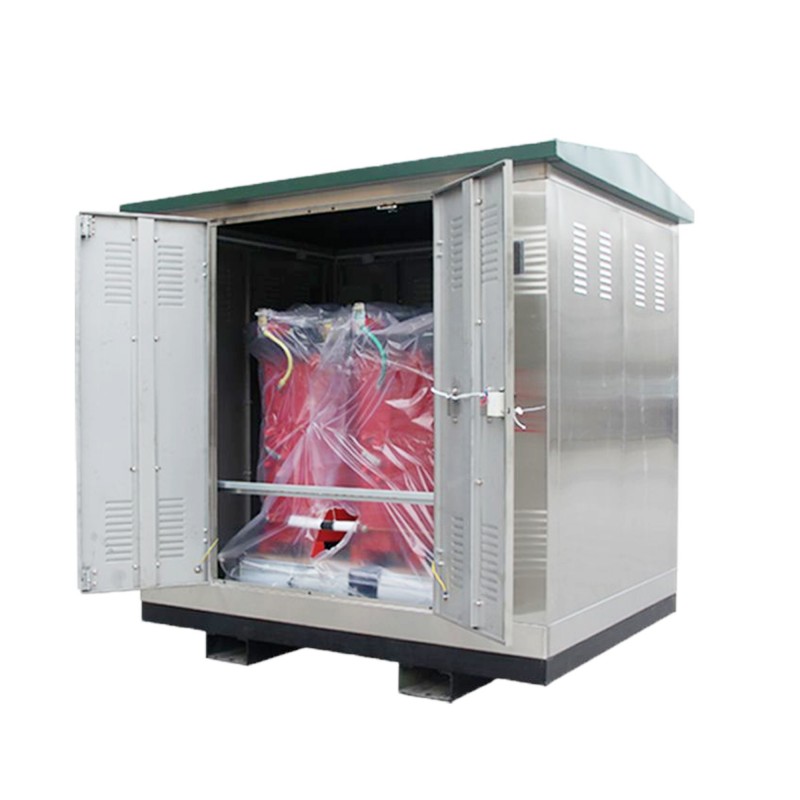
An SCB10 dry-type transformer is a three-phase epoxy resin cast transformer designed for indoor applications where fire safety and environmental concerns are paramount. The "SCB" designation tells you what it is: S for three-phase, C for cast resin (epoxy), and B for foil windings on the low-voltage side. The "10" is the performance code — a generation that represented a significant step forward in efficiency when it was introduced.
Unlike oil-immersed transformers that rely on flammable mineral oil for insulation and cooling, the SCB10 uses solid epoxy resin to encapsulate its windings. No oil means no fire risk, no leak risk, and no oil maintenance. It runs clean, quiet, and safe — right in the middle of a building if needed.
Why does that matter?
Because modern buildings — hospitals, data centers, shopping malls, airports — have strict fire safety requirements. An oil-filled transformer in the basement is a fire hazard that requires special containment and fire suppression. A dry-type transformer like the SCB10 can be installed without those extra precautions. It is fire-resistant, self-extinguishing, and does not release toxic gases under thermal stress.
In short: it puts the transformer where the load is, without the fire risk.
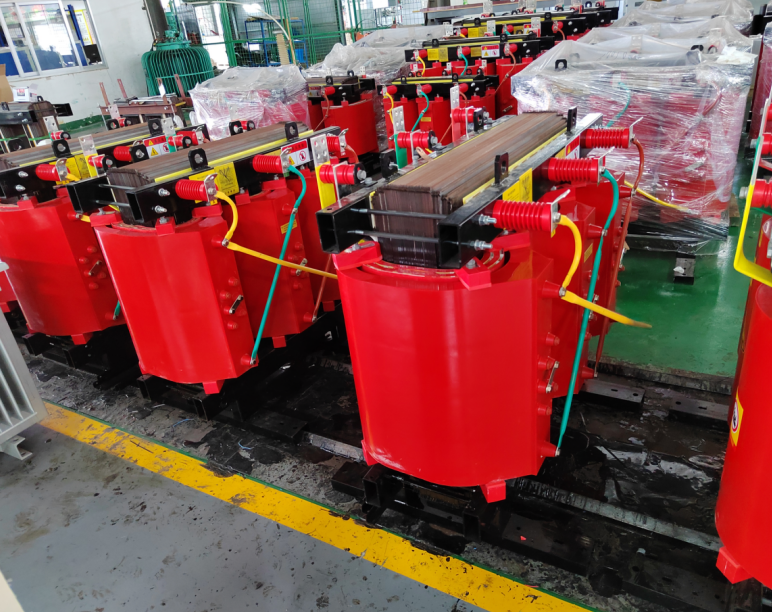
How an SCB10 Dry-Type Transformer Works
The operating principle is the same as any transformer — electromagnetic induction. But the construction is fundamentally different.
Step 1 — The core
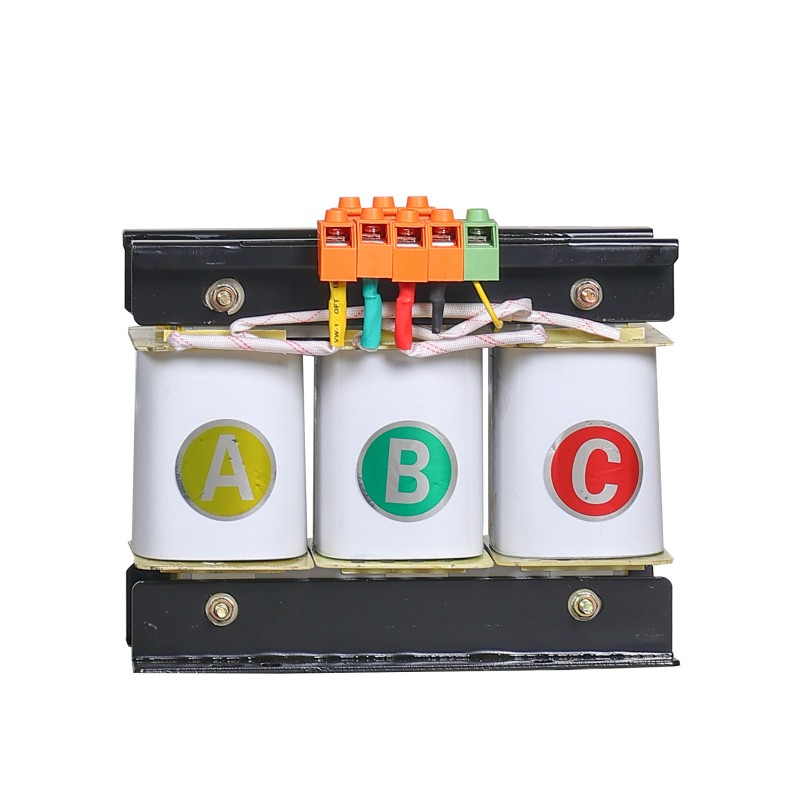
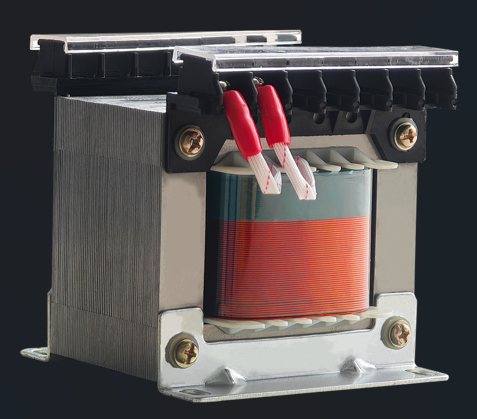
The magnetic core is built from high-permeability cold-rolled grain-oriented silicon steel, assembled with step-lap joints to minimize no-load losses and noise. The core is secured with a tie-plate structure that eliminates the risk of discharge to through-bolts.
Step 2 — High-voltage winding
The high-voltage winding uses Class H (180°C) enameled rectangular wire, wound in a segmented cylindrical configuration. This design gives better voltage distribution and stronger impulse withstand capability. The winding is then cast in epoxy resin with mineral filler under vacuum . The filler improves heat dissipation and mechanical strength while reducing the resin's thermal expansion coefficient.
Step 3 — Low-voltage winding
The low-voltage winding uses a foil-wound construction. Copper foil is wound with insulation between layers, then end-sealed with epoxy resin. This structure delivers excellent short-circuit withstand capability because the foil's wide surface area distributes current evenly and dissipates heat effectively.
Step 4 — Encapsulation
Both windings are cast under vacuum and pressure. The vacuum removes air and moisture before the resin is injected, eliminating voids that could become partial discharge sites. The result is a dense, void-free insulation system that resists moisture, dust, and contamination.
Step 5 — Cooling
Standard cooling is natural air (AN) — convection cooling through the windings. For higher output, forced air (AF) with fans can boost capacity by about 40% .
Step 6 — Temperature monitoring
Pt100 sensors are embedded in the windings, connected to a temperature controller that provides:
Fan start/stop control
High-temperature alarm
Over-temperature trip signal
The result: a transformer that can be installed indoors safely, runs clean and quiet, and protects itself from overheating.
Common Types of SCB10 Transformers
SCB10 dry-type transformers are available in a range of capacities and configurations.
| Capacity Range | Typical Voltage | Impedance | Common Application |
| 30 – 630 kVA | 10kV / 0.4kV | 4% | General building distribution, smaller commercial facilities |
| 800 – 2500 kVA | 10kV / 0.4kV | 6% | Large commercial buildings, data centers, hospitals, industrial plants |
Enclosure options:
IP00 (Open) — No enclosure. For installation inside a locked electrical room.
IP20 — Mesh enclosure. Protects against accidental contact with live parts. Most common for indoor use.
IP23 — Weather-resistant enclosure. Suitable for indoor locations with dripping water or condensation.
Connection group:
Dyn11 — most common, better harmonic suppression
Yyn0 — standard alternative for general applications
Why SCB10 Dry-Type Transformers Matter
Because the safest transformer is the one that doesn't burn or leak.
Here is what makes the SCB10 a preferred choice for critical and sensitive installations:
1. Fire safety
The epoxy resin is flame-retardant and self-extinguishing. In the event of an electrical fault, the resin does not support combustion. It does not release toxic or corrosive gases when heated. This is the primary reason dry-type transformers are required in many building codes.
2. Environmental safety
No oil means no risk of soil or groundwater contamination. No spill containment required. No oil disposal at end of life. For green building certifications and environmentally sensitive locations, this is a major advantage.
3. Low maintenance
The resin encapsulation is permanent. No oil testing, no oil filtering, no top-up. The transformer is designed for 30+ years of service life with minimal maintenance — just occasional cleaning of dust from the enclosure.
4. Moisture resistance
The sealed resin system protects the windings from moisture ingress. SCB10 transformers can operate in 100% humidity and can be re-energized after shutdown without drying-out procedures.
5. Low noise
Typical noise levels are below 50dB for most ratings — quiet enough for installation in occupied buildings without special acoustic treatment.
6. Short-circuit withstand
The foil windings and solid resin encapsulation give the SCB10 excellent short-circuit withstand capability. It can handle the huge mechanical forces of a fault without winding deformation.
7. Partial discharge control
Vacuum casting eliminates voids in the insulation. Partial discharge levels are typically below 10pC — significantly better than many older dry-type designs.
8. Overload capability
With forced air cooling (AF), the transformer can deliver up to 140-150% of its rated capacity . This provides useful headroom for peak loads or emergency conditions.
Without these features, installing a transformer in a high-rise building or a hospital would require fire-rated vaults, oil containment, and extensive ventilation — all of which cost money and consume space. The SCB10 eliminates those requirements.
Choosing the Right SCB10 Dry-Type Transformer
Selecting an SCB10 transformer requires consideration of capacity, environment, and application.
Step 1 — Determine your load
Add up the power consumption of all equipment that will be connected. Include future expansion — typically 20-30% margin. SCB10 standard sizes range from 30kVA to 2500kVA.
Step 2 — Specify voltage
| Parameter | Typical Value |
| Primary voltage | 10kV, 6.3kV, 6kV (standard); up to 35kV available |
| Secondary voltage | 0.4kV (400V) — most common; custom available |
| Tap range | ±5% or ±2×2.5% (no-load tap changer) |
Step 3 — Choose the connection group
Dyn11 — recommended for most modern installations. The delta-connected high-voltage winding reduces harmonic currents and provides a path for zero-sequence currents.
Yyn0 — simpler, but offers less harmonic suppression.
Step 4 — Select enclosure type
| Enclosure | When to Choose |
| IP00 | Transformer in a locked, restricted-access electrical room |
| IP20 | Standard indoor installation with general access (most common) |
| IP23 | Locations with dripping water, condensation, or light splash |
Step 5 — Check cooling and derating
Standard: Natural air (AN) — full rated capacity
Forced air (AF): Add fans for 140-150% capacity — but confirm with the supplier
Altitude derating: above 1000m, capacity must be reduced. Ambient temperature derating: above 40°C, capacity must be reduced.
Step 6 — Verify insulation class
SCB10 uses Class F (155°C) or Class H (180°C) insulation. Higher temperature class means better overload capability and longer thermal life.
Step 7 — Check the temperature controller
A modern SCB10 transformer includes a temperature controller with:
3-wire Pt100 sensors embedded in the windings
Digital display of winding temperatures
Fan start/stop at programmed thresholds
Alarm and trip outputs (dry contacts)
Optional RS485/Modbus communication
Final Thoughts
The SCB10 dry-type transformer represents a specific era in transformer technology — a generation that delivered significantly lower losses, lower noise, and higher reliability than its SCB9 predecessor . It was, at its time, the standard for modern indoor power distribution.
And it remains a solid choice for many applications today — especially for projects where budget is a consideration. While higher-efficiency SCB11, SCB13, and SCB18 models now offer even lower losses, the SCB10 still meets current standards and provides reliable, safe service for countless buildings worldwide.
If you are installing a transformer in a commercial building, a hospital, a data center, or any location where fire safety and environmental concerns are paramount, a dry-type transformer is likely a requirement. The SCB10 offers the right balance of safety, efficiency, and cost-effectiveness for many of those applications.
It does not have oil to leak, burn, or spill. It does not require periodic oil testing. It does not need a fire-rated vault. It just sits there, quietly doing its job, year after year.Clean, safe, reliable power — right where you need it.
Related News
- What ZSG Three-Phase Dry-Type Rectifier Transformer work?
- Which one is good S13 Oil-Immersed Distribution Transformer?
- How to choose JBK5 Machine Tool Control Transformer?
- How BK Machine Tool Transformer 220V works?
- Which one is good SBK Three-Phase Dry-Type Transformer?
- How to choose SBW Intelligent Servo Voltage Stabilizer?
Leave me a message