
Do You Know About Oil-Immersed Transformers?
Electricity leaving power plants has an extremely high voltage (tens of thousands or even hundreds of thousands of volts), which cannot be directly used by industrial machinery or residential households.
The voltage needs to be stepped down.
Who does this job? Oil-immersed transformers.
They are neither novel nor cutting-edge, and their working principle has remained largely unchanged for over a century. Yet to this day, you will most likely find one in every substation, under every utility pole, and in the distribution room of every factory.
What Is an Oil-Immersed Transformer Used For?
Simply put: to transform voltage.
Step-down: Convert high-voltage electricity (e.g., 10kV) into low-voltage electricity (e.g., 380V, 220V) for equipment use.
Step-down – Takes high voltage (like 10kV) and drops it to low voltage (380V, 220V) so your equipment can actually use it.
Step-up – For solar or wind power. It boosts the voltage before feeding it into the grid so you don't lose too much energy over long transmission lines.
It doesn't change frequency, clean up harmonics, or regulate voltage. It does exactly one thing: turn the voltage into what you need.
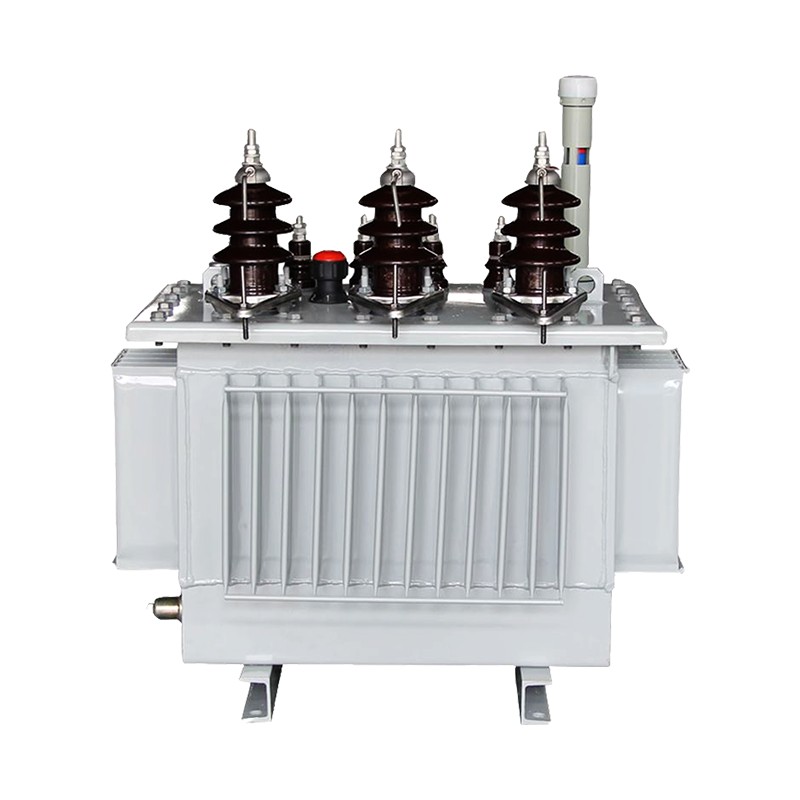
Why is it called "oil immersed"?
Simple — it's filled with oil.
Not for burning. For two things: insulation and cooling.
Insulation – The oil sits between the coils and the core, and between the coils and the tank. Without it, high voltage would arc right across — short circuit, discharge, burnt equipment.
Cooling – When the coils get hot, the oil carries the heat away and the tank wall lets it out into the air. Oil holds a lot of heat, which is why oil immersed transformers handle overload well — they can run hard for a while without complaining.
The oil doesn't last forever though. Over time it gets dirty and picks up moisture. You have to test it, filter it, or replace it now and then. That's the biggest difference from dry type transformers.
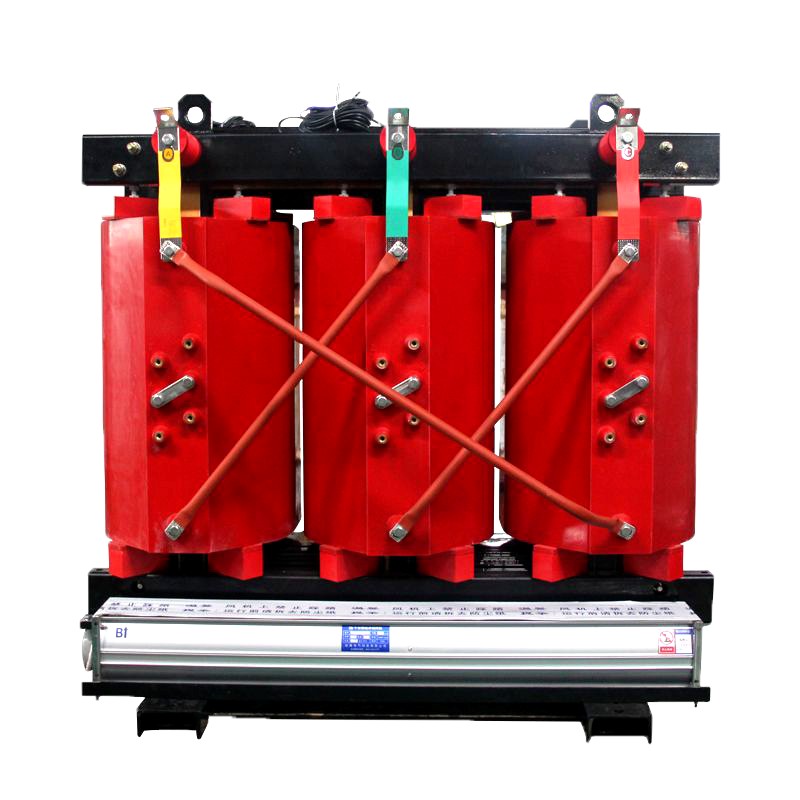
Dry type transformers don't use oil. They use air for cooling. Safer and cleaner, yes. But more expensive, and they don't take overload as well. The two are not substitutes for each other; they serve different scenarios.
Are Oil-Immersed Transformers Prone to Failure?
On the contrary, they are among the most durable power equipment.
Their designed service life is typically 20–30 years. As long as they are not severely overloaded, not permanently low on oil, and not repeatedly struck by lightning, they can operate reliably for decades.
Common "faults" are rare:
Dropping oil level (leakage or evaporation)
Deteriorated oil quality (moisture or oxidation)
Aging bushings and tap changers
Insulation aging due to long-term overload
These issues do not cause sudden failure. They can be detected and addressed in advance through regular inspections and oil testing. Oil-immersed transformers are not maintenance-free, but proper maintenance ensures a long service life.
Where Are Oil-Immersed Transformers Still Used?
| Scenario | Reason for Using Oil-Immersed Transformers |
| Outdoor substations | Resistant to wind, sun and rain; no dedicated building required, can be directly installed on a platform |
| Main factory distribution | Large capacity (up to thousands of kVA) available; lower cost than dry-type transformers |
| End of long transmission lines | Severe voltage drop requiring voltage boost compensation |
| Photovoltaic and wind power step-up | Cost-effective, durable, suitable for outdoor use |
| Old residential area distribution | Most existing equipment is oil-immersed, low replacement cost |
Key Parameters of Oil-Immersed Transformers: Most Frequently Asked Customer Questions
Capacity (kVA): Sum the power of all loads and add a 30%–50% margin. Avoid tight calculations.
Copper or Aluminum: Copper vs. aluminum
Copper costs more. Aluminum costs less.
But copper conducts better, lasts longer, and handles heat better. If your equipment runs day and night, go with copper. You'll thank yourself later.
Fully sealed or conservator type
Fully sealed keeps air out. Less oxygen means the oil ages slower and you don't have to fiddle with it as often.
Conservator type lets you see the oil level. Better if you have someone checking things regularly anyway.
Energy efficiency class – S11, S13, S20…
Bigger number means lower losses, but also higher price. Do the math: how many years will it take for the electricity savings to pay for the higher upfront cost? That's your answer.
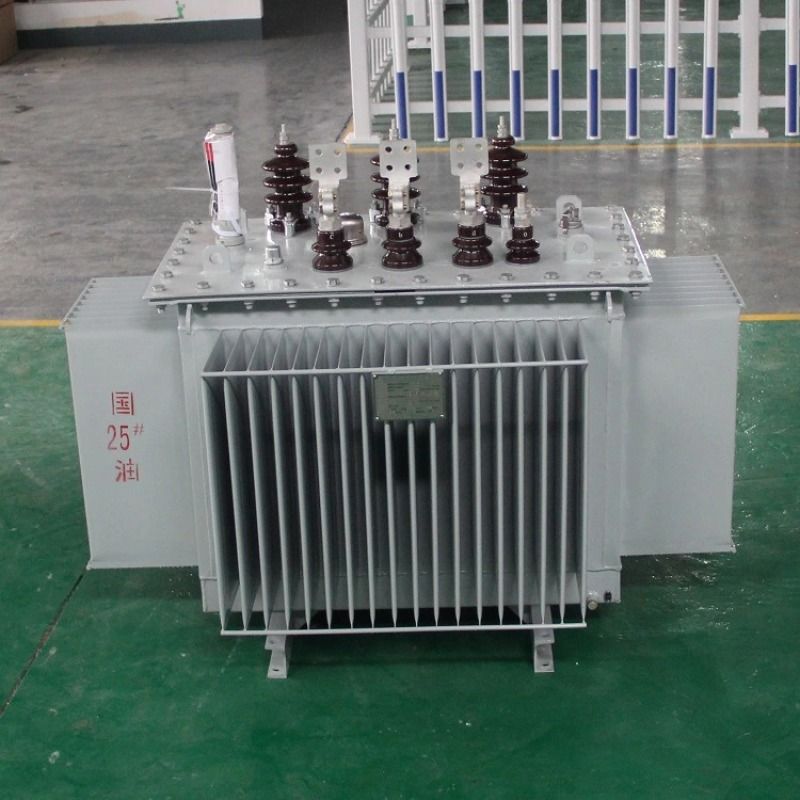
Yibaling's oil immersed transformers
Nothing fancy. Just solid work.
Core – high grade cold rolled silicon steel, fully interleaved joints. Low no load loss.
Windings – pure copper as standard (high purity aluminum if you ask). Layer insulation is tight and consistent.
Insulating Oil: Premium transformer oil, fully tested for withstand voltage, moisture content and dielectric loss before delivery.
Tank: Corrugated or finned radiators with fully sealed welding for leak and corrosion resistance.
Factory Testing: Every unit undergoes tests for transformation ratio, DC resistance, insulation resistance, no-load loss, load loss and power frequency withstand voltage—no sampling-only testing.
Application Scenarios
Factory distribution, residential substationsMining, chemical, papermaking, textile industriesPhotovoltaic step-up, wind power grid connectionExport supporting projects, foreign aid projects
Specifications
Capacity: 30kVA–3150kVA (larger capacities negotiable)
Voltage: Mainly 10kV/0.4kV, customized non-standard options available.
Next :
Related News
- What ZSG Three-Phase Dry-Type Rectifier Transformer work?
- Which one is good S13 Oil-Immersed Distribution Transformer?
- How to choose JBK5 Machine Tool Control Transformer?
- How BK Machine Tool Transformer 220V works?
- Which one is good SBK Three-Phase Dry-Type Transformer?
- How to choose SBW Intelligent Servo Voltage Stabilizer?
Leave me a message