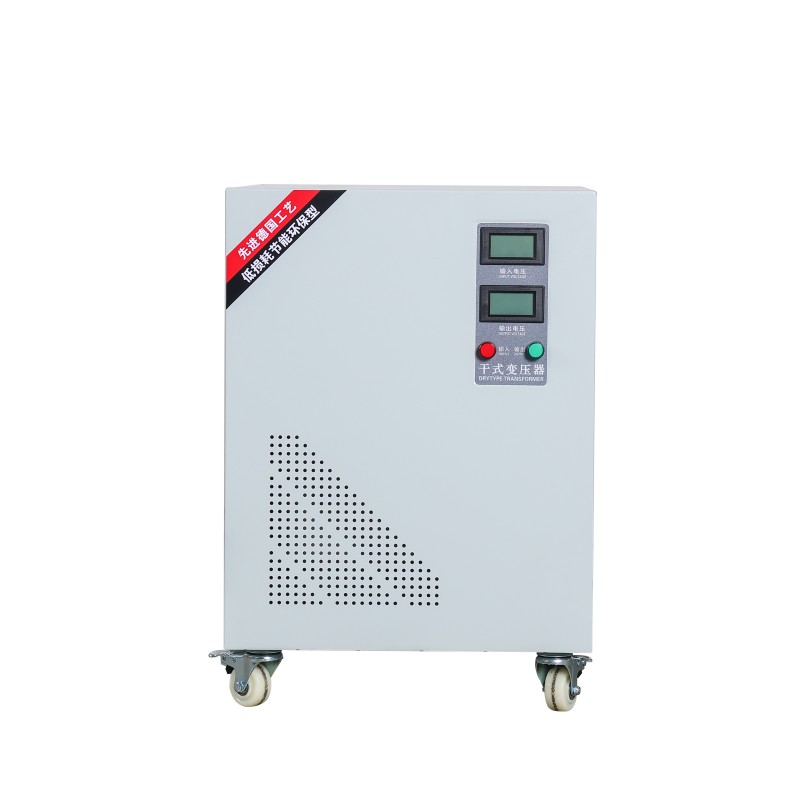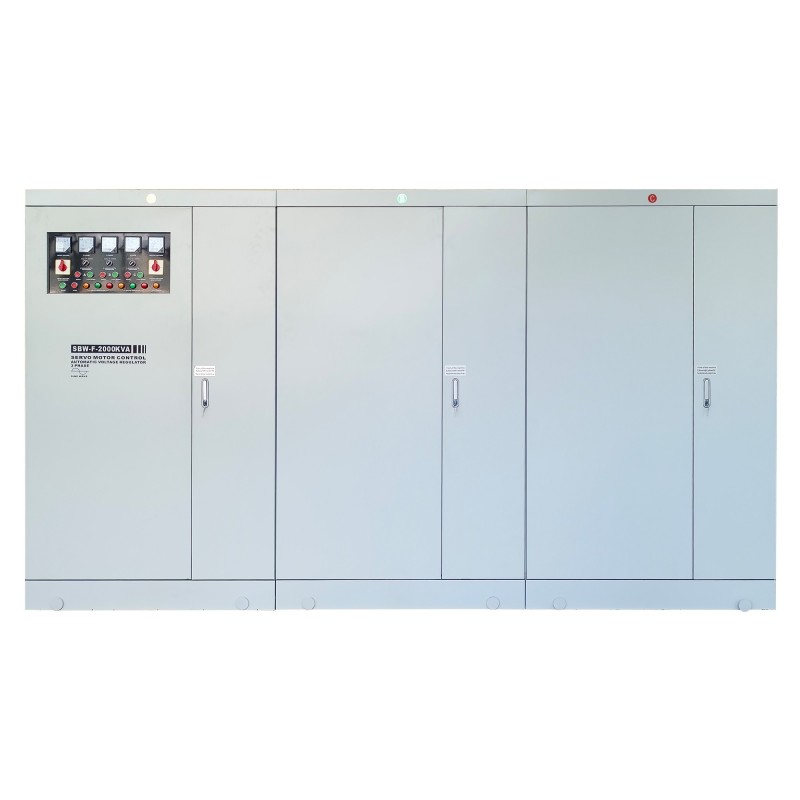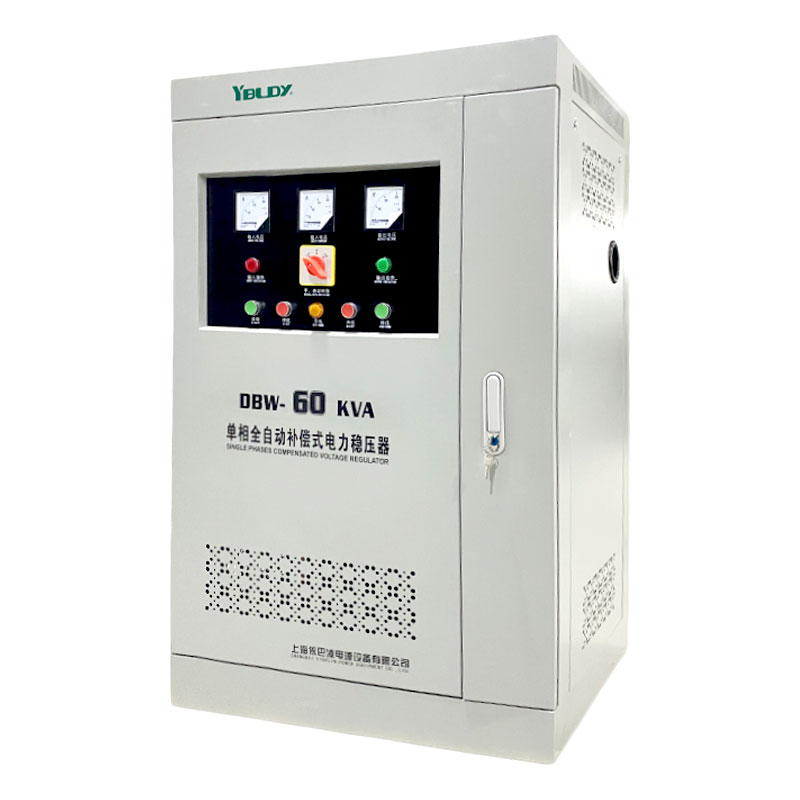

What is DBW Intelligent Compensation Voltage Stabilizer?
Unstable Voltage? DBW Has You Covered
As single phase equipment gets bigger and more sophisticated, its appetite for clean power grows right along with it.
Precision grinders produce inconsistent finishes. CT scanners show ghost images in the data. Lab instruments drift mid experiment. Air conditioners trip off during peak hours, leaving the whole building hot and uncomfortable.
More often than not, the problem isn't the equipment — it's the voltage.
Grid voltage fluctuates throughout the day. Low during peak load, high at night. Add in the startup surges from heavy equipment on the same line, and the quality of single phase 220V power becomes anything but stable. For household appliances, voltage swings might mean the difference between “works” and “works a bit poorly.” For precision and high power equipment? It’s the difference between running and shutting down.
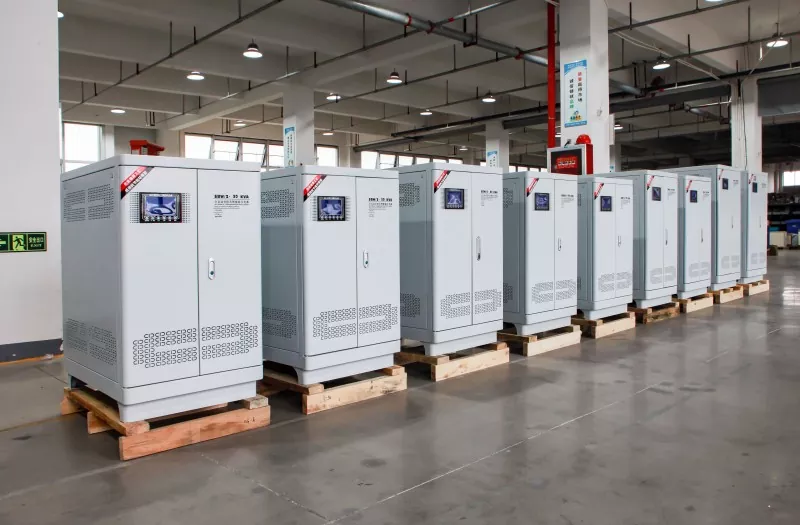
The Yibaling DBW Intelligent Compensation Voltage Stabilizer is built to solve exactly that problem.
How DBW Intelligent Compensation Voltage Stabilizer Works
The DBW uses compensation type voltage regulation — same proven approach as servo type stabilizers, but with better capacity and higher efficiency.
The system consists of four main parts:
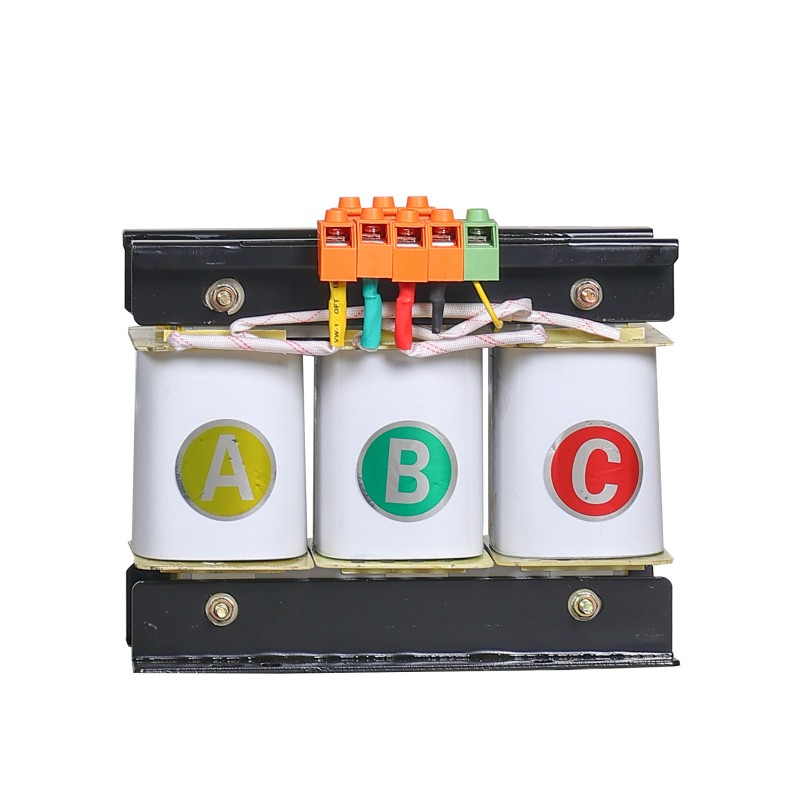
Compensation transformer
Contact voltage regulator
Automatic control circuit
Servo motor with speed reduction drive mechanism
The compensation transformer’s secondary winding is connected in series with the main circuit. Its primary winding connects to the output of the contact regulator.
The operating cycle works like this:
Step 1 – Real time sampling.
The control circuit continuously samples voltage from the stabilizer output, checking whether the output is holding at the setpoint.
Step 2 – Deviation calculation.
The sampled signal is processed to determine how far the output has drifted from the target value.
Step 3 – Adjustment command.
The control circuit signals the servo motor to turn. Through the speed reducer and chain drive, the motor moves the carbon brush along the contact regulator’s winding surface.
Step 4 – Compensation correction.
The carbon brush’s new position changes the contact regulator’s output voltage, which in turn changes the voltage across the compensation transformer’s primary winding. The secondary winding—connected in series with the main circuit—adds or subtracts voltage as needed to bring the output back to the setpoint.
This closed loop cycle runs continuously: Monitor → Calculate → Adjust → Monitor again. Response time is typically under 1.5 seconds for a 10% input voltage change.
Key Features That Actually Matter
Large capacity, high efficiency
The DBW series covers 10kVA to 180kVA, with full load efficiency above 95% — some models hit 98%. It handles heavy loads without wasting power.
No waveform distortion
The output waveform matches the input waveform exactly. No added harmonics, no distortion. For medical imaging equipment and precision instruments, this matters—a lot. Distortion directly affects image quality and measurement accuracy.
Works with any load type
Resistive (heaters, lighting), inductive (motors, compressors), capacitive (capacitor banks) — the DBW handles all of them. One stabilizer, any load.
Handles startup surges
Big motors and compressors draw huge current when they start. The DBW absorbs that surge without tripping or shutting down.
Comprehensive protection
Over voltage, under voltage, phase loss, wrong phase sequence, over current, short circuit — all protected. When the grid misbehaves, the DBW cuts output first and protects your equipment. Some models offer dual supply channels — stabilised and mains direct — with selectable manual or automatic operation.
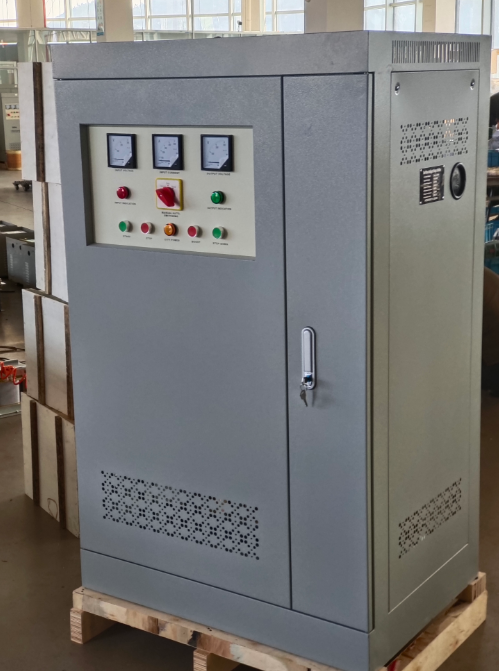
Where Does the DBW Intelligent Compensation Voltage Stabilizer Go?
Pretty much anywhere that needs single phase high power voltage stabilisation.
Precision manufacturing – CNC machines, precision grinders, EDM equipment, laser cutters. Voltage instability affects machining accuracy. Scrap rate goes up, profit margin goes down.
Medical equipment – CT scanners, X ray systems, ultrasound, MRI support systems. Medical imaging gear is extremely sensitive to power quality. Voltage fluctuation produces image artifacts that can affect diagnosis.
Laboratories and R&D – Analytical instruments, test rigs, measurement systems. Data that drifts and experiments that fail waste time, samples, and grant money.
Commercial and public facilities – Central air conditioning, elevators, large format printers, communications rooms, data centres. When these stop, the whole building stops with them.
Industrial and mining sites – Production lines, textile machinery, mixers, hoists, welding equipment. The line can't stop and the voltage can't wander.
Especially for users at the end of low voltage distribution lines — far from the substation, long cable runs, low baseline voltage. When loads change, voltage swings are worse. The DBW’s wide input range (single phase 176V 264V) handles that reliably.
How to Pick the Right DBW Intelligent Compensation Voltage Stabilizer
Two things matter most: capacity (kVA) and input voltage range.
Capacity – Add up the total power of everything you’re connecting, then add 30% margin. Motors and compressors draw several times their running current at startup — leave enough room.
Standard DBW capacities: 10kVA to 180kVA. Not sure which one fits? Send your equipment list to Yibaling sales — they’ll size it for you.
Input voltage range – Standard models cover single phase 176V 264V. If your site has wider swings — long supply lines, remote locations, weak grids — wider input ranges are available on request.
Output voltage – Standard output is single phase 220V. Regulation accuracy can be set between ±1% and ±5% . Factory default is usually ±3%. If you need tighter accuracy, just specify when ordering.
Installation environment – The DBW is designed for indoor installation. Ambient temperature -15°C to +40°C, relative humidity below 90% , with no corrosive gases, steam, chemical deposits, dust, or explosive/conductive contaminants. The site should be free from severe vibration or shock.
Final Thoughts
The DBW Intelligent Compensation Voltage Stabiliser doesn't have a touchscreen. It doesn't connect to Wi Fi. It doesn't make headlines.
What it does is straightforward: it stabilises single phase high power voltage, reliably and continuously.
For factories, hospitals, and laboratories that have been wrestling with unstable power for years, the difference is immediate. Equipment stops acting up. Production stops stopping. People stop worrying about the next voltage dip.
It's not the flashiest piece of gear on the plant floor. But it's the one that keeps everything else working.
Related News
- What ZSG Three-Phase Dry-Type Rectifier Transformer work?
- Which one is good S13 Oil-Immersed Distribution Transformer?
- How to choose JBK5 Machine Tool Control Transformer?
- How BK Machine Tool Transformer 220V works?
- Which one is good SBK Three-Phase Dry-Type Transformer?
- How to choose SBW Intelligent Servo Voltage Stabilizer?
Leave me a message