
What is the function of The TSGC2J Contact Voltage Regulator?
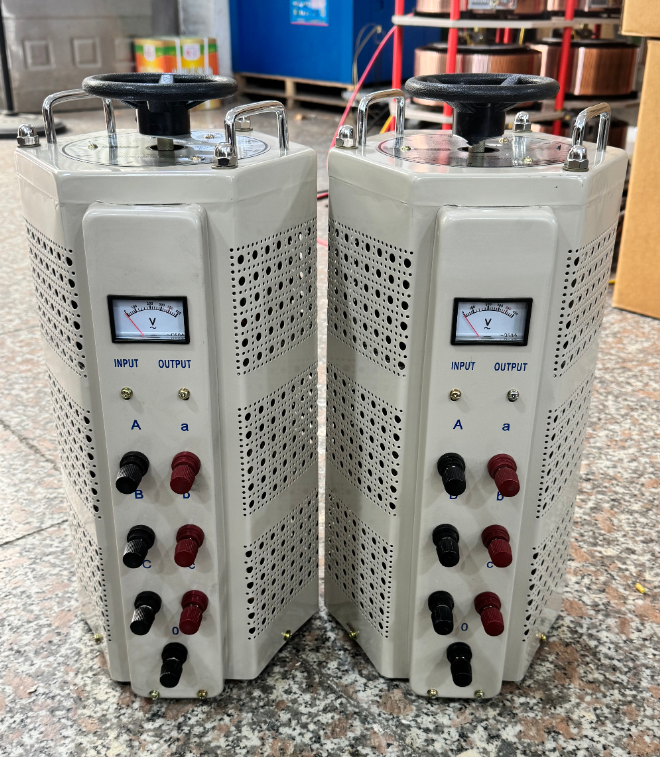
If you've ever needed to vary the voltage going into a piece of equipment—dial it up for a test, dial it down for a heat treat, or just dial it around to find the sweet spot—you know the value of a simple, reliable tool that does one thing well. The TSGC2J series three-phase contact voltage regulator is exactly that.
It's a manually operated variable transformer. You turn a handwheel, the voltage changes. No software. No menus. No waiting for a control loop to figure out what you want. Just a mechanical connection between your hand and the output.
What You're Actually Turning
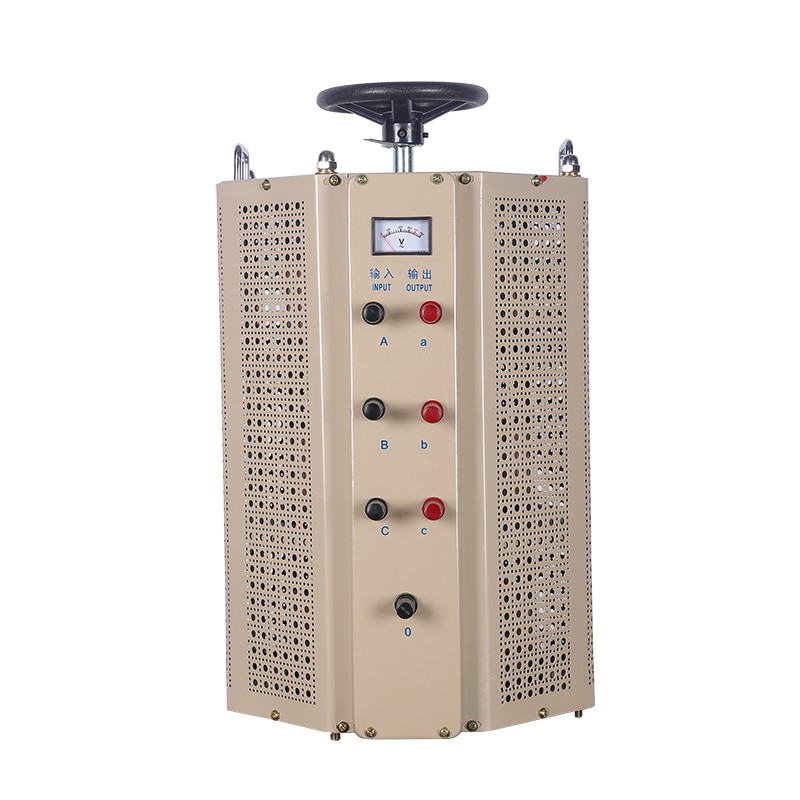
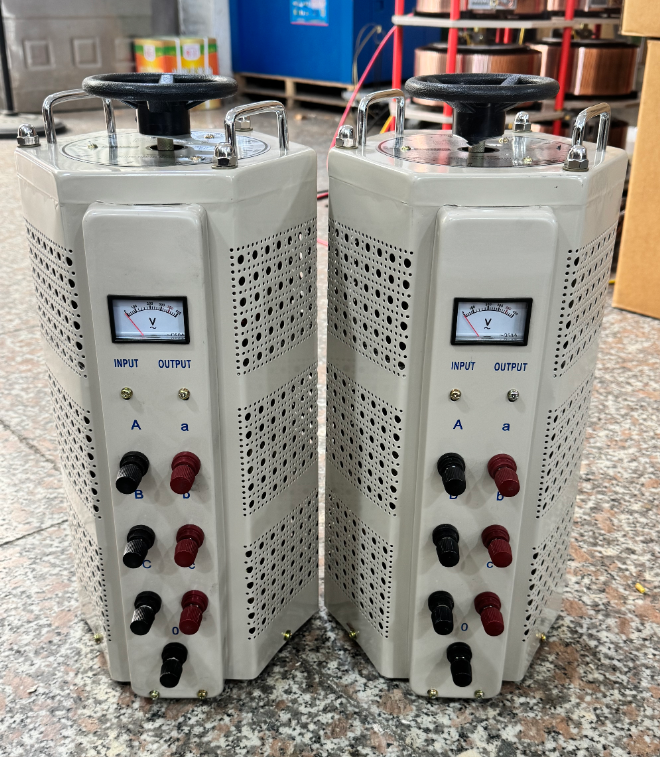
Inside the TSGC2J contact voltage regulator, the principle is straightforward: it's an autotransformer with a continuously adjustable turns ratio. A carbon brush rides along a polished coil surface. Turn the handwheel, the brush slides, and the number of active turns changes. That changes the output voltage—smoothly, continuously, from zero up to maximum.
The three-phase version is three identical single-phase windings mounted coaxially on a common shaft. Turn one handwheel, all three move together. Input is 380V three-phase; output is adjustable from 0 to 430V. That gives you a wide range to work with, from a full shutdown to a healthy overvoltage for testing or burn-in.
Capacities run from 3kVA up to 60kVA in standard models, with 30kVA being a common sweet spot. The "J" in the model number indicates it's the economy version—still built to the same functional standard, but with a hexagon-shaped enclosure instead of the newer square style.
Where The TSGC2J Contact Voltage Regulator Gets Used
According to the manufacturers, the TSGC2J is meant for a broad range of applications: industrial settings like chemical plants, metallurgy, instrumentation, and light manufacturing; scientific labs; public facilities; and even household appliances. The actual use cases are more specific.
People use these for power control—tuning the heat in an industrial oven, adjusting the speed of a motor, dimming a large lighting rig, or controlling the power delivered to a load during testing. It's also common in laboratories, where you need to supply a device with a variable AC source to test its response across a voltage range.
What the Specs Say
Efficiency is rated above 90%, with some suppliers claiming up to 98%. No added waveform distortion—the output is a clean sine wave, just at a different voltage. Insulation resistance is >2MΩ, and the unit withstands 1500V for one minute during dielectric testing.
Operating conditions: -5°C to 40°C ambient, altitude up to 2000 meters, and relative humidity up to 90% non-condensing. It's an indoor unit, not sealed against the weather, and not meant for parallel operation.
Standard features include a position limit switch that stops the brush at the end of its travel, and an earth terminal for proper grounding.
The Care and Feeding
Like any brush-based device, the TSGC2J needs occasional attention. The carbon brushes wear down over time and need replacement. The manufacturer recommends checking them periodically and swapping them out when they get too short or damaged. When you install new brushes, you use fine sandpaper under the brush while turning the handwheel a few times to seat it properly against the coil surface.
The coil surface itself should be kept clean—dust or dirt can cause sparking and burn the winding. A cotton cloth with 90% alcohol will clean off any black spots. Beyond that, keep the cabinet clean, check the connections are tight, and don't use the handwheel as a handle when moving the unit.
The Bottom Line
The TSGC2J isn't fancy. It doesn't have Bluetooth, a display, or an automatic anything. It's a manual voltage regulator that you turn by hand.
But for people who need to dial in a specific voltage—and dial it in again tomorrow, and again next week—the simplicity is the point. No logic board to fail, no programming to learn, no sensor drift to recalibrate. Just a handwheel, a brush, and a coil that does exactly what you tell it.
Sometimes that's exactly the right tool for the job.
Related News
- What ZSG Three-Phase Dry-Type Rectifier Transformer work?
- Which one is good S13 Oil-Immersed Distribution Transformer?
- How to choose JBK5 Machine Tool Control Transformer?
- How BK Machine Tool Transformer 220V works?
- Which one is good SBK Three-Phase Dry-Type Transformer?
- How to choose SBW Intelligent Servo Voltage Stabilizer?
Leave me a message