
What is the significance of Special Frequency Converter for Fans and Pumps?
Walk into any water treatment plant, any commercial HVAC room, any industrial cooling tower, and you’ll see them: big motors turning big fans and big pumps. They run at full speed almost all the time. The flow gets adjusted by a valve somewhere downstream, or a damper in the duct. Nobody thinks twice about it.
That’s exactly the problem.
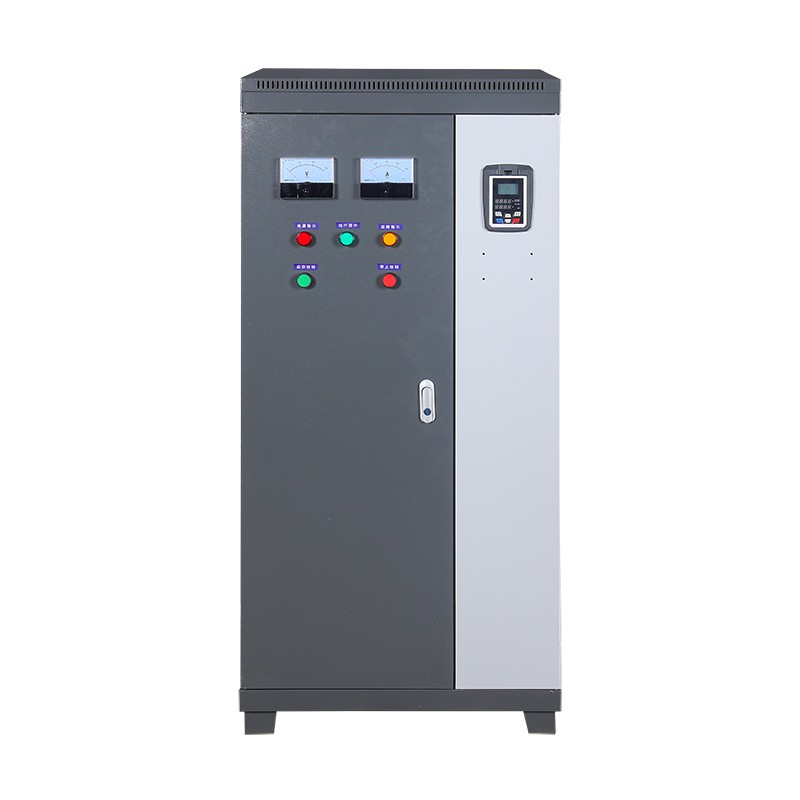
The special frequency converter for fans and pumps isn’t a complicated piece of technology. It’s a variable frequency drive, same as any other, but with one crucial difference: it’s set up from the factory to match the way fans and pumps actually behave. And that setup matters more than most people realize.
Why Special Frequency Converter for Fans and Pumps Are Different
Here’s the thing about centrifugal loads. The power they consume doesn’t drop in a straight line when you slow them down. It follows a cube law. Cut the speed by 20 percent, and the shaft power drops by almost half. That’s not a marginal gain—that’s the difference between a pump that pays for its own drive in eighteen months and one that doesn’t.
But if you just bolt on a general-purpose drive and leave it in default mode, you might not see that benefit. The drive needs to know what it’s driving.
Fans and pumps are what engineers call variable torque loads. At low speeds, they don’t need much torque. The load curve is soft. A conveyor or an extruder is the opposite—constant torque, full grunt required even at a crawl. Run a fan or pump on a drive configured for constant torque, and you’re leaving money on the table.
The special frequency converter solves that by shipping with a V/F curve already shaped for quadratic loads. The voltage drops along with the frequency in a way that matches what the motor actually needs. No extra programming, no guesswork. You wire it up, set your pressure or flow target, and it does the rest.

What’s Actually Inside of Special Frequency Converter for Fans and Pumps?
The hardware isn’t exotic. Rectifier, DC bus, inverter—same architecture as any VFD. What makes it “special” is the firmware and the I/O.
These units typically come with a built-in PID controller. That’s the key. Instead of running at a fixed speed and letting a valve waste the excess, the drive reads a pressure or flow sensor and adjusts motor speed to hold that value steady. The valve stays wide open. The pump or fan only does the work that’s actually needed.
Most models also include pump-specific functions that general-purpose drives don’t bother with. Sleep mode, for instance. When demand drops to zero—say, nobody’s using water at 3 AM—the drive can shut the motor off entirely, then wake it back up when pressure in the line starts to fall. No timers, no manual intervention. Just automatic, demand-based operation.
Multi-pump sequencing is another common feature. One drive can rotate between several pumps, bringing them online or offline as needed and equalizing runtime across the set. That’s not just about energy—it’s about maintenance. A pump that runs 24/7 wears out faster than one that shares the load.
The Installation Side
One thing that doesn’t get mentioned enough: these drives are usually easier to commission than people expect.
Pre-programmed application macros are standard on most name-brand units. You select “fan” or “pump” from a menu, enter the motor nameplate data, and the drive configures its own parameters accordingly. The PID loop, the V/F curve, the sleep thresholds—all preset. If you’ve ever spent an afternoon punching parameters into a drive that arrived with blank defaults, you know what a difference that makes.
Physical installation is straightforward, but a few details matter. Cooling airflow needs to be maintained, especially in dirty environments where dust can clog heatsinks. Cable length has limits before you need to derate the carrier frequency or add output reactors. And if the drive is going into a wet or washdown area—like a wastewater pump station—an IP65-rated enclosure is worth the extra cost.
The Bottom Line
A special frequency converter for fans and pumps doesn’t do anything magical. It’s not a new physics. It’s just a drive that’s been told what kind of load it’s going to see, and configured accordingly.
The savings come from matching speed to demand. A pump that only needs to move half the water it was designed for doesn’t need to spin at full RPM and throttle the rest away. A fan that only needs to move enough air to keep a space comfortable doesn’t need to run flat out and dump the excess through a damper.
For anyone staring at a utility bill that keeps climbing, or a pump that’s been rebuilt twice in three years because it never gets a break, that’s worth looking into. Not because the technology is exciting—because it isn’t. It just works.
Next :
Related News
Leave me a message