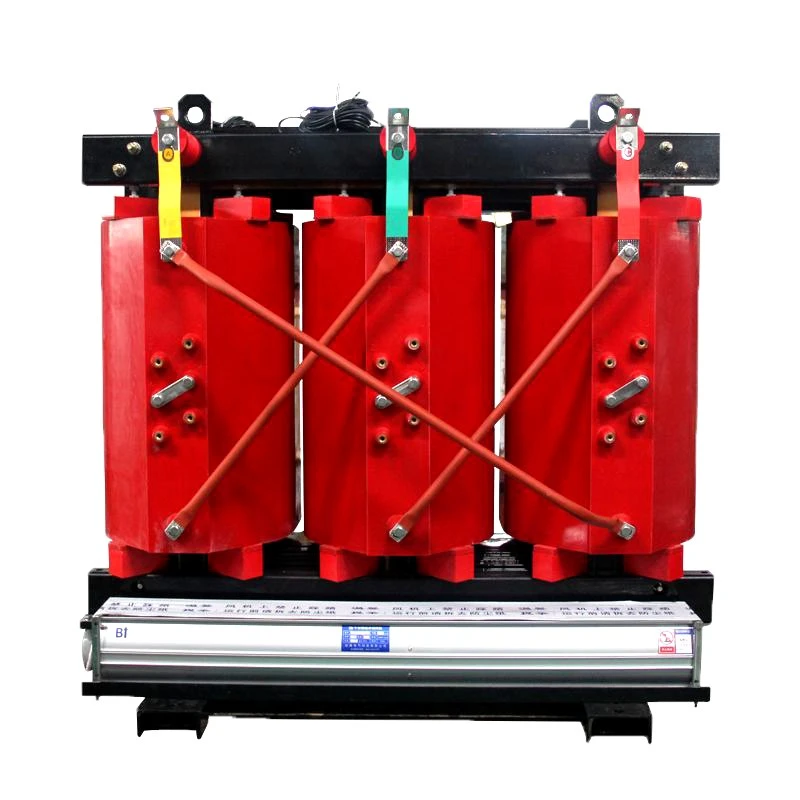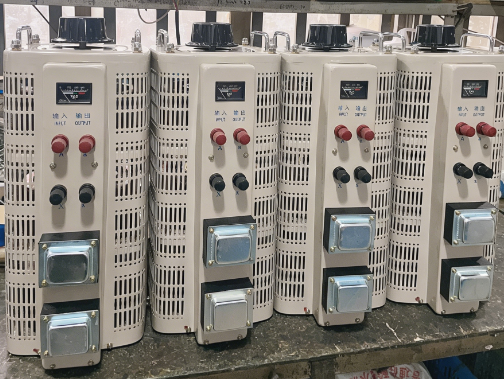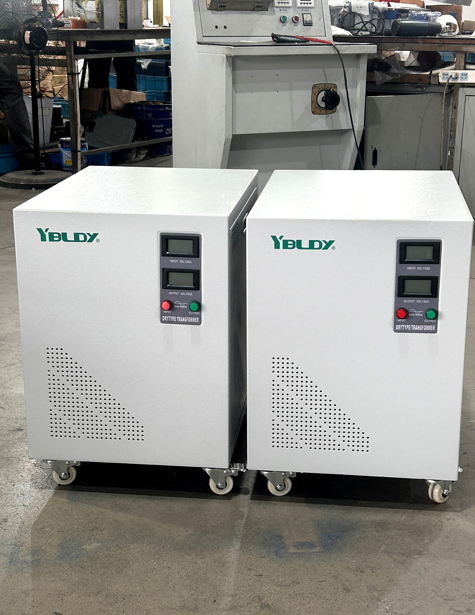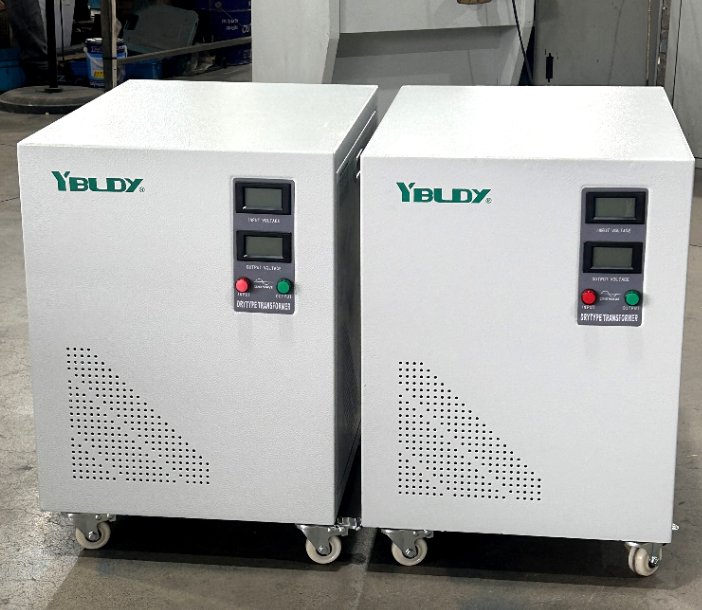

Where is BK Industrial Control Transformer?
When Control Circuits Act Up, It's Often the Last Thing You Check
Anyone who's done machine tool electrical maintenance shares a consensus: main circuit trips come with clear alarm codes and a straightforward repair path. Control circuits are different. A contactor that won't pull in, indicator lights flickering randomly, a PLC that resets occasionally — the symptoms are fragmented, and you can chase them for hours without finding the cause. You run a multimeter along the wiring, and finally discover the control transformer's output voltage has drifted, or winding insulation has aged and load-carrying capacity has dropped. The BK series industrial control transformer does this unassuming but unavoidable job in the control cabinet — translating the grid's 380V or 220V into the safe voltage the control circuit can use.
Small Capacity, but It Covers the Control Cabinet's Daily Needs
The BK Industrial Control Transformer series starts at 25VA, with standard models covering 50, 100, 150, 200, 250, 300, 400, 500, 700, and 1000VA, going up to 1500, 2000, 3000, even 5000VA. These capacities look modest, but the loads in a control cabinet aren't high-power equipment to begin with: contactor and relay coils, PLC power modules, solenoid valves, indicator lights, local lighting — add them up and you're typically in the few-hundred-volt-ampere range.
Input voltage is commonly 220V or 380V, with some models supporting dual input taps — which one to wire depends on the actual grid at the site. Output options are broader: 6V, 12V, 24V, 36V, 110V, 127V, 220V are all doable, and multi-winding, multi-output versions can be customized. It's common for one transformer to feed both the lighting circuit and the signal circuit — the two winding sets are wound separately and don't interfere with each other.
Isolated Windings: Not the Same as Auto-Transformers
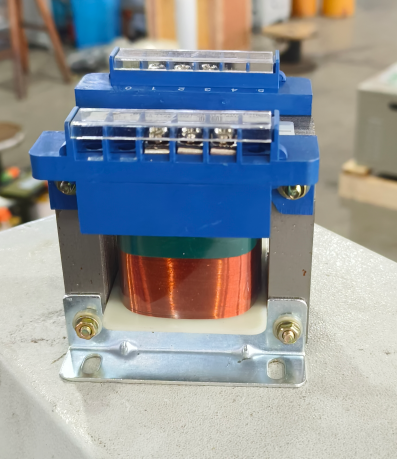
The BK Industrial Control Transformer's control winding and lighting winding are wound separately, and primary and secondary are isolated. That means grid-side harmonics and common-mode interference don't sneak directly into the control circuit. For control systems built from PLCs and precision relays, this layer of isolation is sometimes more important than the voltage matching itself.
But isolation also means larger size and higher cost than an auto-transformer solution of the same capacity. The BK isn't meant for high-power loads anyway — control circuit power demand is what it is, and the cost difference is a small fraction of the whole control cabinet. Whether to choose isolation depends on the equipment's control precision requirements.
Core and Terminals: Details Determine Whether It Runs Smoothly
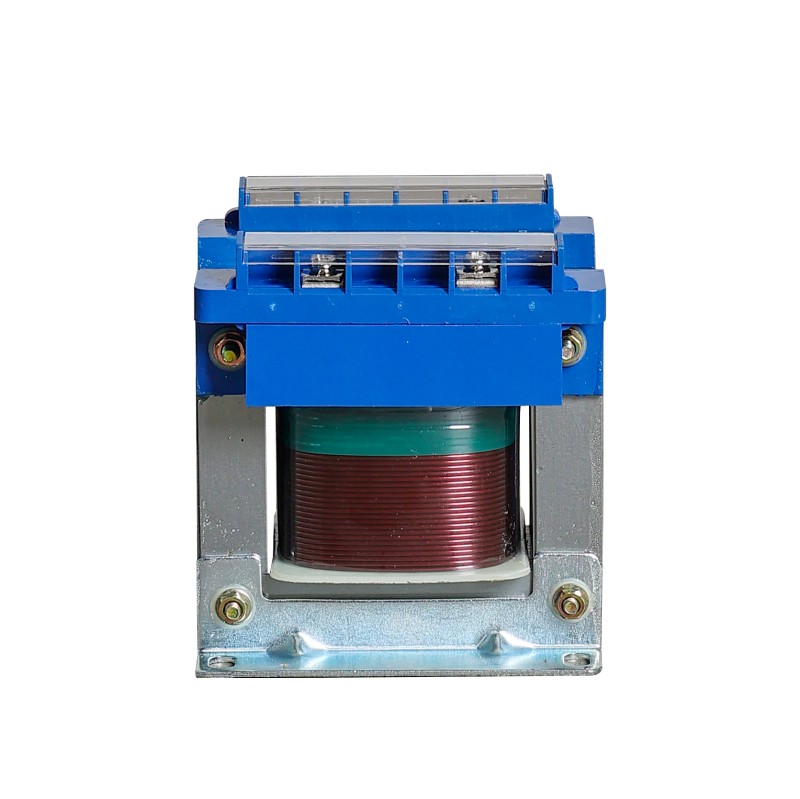
The core uses stacked cold-rolled silicon steel laminations in a shell-type structure, vertically mounted. Laminations are welded into a single unit with argon arc welding — between laminations and between laminations and base plate — eliminating through-bolts. The structure is simple, with noise and vibration control at normal levels for this price range.
Terminals are on the outside — maintenance without removing the enclosure. Thickened silver-plated copper terminals have low contact resistance and resist heat and oxidation over long runs. This detail makes a difference when cabinet temperatures run high. On mounting dimensions, small-capacity models from 25VA to 50VA have mounting hole spacing of roughly 65×50mm, with overall dimensions under 80mm square — they fit in a corner of the control cabinet. When cabinet space is tight, these dimensions matter more than any other number on the spec sheet.
Avoid These Traps When Specifying
Capacity isn't simply the sum of all load rated powers. Contactor inrush current can be several times rated value — leaving adequate margin matters more than impressive specs. For multi-winding output models, don't exceed total capacity when all windings carry load simultaneously. The transformer is designed for total capacity, not for every winding running at full load.
Insulation class is conventionally B or F. For scenarios with high workshop temperatures or poor cabinet ventilation, F is the safer choice. Standard ambient temperature range is -5°C to +40°C; above 2000m altitude, derating is required.
One more thing easily overlooked: the BK is a dry-type, self-cooled transformer relying on air convection. For cabinet mounting, don't cram it into a corner where it can't breathe — leave adequate heat dissipation space around it. Make sure the grounding terminal is tightened — this isn't just a safety requirement, it also affects isolation effectiveness.
Applications Are Fairly Concentrated
BK Industrial Control Transformer applications revolve around one phrase: control power. Machine tool control electrical power, local lighting power, indicator light power — those are the standard uses. Mechanical equipment, automated production lines, switchgear operating circuits — wherever grid voltage needs to be stepped down to a level control components can accept, the BK sits in that position.
When specifying, focus on three things: input and output voltage, capacity margin, and whether multiple outputs are needed. Let the transformer handle the rest.
Related News
- When can we find TSGC2 Contact-type Voltage Regulator?
- Why is Online Soft Starter Convenience or Trouble?
- When use Three Phase High-power Voltage Regulator?
- How TDGC2J Single-Phase Contact Voltage Regulator work?
- When Voltage Drops to 160V, Can TND Fully Automatic AC Voltage Stabilizer Still Work?
- Why SBK Isolation Transformer is important?
Leave me a message
News Recommendations