
Why is Online Soft Starter Convenience or Trouble?
Does a Online Soft Starter Always Need a Bypass?
When discussing soft starters, one question often gets skipped: after startup completes, do the thyristors keep carrying current, or does a contactor take over? Most people answer the latter — a bypass contactor is standard configuration. Once startup finishes, the thyristors are cut out and the contactor carries running current, reducing heat and losses. That logic is sound, and most soft starter cabinets on the market do exactly this.
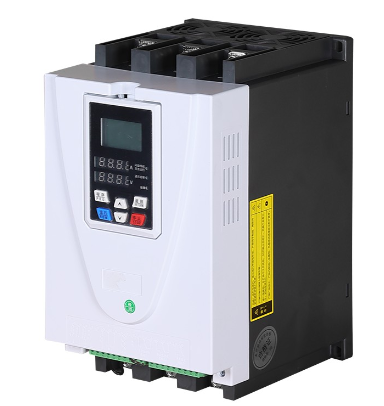
But one category of product takes a different path: the online soft starter, where thyristors handle both startup and running current throughout, with no external bypass contactor. Its reasons for existing — and its limitations — are worth spelling out.
Cutting One Contactor: What's Saved
The most obvious benefit of the online type is structural simplicity. A bypass soft starter cabinet needs an external contactor matched to the motor's rated current, which takes over running current after startup. The online type eliminates this link — one fewer component in the cabinet, one fewer set of wiring, one fewer failure point.
The cost calculation depends on how you look at it. On the soft starter alone, the online type isn't necessarily cheaper than the bypass type — thyristors must be selected for continuous running current, and thermal design has to keep up. But factoring in the bypass contactor, associated cabling, and cabinet space, the online type doesn't necessarily lose on the overall solution. For scenarios with tight cabinet space or a preference for clean wiring, this difference is real.
Thyristors Carrying Current Continuously: What's the Cost?
The biggest point of contention for the online type is power dissipation and heat during operation. Thyristors have on-state voltage drop, and motor running current flows through them the whole time, so losses are continuously generated. The bypass type cuts current over to the contactor after startup, taking the thyristors out of the circuit — that portion of losses drops to zero.
This difference isn't obvious on small-to-medium power, intermittently operating equipment. But in high-power, long-term continuous operation scenarios, the thyristors' sustained heat has a real impact on cabinet temperature, thermal design, and device life. The view that online types are less durable than bypass types traces back to this.
Harmonics are another issue that gets raised. Thyristors running online introduce higher-order harmonics into the grid. For locations with strict power quality requirements, this needs to be factored in.
Who Chooses the Online Type
The online soft starter's applicable scenarios are fairly clear. For equipment with modest power and short run times — intermittently working pumps, fans, small compressors — the thyristors' continuous losses are within acceptable range, and the simplicity of eliminating the bypass contactor is worth more.
Harsh environments are another consideration. Thyristors are solid-state devices with no mechanical contacts. In dusty, high-vibration environments where contactor contacts tend to have problems, the solid-state approach offers higher theoretical reliability. Of course, this depends on the specific product's protection design and thermal capability — not every online type is suited for harsh environments.
Another situation is equipment requiring soft stopping. During soft stop, thyristors must continuously control voltage ramp-down. With a bypass contactor, the switching sequence becomes more complex. The online type has thyristors in control throughout, making soft stop logic more direct.
A Few Things to Think Through When Specifying
Capacity is selected based on motor rated current, but frequent starting scenarios require calculating heat accumulation. Thyristors endure surge current during startup and conduction losses during running — the combined thermal stress needs adequate margin in selection.
Thermal conditions must be confirmed. Online type cabinets typically run hotter than bypass type. If ventilation space is insufficient or ambient temperature runs high, derating is necessary. Above 1000m altitude, corresponding derating also applies.
Check whether protection features are complete. Overload, phase loss, overvoltage, and undervoltage are basic configurations, with some products adding load short circuit and start current limit timeout protection. The online type has no bypass contactor sharing protection duties, so the soft starter's own protection capability is more critical.
Finally, think through one thing: does your equipment run continuously for long periods, or intermittently? For the former, choose the bypass type and take the thyristors out of the running circuit. For the latter, the online type deserves serious consideration — the simplicity and cost advantage of eliminating the contactor are enough to cover those losses.
Related News
- When can we find TSGC2 Contact-type Voltage Regulator?
- When use Three Phase High-power Voltage Regulator?
- How TDGC2J Single-Phase Contact Voltage Regulator work?
- When Voltage Drops to 160V, Can TND Fully Automatic AC Voltage Stabilizer Still Work?
- Where is BK Industrial Control Transformer?
- Why SBK Isolation Transformer is important?
Leave me a message
News Recommendations