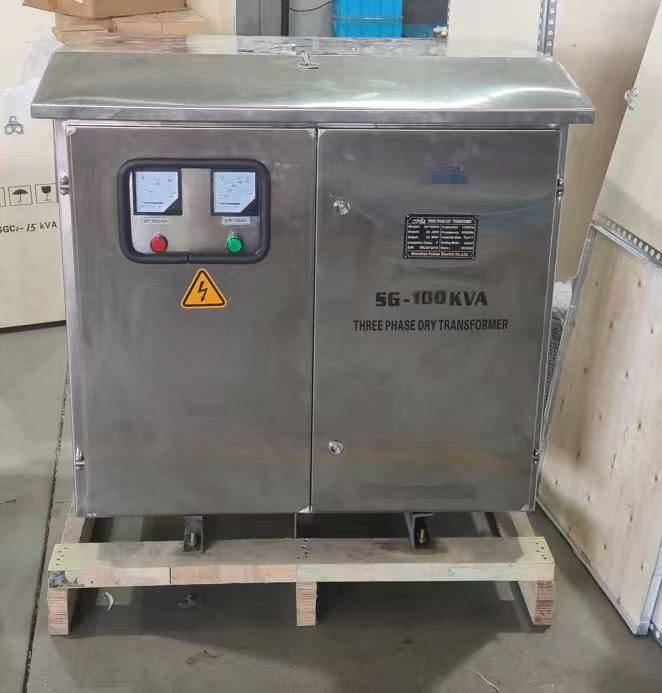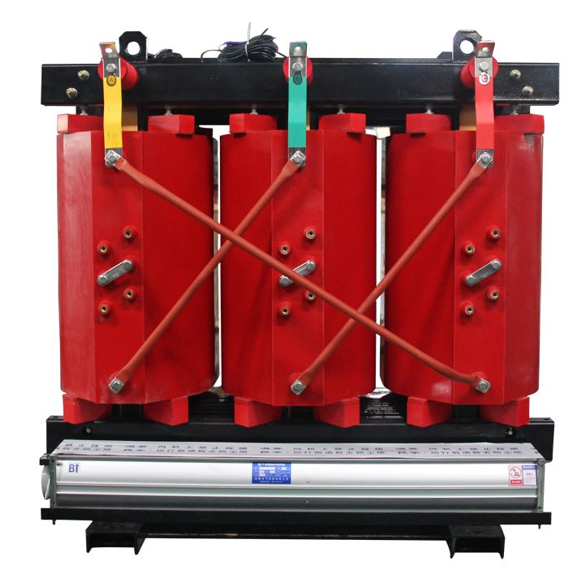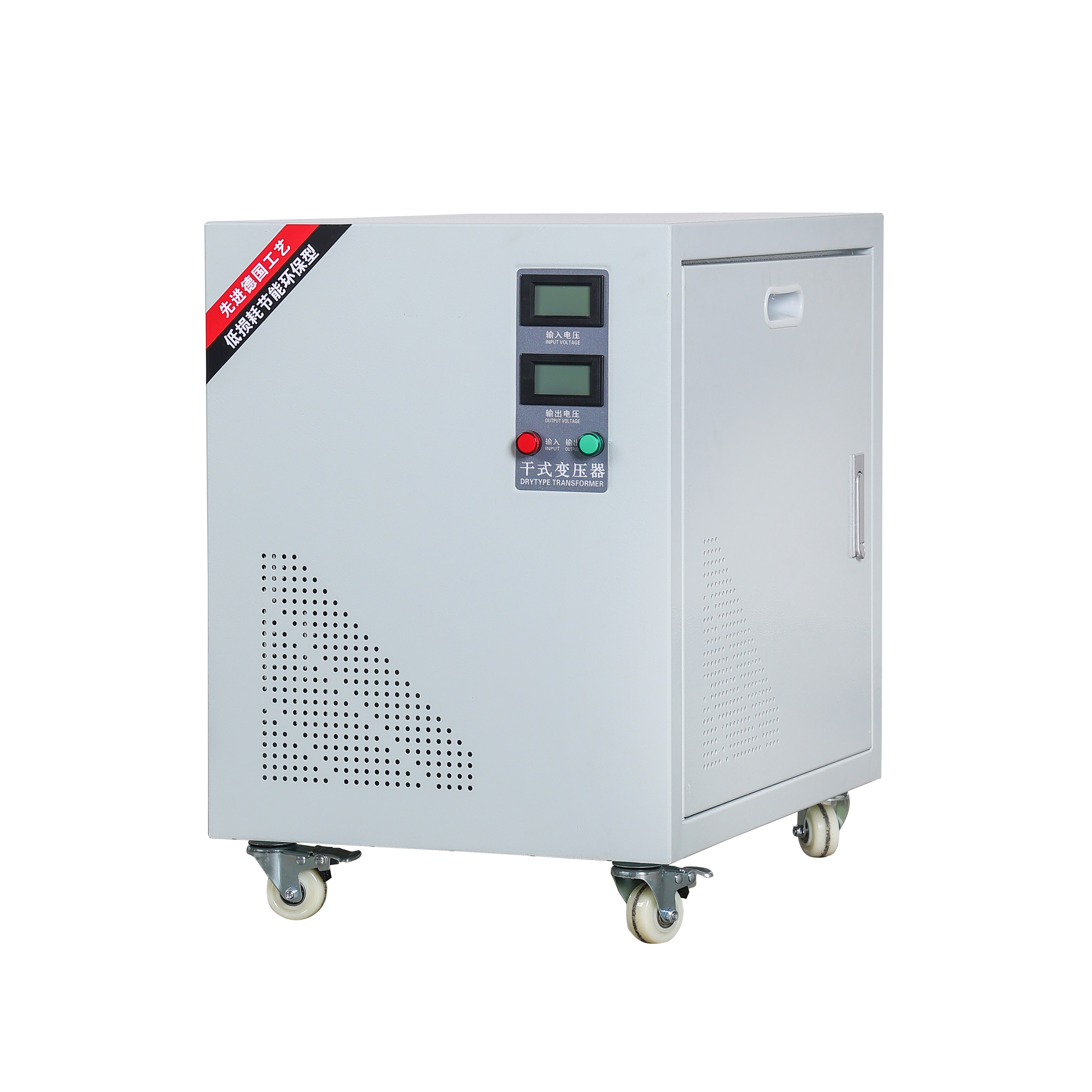

What Is an SBK High-Precision Transformer and Why Is It Important?
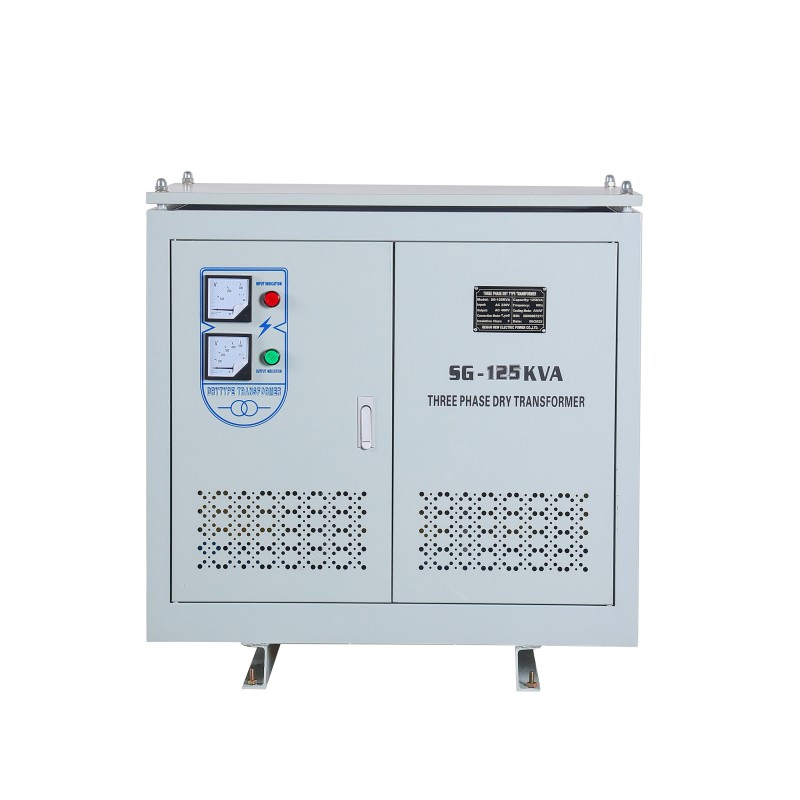
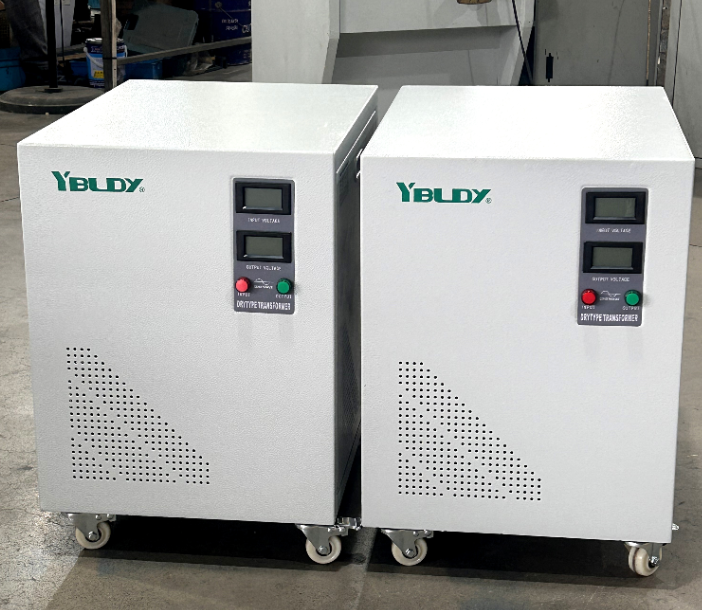
An SBK high precision transformer is a three phase dry type isolation transformer. It’s built for jobs that need clean, stable, noise free power.
Most distribution transformers just step voltage up or down. The SBK does more. It focuses on power quality. It isolates sensitive gear from the grid. It filters out high frequency noise. And it delivers output that’s stable, balanced, and low in distortion.
Why does that matter?
Because modern equipment — CNC machines, lab instruments, medical devices — is picky about power. More picky than it used to be. And when the power isn't clean, things go wrong.
A CNC controller glitches. A laboratory instrument gives erratic readings. A medical device alarms for no reason. A communication system drops data.
These problems are often not equipment failures — they are power problems.
The SBK transformer sits between the dirty grid and the sensitive load. It cleans the power, stabilizes the voltage, and protects the equipment.
In short: it turns problematic power into precision power.
How an SBK High-Precision Transformer Works
The operating principle is electromagnetic isolation — but with several critical enhancements.
Step 1 – Isolation
The primary and secondary windings have no direct electrical connection. Power transfers through a magnetic field. This alone blocks common-mode noise and breaks ground loops.
Step 2 – Electrostatic shielding
Between the primary and secondary windings, an electrostatic copper shield is added and grounded. This shield capacitively diverts high-frequency noise — from VFDs, switch-mode power supplies, radio transmitters — away from the secondary side.
Step 3 – Low coupling capacitance
Special winding construction (layer separation, interleaving, or split bobbin) reduces the parasitic capacitance between primary and secondary. Lower capacitance means better high-frequency noise rejection.
Step 4 – Tight voltage regulation
The SBK is built with a low-impedance design, minimizing voltage drop from no-load to full-load. Output voltage remains stable even when the load changes suddenly.
Step 5 – Balanced output
For three-phase models, the SBK produces a well-balanced output even if the input is slightly unbalanced. This is critical for sensitive three-phase loads like CNC machines, precision grinders, and test stands.
The result: clean, stable, balanced power that sensitive equipment can rely on.
Common Types of SBK High-Precision Transformers
SBK transformers are available in several configurations to match different application needs.
| Type | Typical Rating | Key Features | Best For |
| Single-phase SBK | 0.5kVA – 30kVA | Electrostatic shield, low leakage current | Laboratory instruments, medical devices, audio systems |
| Three-phase SBK | 3kVA – 300kVA | Independent phase shielding, balanced output | CNC machines, precision manufacturing, test equipment |
| Medical-grade SBK | 1kVA – 15kVA | Ultra-low leakage (<0.1mA), reinforced insulation | Patient-connected equipment, diagnostic imaging |
| Audio-grade SBK | 1kVA – 10kVA | Extra shielding, low mechanical hum | Professional audio, broadcast, recording studios |
| Custom SBK | User-defined | Specific voltages, enclosures, or terminal arrangements | OEM equipment, special projects, retrofits |
Most SBK transformers are built to order, not stocked off the shelf. Voltage, capacity, shielding, and enclosure are all matched to the customer's load.
Why SBK High-Precision Transformers Matter
Because "good enough" power is not good enough for sensitive equipment.
Here is what an SBK transformer delivers that ordinary transformers cannot:
1. High-frequency noise rejection
Standard transformers offer some isolation, but high-frequency noise still couples through winding capacitance. The SBK's electrostatic shield cuts that noise by orders of magnitude — typically 60dB to 100dB of common-mode rejection.
2. Ground loop elimination
When several pieces of equipment share a common ground, the ground potentials are rarely identical. That difference creates stray currents that loop between them — that's what engineers call a ground loop.
In an audio system, it shows up as a low frequency hum. In data acquisition, it causes erratic readings or phantom signals. In precision measurements, you'll see drift that shouldn't be there.
The SBK solves the problem by giving the load its own isolated ground reference — breaking the loop and stopping the noise at its source.
3. Low output distortion
The SBK does not introduce significant harmonic distortion. Output voltage waveform is a clean sine wave, indistinguishable from the input. For sensitive instrumentation, this is non-negotiable.
4. Reduced common-mode voltage
In systems with poor or no grounding, common mode voltage can make electronics act unpredictably — random glitches, false readings, unstable operation. The SBK’s isolation and shielding slash that common mode voltage right at the load, so your equipment sees clean, stable power.
5. Equipment protection
Isolation blocks surges, spikes, and lightning-induced transients. The load sees only the clean power it needs — not the garbage on the grid.
Without an SBK transformer, sensitive equipment is at the mercy of the grid. With one, it operates as designed — predictably, reliably, accurately.
Choosing the Right SBK High-Precision Transformer
Selecting an SBK transformer requires attention to more than just kVA and voltage.
Step 1 – Determine the load type
Single-phase or three-phase? Most laboratory and medical equipment is single-phase. Most industrial CNC and test systems are three-phase.
Continuous or intermittent? A 5kVA transformer running 24/7 has different thermal requirements than one used for occasional testing.
Step 2 – Calculate required capacity
Add the nameplate VA or amperes of all equipment that will run simultaneously. Then add a margin — typically 20% to 30% for future expansion or unexpected overloads.
Example: A CNC control (1.5kVA), a servo drive (2kVA), and a spindle drive (3kVA) total 6.5kVA. With 20% margin: 7.8kVA → choose 8kVA or 10kVA.
Do not oversize dramatically. An oversized transformer has higher no-load losses and larger inrush current, with no benefit.
Step 3 – Specify shielding
| Shielding Level | Description | When to Choose |
| None | Basic isolation only | General-purpose, non-sensitive loads |
| Single electrostatic shield | Copper shield between primary and secondary, grounded | Standard industrial precision applications |
| Double electrostatic shield | Two shields, separately grounded | Medical equipment, audio, extreme EMI environments |
| Mu-metal shielding | Magnetic shielding outside the transformer | Very low magnetic field requirements (CRT displays, sensitive magnetometers) |
Most SBK applications require single electrostatic shielding. Double shielding is rare but available.
Step 4 – Check voltage and frequency
Primary voltage — Must match your site supply (e.g., 380V, 400V, 415V, 460V).
Secondary voltage — Must match your load (e.g., 380V, 220V, 200V, 110V).
Frequency — 50Hz, 60Hz, or 50/60Hz dual-rated.
The SBK can be built with taps on the primary side to accommodate slightly varying line voltages.
Step 5 – Choose enclosure and mounting
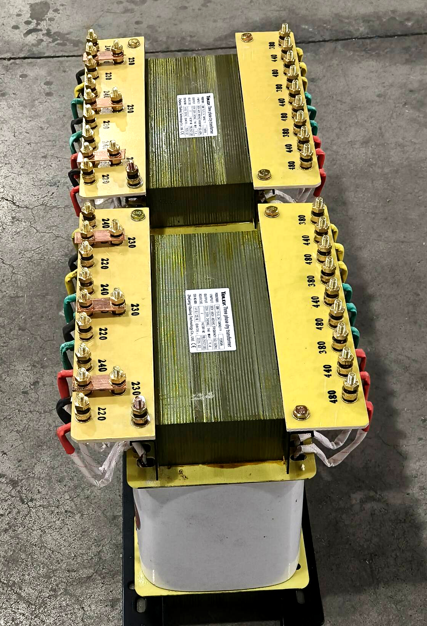
Open frame — For installation inside an existing electrical panel. Lowest cost.
Enclosed (IP20) — Standard indoor enclosure. Protects against accidental contact.
Enclosed (IP54) — Dust-tight and splash-proof. For industrial environments with dust or moisture.
Rack-mount — For 19-inch equipment racks. Common in audio and test systems.
Step 6 – Verify leakage current (for medical or patient-connected applications)
Medical-grade SBK transformers must meet IEC 60601-1 leakage current limits (typically <0.1mA for patient-accessible parts). Ask for a test report — do not rely on verbal claims.
Step 7 – Ask for test reports
A reputable supplier should provide:
Insulation resistance test
Dielectric withstand test
No-load loss measurement
Voltage regulation test
Leakage current measurement (for medical units)
Optional: Third-party type test report
Final Thoughts
The SBK high-precision transformer is not the cheapest transformer on the market. It is not the smallest or the lightest.
But when your equipment cannot tolerate "dirty" power — when a glitch means a scrapped part, a lost sample, or a repeat MRI — the SBK pays for itself quickly.
It does not have a touchscreen. It does not connect to Wi-Fi. It does not produce fancy graphs.
It just works. Quietly, reliably, year after year.
In an era where electrical noise is everywhere — VFDs, LED lighting, switching power supplies, wireless chargers — clean power is increasingly rare. The SBK transformer is the tool that gives it back to you.
If you operate precision manufacturing, medical imaging, laboratory testing, or professional audio, you already know the value of clean power. If you are still troubleshooting mysterious equipment problems, the SBK might be the answer you have not tried yet.
Clean power is not a luxury. For sensitive equipment, it is a requirement.
Related News
- What ZSG Three-Phase Dry-Type Rectifier Transformer work?
- Which one is good S13 Oil-Immersed Distribution Transformer?
- How to choose JBK5 Machine Tool Control Transformer?
- How BK Machine Tool Transformer 220V works?
- Which one is good SBK Three-Phase Dry-Type Transformer?
- How to choose SBW Intelligent Servo Voltage Stabilizer?
Leave me a message