
What Is a DDG Heating Transformer and Why Is It Important?
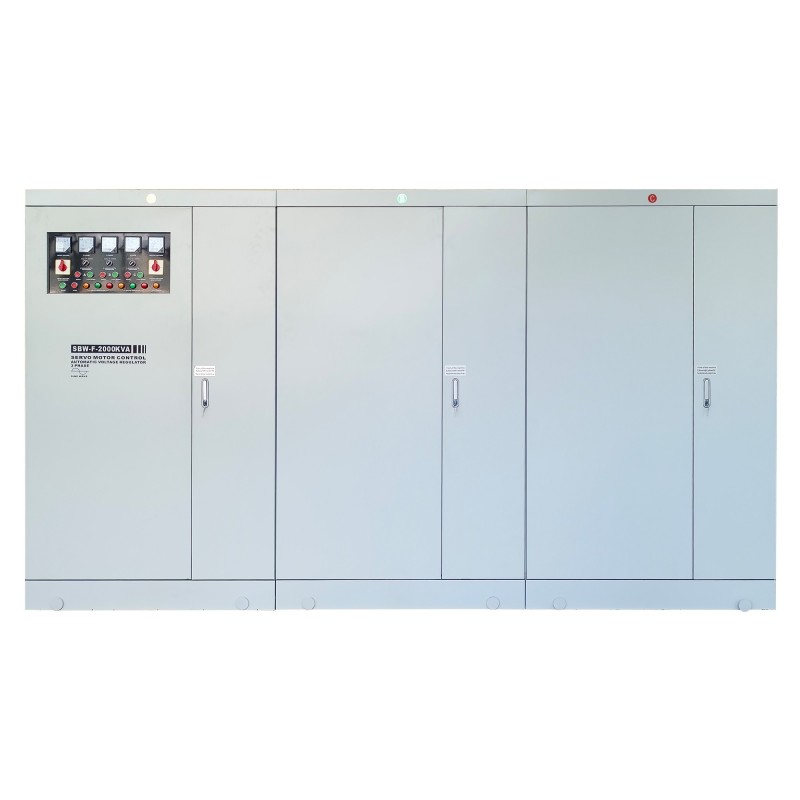
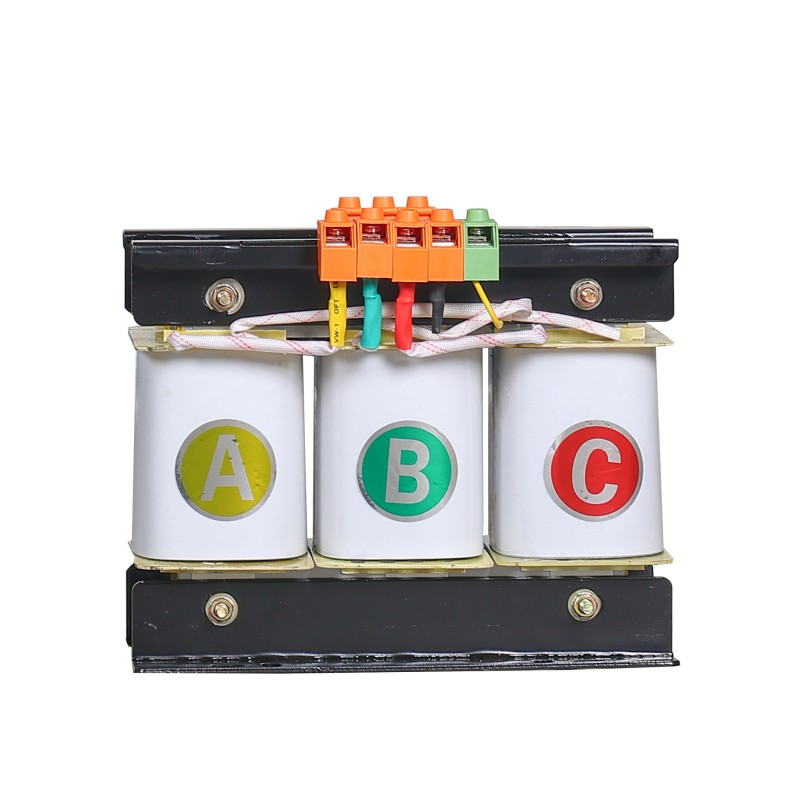
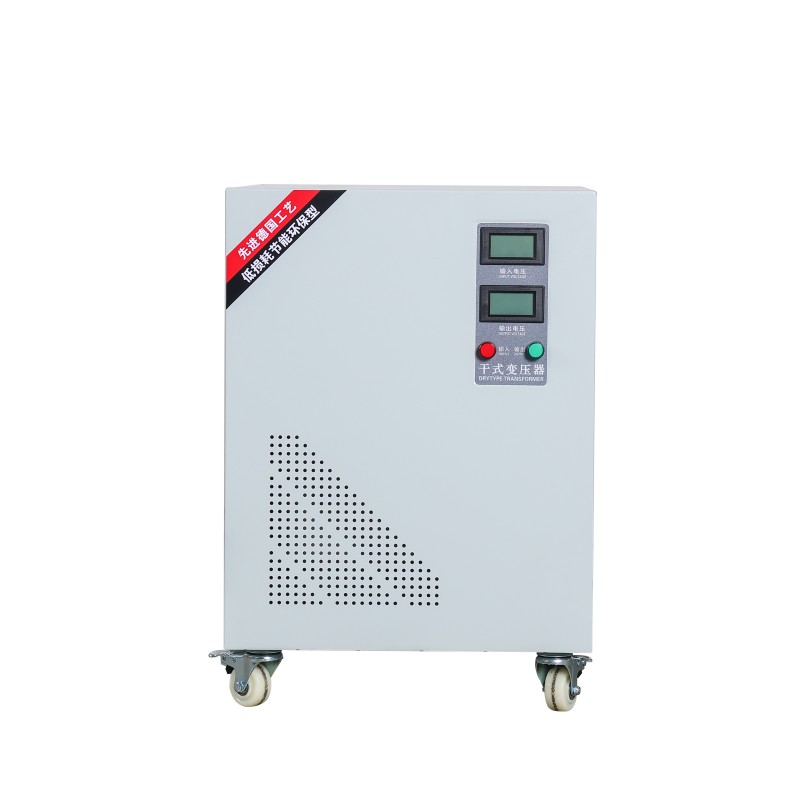
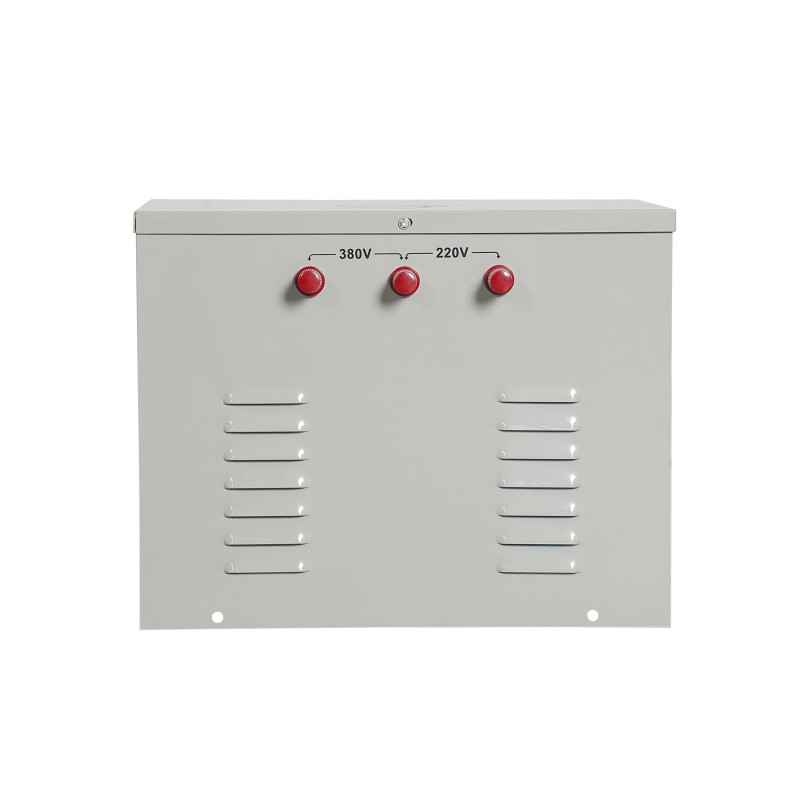
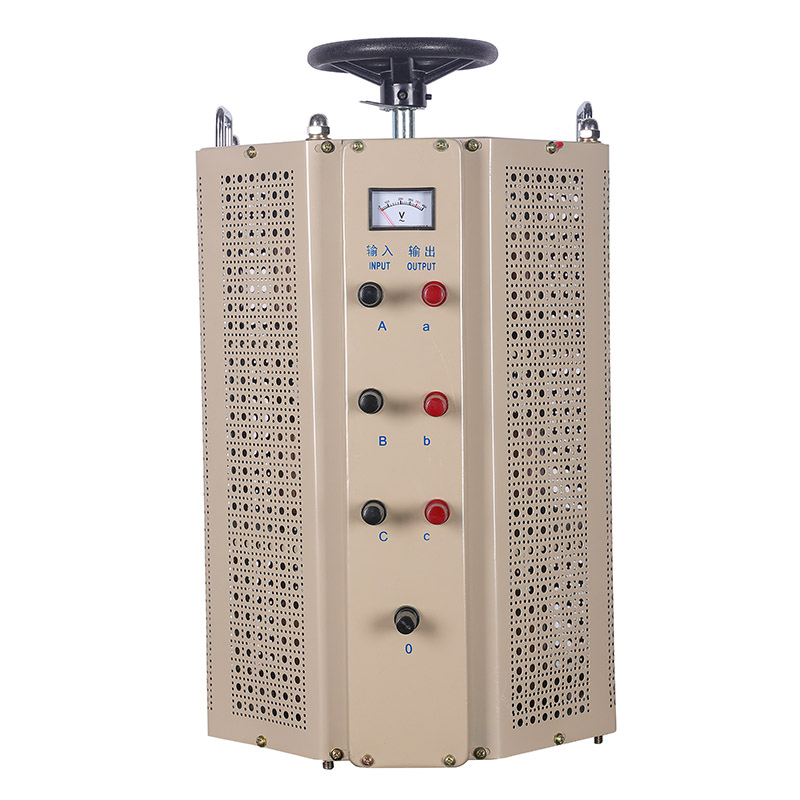
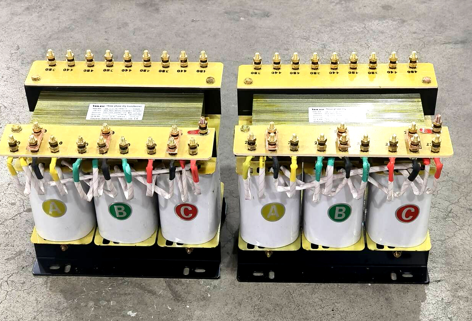
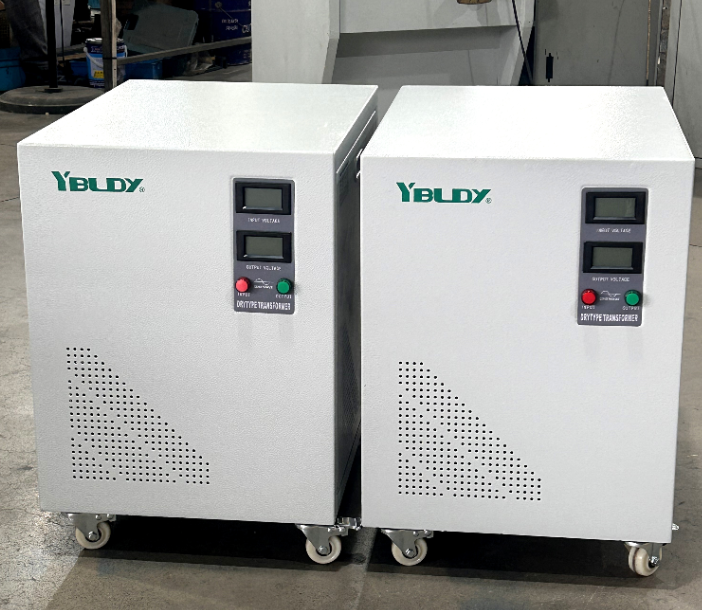
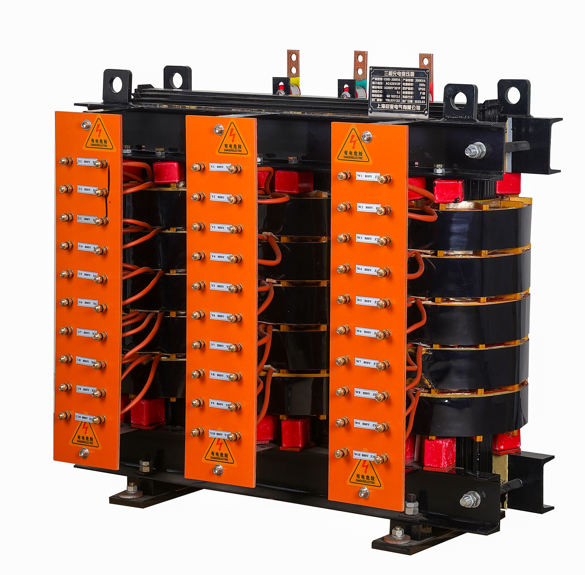
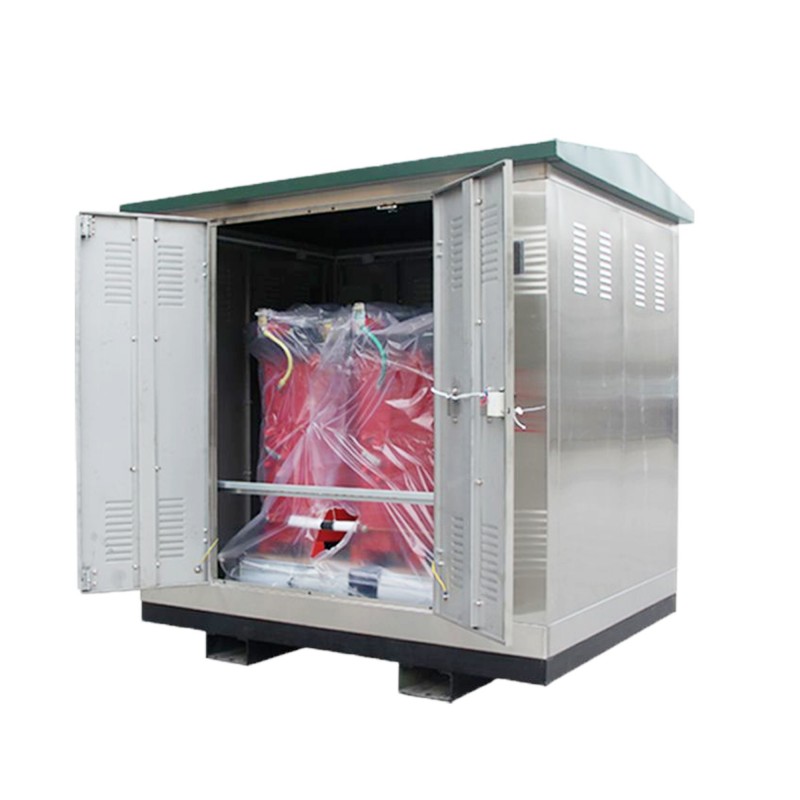
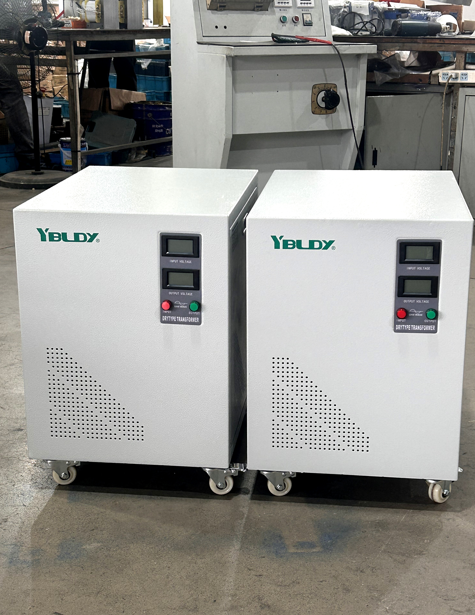
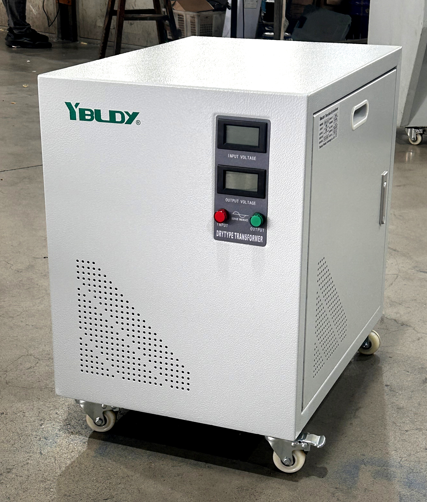
A DDG heating transformer is a specialized low-voltage, high-current dry type transformer designed for industrial heating applications.
Unlike standard power transformers that step voltage up or down for general equipment, the DDG transformer does something different: it takes ordinary line voltage (typically 380V or 220V) and converts it into very low voltage — often just a few tens of volts — while delivering enormous current, sometimes thousands of amperes.
Why does that matter?
Because many industrial heating processes — melting, annealing, forging, quartz tube heating, resistance heating — require low voltage and high current to generate heat efficiently and safely.
A standard power supply cannot produce that kind of output. The DDG transformer is the dedicated tool for this job.
In short: it turns electricity into concentrated heat, exactly where and how you need it.
How a DDG Heating Transformer Works
The working principle is the same as any transformer — electromagnetic induction — but the design priorities are different.
Step 1 – Input
The primary winding connects to a standard AC supply, usually 380V or 220V at 50/60Hz.
Step 2 – Step down
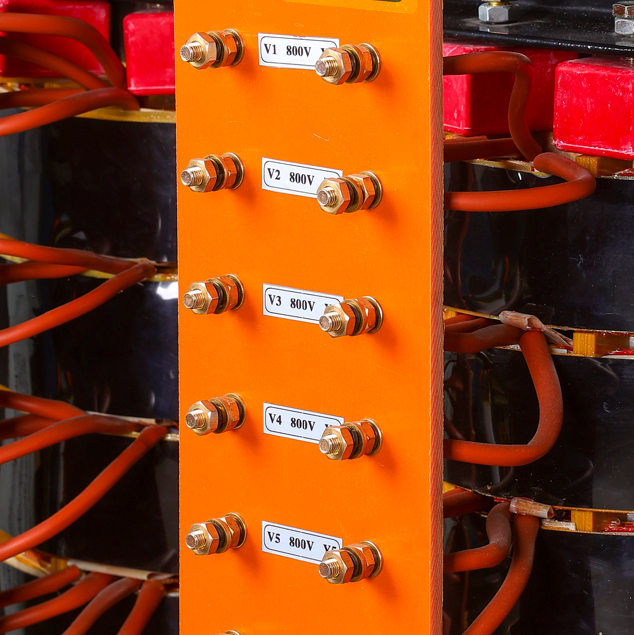
The secondary winding has far fewer turns than the primary. This dramatically reduces the output voltage — often to 10V, 20V, 40V, or 60V — while proportionally increasing the current.
Step 3 – High current output
Because power is conserved (ignoring losses), a 10:1 step down in voltage produces a 10:1 increase in available current. A 40V secondary can deliver hundreds or thousands of amperes.
Step 4 – Connected to heating elements
The low voltage, high current output connects directly to heating elements — graphite rods, molybdenum electrodes, resistance wires, or quartz tubes. The high current causes the elements to heat up rapidly and intensely.
Step 5 – Controlled by a power regulator
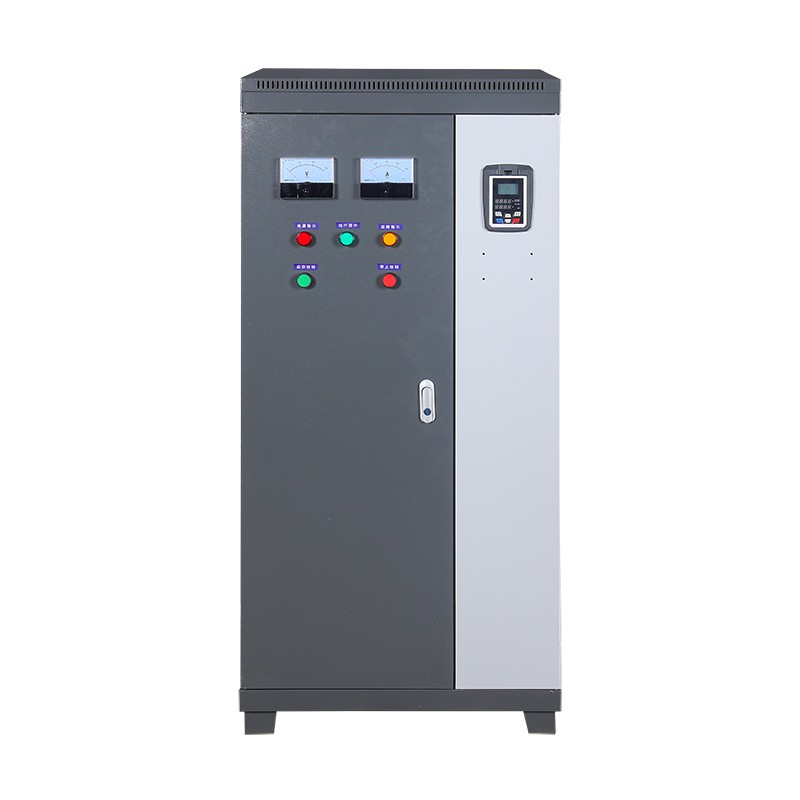
In most installations, the DDG transformer is paired with a thyristor power regulator (SCR). The regulator adjusts the transformer's input power, allowing precise control of the output current and therefore the heating temperature.
The result: clean, controllable, high intensity heat for industrial processes.
Common Types of DDG Heating Transformers
DDG transformers are not one size fits-all. They are typically built for specific applications.
| Type | Typical Secondary Voltage | Typical Current | Common Application |
| Low voltage, high current | 10V – 40V | 500A – 5000A | Electric furnaces, crystal growing, graphite heaters |
| Medium voltage heating | 40V – 110V | 200A – 2000A | Annealing, forging, metal treatment |
| Quartz tube heater | 50V – 220V | 100A – 1000A | Quartz tube heating, diffusion furnaces |
| Electrode boiler / salt bath | 10V – 30V | 1000A – 10000A | Electrode boilers, salt bath furnaces |
| Custom / multi tap | User defined | User defined | Specialised R&D, laboratory heating, exotic materials |
Most units are built to order — not stocked off the shelf. Voltage, current, cooling method, and physical size are all matched to the customer's heating process.
Why DDG Heating Transformers Matter
Heavy industry cannot run without them. Here's why:
1. They produce concentrated heat safely
Low voltage means less risk of arcing, breakdown, or accidental shock in high temperature environments. The isolation between primary and secondary also protects upstream power systems.
2. They are designed for continuous heavy load
Industrial heating is not intermittent. Furnaces can run for days or weeks. DDG transformers are built with oversized copper windings, heavy duty cores, and robust cooling to handle that duty cycle.
3. They tolerate harmonics and distortion
Thyristor regulators — which control the transformer's output — generate harmonic currents. DDG transformers are designed to run hot and noisy without failing, unlike sensitive electronics.
4. They are field repairable
When something fails (and eventually, it will), the design is straightforward. Copper windings can be re wound. Terminals can be replaced. Cooling fans can be swapped. In heavy industry, repairability matters more than first cost.
5. They are highly efficient
A well designed DDG transformer operating near its rated load can achieve 95-98% efficiency. Losses go into the heating process anyway — but lower losses mean lower operating costs and less strain on upstream breakers and cables.
Without the DDG transformer, electric furnaces, crystal growers, and industrial heaters would be impractical, unsafe, or impossibly inefficient.
5. Choosing the Right DDG Heating Transformer
Selecting a heating transformer is not like picking a standard distribution unit. Get it wrong, and your furnace will not reach temperature — or will trip breakers constantly.
Step 1 – Define the heating load
What are you heating? Graphite? Metal? Quartz? Glass? Each material has different resistance characteristics as temperature changes. You need the transformer's secondary voltage to match the load's resistance at operating temperature — not at room temperature.
Step 2 – Calculate secondary voltage and current
Use Ohm's law and the target power (kW):
Power (kW) = Voltage × Current ÷ 1,000
Example: You need 100kW of heating power at the element.
If secondary voltage = 50V, then current = 100,000W ÷ 50V = 2,000A.
If secondary voltage = 20V, then current = 100,000W ÷ 20V = 5,000A.
Lower voltage = higher current = thicker cables, heavier busbars, and more attention to connection resistance.
Step 3 – Select cooling method
| Cooling | Description | Best For |
| AN (Natural air) | No fans. Simple, quiet, but large and heavy. | Small units, intermittent duty |
| AF (Forced air) | Fans blow air through the windings. Compact. | Most industrial units up to ~500kVA |
| Water cooled | Copper tubes carry water inside the windings. Very compact, very efficient. | Very high current (>5000A), confined spaces |
Step 4 – Check primary voltage
Standard: 380V, 400V, 415V, 460V. Some units are built for 220V single phase, but three phase is far more common for heating.
Step 5 – Specify regulation and control
Most DDG transformers are paired with a thyristor power regulator (SCR stack) that sits on the primary side. The regulator adjusts voltage to control temperature.
Decide:
Open loop (manual adjustment) or closed loop (thermocouple feedback + PID)?
Analog control (0-10V, 4-20mA) or digital (Modbus, Profibus)?
Do you need a local display of current, voltage, and power?
Step 6 – Confirm physical constraints
Available floor space
Lifting points and weight
Cable entry direction (top, bottom, side)
Ambient temperature (hot environment means derating or larger cooling)
Final Thoughts
The DDG heating transformer is not a "glamorous" piece of equipment. It does not communicate wirelessly, self diagnose, or produce fancy graphs.
But when a crystal growing furnace needs 4,000 amperes at 30 volts — day after day, week after week — nothing else will do the job.
It is a workhorse. Heavy, hot, and loud, but utterly reliable when built correctly.
If you are designing, upgrading, or maintaining an industrial heating system — a vacuum furnace, a crystal puller, a quartz heater, a salt bath, or a resistance annealing line — the DDG transformer is at the heart of it.
Get the transformer right, and everything downstream just works.
Related News
Leave me a message