
What Is a TNS Three-Phase Voltage Stabilizer?
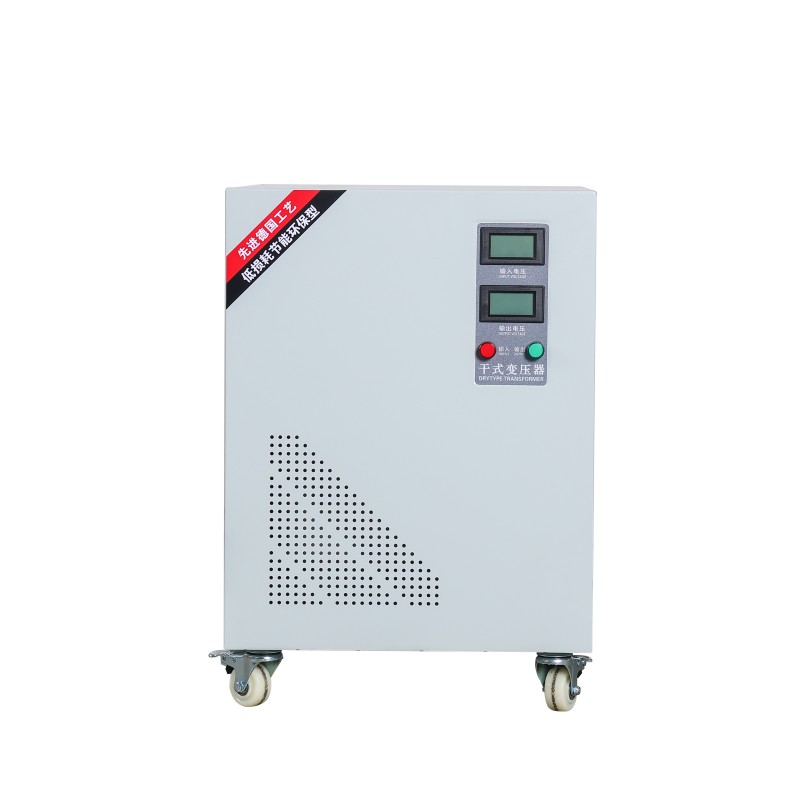
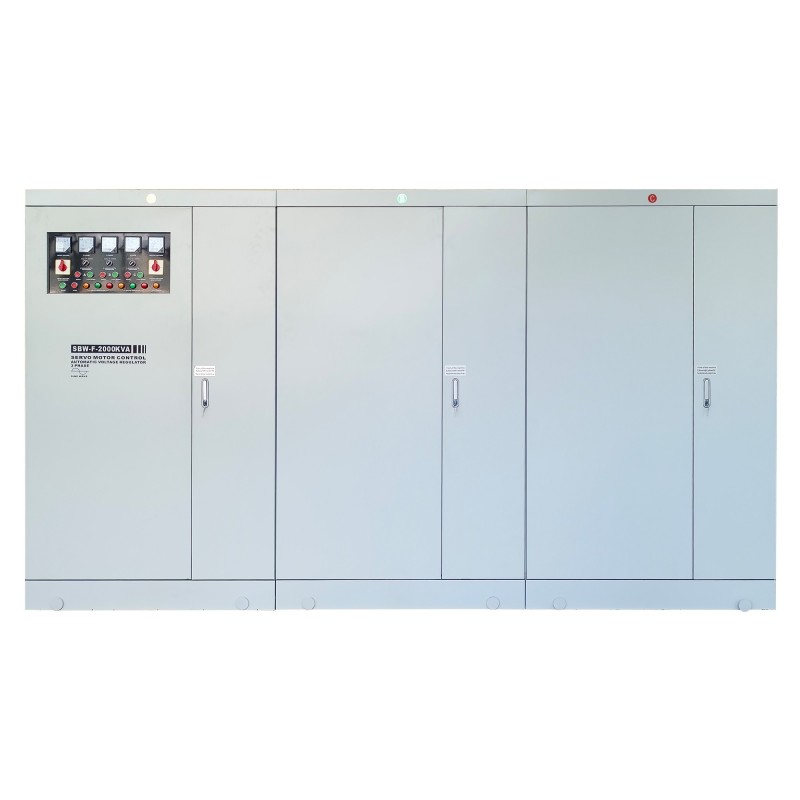
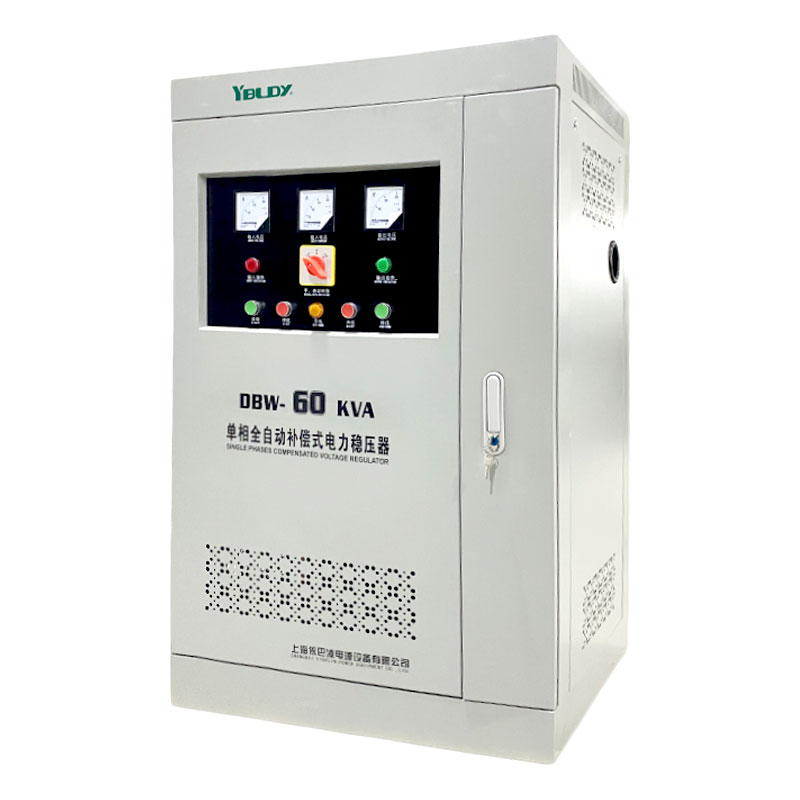
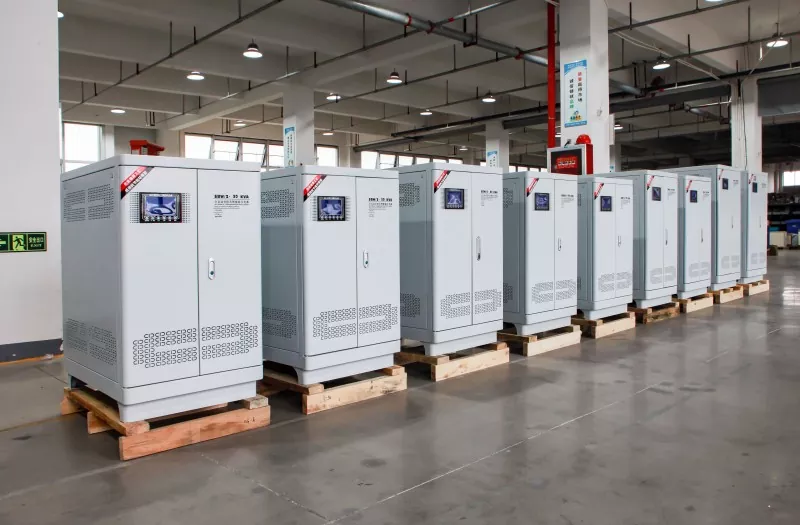
A TNS three phase voltage stabilizer is essentially a high precision automatic voltage regulator that keeps three phase power steady and balanced for industrial gear, commercial buildings, and critical systems.
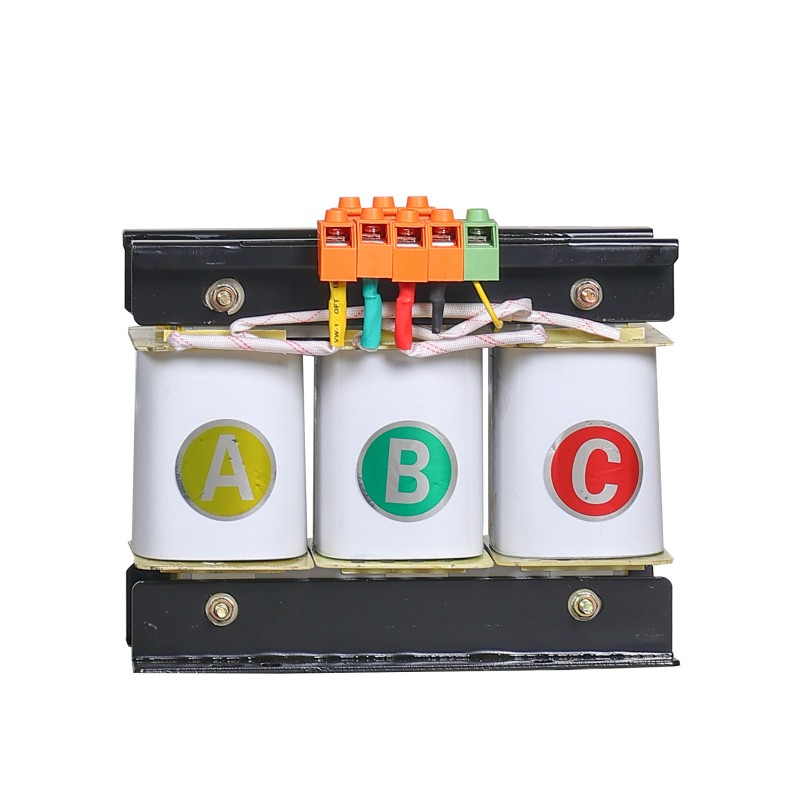
What sets it apart from single phase units is its design: it's essentially three independent single phase stabilizers wired together in a star (Y) configuration. Each phase gets its own regulation channel — so if one phase plays up, the others don't get dragged down with it. Each phase is regulated separately — meaning if one phase dips or surges, only that phase is corrected while the others remain stable.
Why does that matter?
Because three-phase equipment — CNC machines, industrial motors, medical imaging systems, data centres — depends on balanced voltage across all three phases. When one phase is low and another is high, motors run hotter, controllers behave erratically, and equipment lifetime shortens.
The TNS stabilizer sits between the utility supply and your equipment, continuously monitoring each phase and correcting voltage fluctuations before they can cause problems. It delivers clean, balanced, stable power — regardless of what the grid is doing.
In short: it keeps three-phase equipment running smoothly, efficiently, and reliably.
How a TNS Three-Phase Voltage Stabilizer Works
The TNS stabilizer works with a straightforward servo motor control system — nothing fancy, but proven to get the job done.
Here's how it actually works:
Step 1 – It watches the voltage
Sensors on each of the three phases constantly measure the incoming voltage. The moment anything drifts off the setpoint, the control circuit notices it instantly.
Step 2 – It figures out what to do
The control board processes that voltage reading, calculates the difference, and works out how much correction is needed. If the input fluctuates or the load changes, it immediately sends a command to the servo motor.
Step 3 – The servo moves
The servo motor turns and pushes a carbon brush along the winding of the auto-transformer. This changes the turns ratio — smoothly and continuously, no jerks or steps.
Step 4 – The voltage gets pulled back in line
If the input is low, the transformer adds voltage. If it's high, it subtracts. The output ends up right where it should be — usually within ±1% to ±3% of the target.
Step 5 – Continuous monitoring
The system operates in a closed loop — sensing, adjusting, and checking — continuously. Response time is typically under 1 second for a 10% input voltage change.
Step 6 – Independent phase regulation
Because the TNS is built from three separate single-phase units, each phase is regulated independently. This is critical for applications where phase imbalance is a problem.
The result: stable, balanced three-phase power delivered continuously, with no waveform distortion.
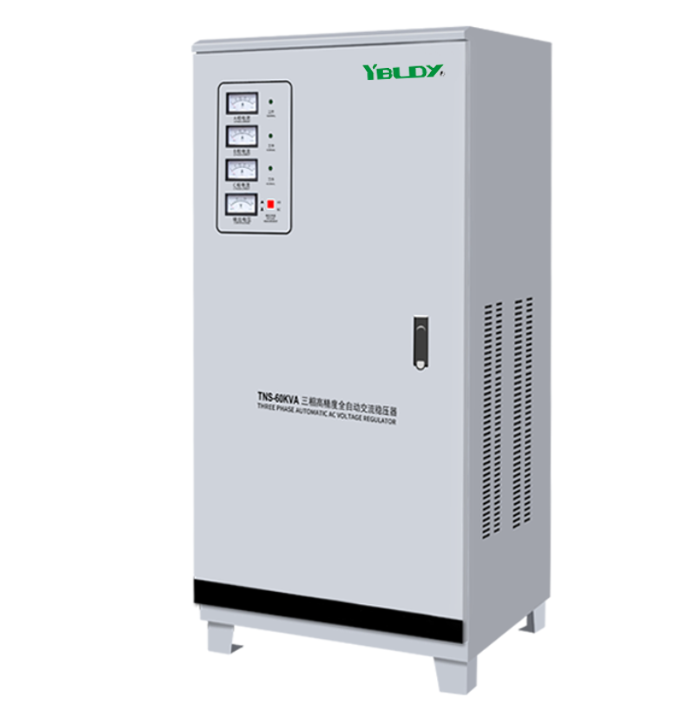
Common Types and Ratings of TNS Stabilizers
TNS stabilizers are available in a range of capacities to suit different applications.
Capacity range:
1.5kVA to 60kVA (standard), with larger capacities available on request.
Standard specifications:
| Parameter | Value |
| Input voltage | 304-456V (three-phase four-wire) |
| Output voltage | 380V ±1-3% (three-phase four-wire) |
| Frequency | 50Hz / 60Hz |
| Response time | ≤1 second (for 20% input change) |
| Efficiency | ≥90% |
| Insulation resistance | ≥5MΩ |
| Withstand voltage | 1500V / 1 minute |
| Audio noise | ≤60dB (at 1 metre) |
| Operating temperature | -5°C to +40°C |
| Waveform distortion | None (output waveform matches input) |
Standard features:
Three-phase four-wire input and output
Independent phase regulation
Over-voltage protection
Short-circuit protection
Phase loss protection
Manual bypass function (on some models)
Digital display showing input/output voltage and current
Why TNS Three-Phase Voltage Stabilizers Matter
Because unbalanced, unstable power costs you money.
Here is what a TNS stabilizer provides that ordinary power supplies cannot:
1. Independent phase regulation
The TNS is built from three separate single-phase stabilizer units, each regulating its own phase independently. If one phase dips, only that phase is corrected — the others stay stable. This prevents the "ripple effect" that causes motors to overheat and equipment to behave erratically.
2. Fast response
As soon as the voltage changes, the TNS reacts in under a second. By the time it's done adjusting, your equipment may not even have noticed that the voltage had a problem.
3. No waveform distortion
The TNS adjusts voltage but doesn't change the waveform. The output is exactly the same as the input — no extra stuff added. For sensitive equipment like medical imaging or lab instruments, that's a big deal.
4. Wide input voltage range
It works perfectly from 260V to 430V. Even if the grid is in bad shape, it holds steady and doesn't drop out of regulation.
5. High efficiency
Efficiency is over 90%, so less energy goes to waste. That means your electricity bill stays a little friendlier.
6. Comprehensive protection
Over voltage, under voltage, over current, short circuit, phase loss, overheating — it covers most of the common electrical faults you might run into.
7. Reliable construction, long life
It uses pure copper windings, reliable servo motors, and durable carbon brushes. It's not built to last just a couple of years — it's designed for continuous, long term operation.
8. Versatile application
The TNS can supply three-phase 380V within its rated capacity.
Choosing the Right TNS Stabilizer
Selecting a TNS stabilizer requires attention to capacity, voltage, and application.
Step 1 — Determine your load
Add up the power consumption of all equipment that will be connected. Include startup (inrush) currents for motors and compressors. Apply a safety margin — typically 20-30% for future expansion.
TNS standard ratings: 1.5kVA, 3kVA, 5kVA, 10kVA, 15kVA, 20kVA, 30kVA, 40kVA, 50kVA, 60kVA.Step 2 — Check your grid conditions
| Condition | Requirement |
| Input voltage | 304V – 456V (three-phase four-wire) |
| Frequency | 50Hz or 60Hz |
| Phase | Three-phase four-wire — neutral connection is required |
Step 3 — Specify output requirements
Output voltage — typically 380V (three-phase four-wire)
Regulation accuracy — standard ±3%; high-precision models available
Step 4 — Consider the installation environment
| Condition | Requirement |
| Ambient temperature | -5°C to +40°C |
| Humidity | Standard indoor conditions |
| Installation | Indoor, well-ventilated area |
Step 5 — Check features
Digital display — for real time voltage and current monitoring
Bypass function — for maintenance without interrupting supply
Communication — RS485/Modbus for remote monitoring (available on some models)
Step 6 — Verify protection features
Confirm the unit includes:
Over-voltage protection
Short-circuit protection
Phase loss protection
Over-temperature protection
Application Scenarios
The TNS series is widely used across multiple industries:
| Industry | Typical Applications |
| Manufacturing | CNC machines, machining centres, industrial robots, production line controls |
| Medical | MRI equipment, CT scanners, X-ray machines, laboratory instruments |
| Data centres | Server power supplies, communication systems |
| Commercial | Air conditioning systems, lighting, elevators |
| Test & measurement | Voltage testing instruments, calibration equipment |
| Security | Safety alarm systems, surveillance equipment |
Real-world example: A semiconductor factory operating 24/7 with unattended equipment installed TNS stabilizers and achieved 99.8% production continuity with no voltage-related downtime.
Final Thoughts
The TNS three-phase voltage stabilizer is not the flashiest piece of equipment in an industrial plant. It does not have a touchscreen or a wireless connection.
But it does one thing very well: it delivers stable, balanced three-phase power — quietly, efficiently, and reliably.
In an age where production lines are increasingly automated and equipment increasingly sensitive to power quality, the TNS stabilizer is the quiet foundation that keeps everything running.
Stable power is not a luxury. For three-phase equipment, it is a requirement.
Related News
- What ZSG Three-Phase Dry-Type Rectifier Transformer work?
- Which one is good S13 Oil-Immersed Distribution Transformer?
- How to choose JBK5 Machine Tool Control Transformer?
- How BK Machine Tool Transformer 220V works?
- Which one is good SBK Three-Phase Dry-Type Transformer?
- How to choose SBW Intelligent Servo Voltage Stabilizer?
Leave me a message