
What Is an SBW Servo Voltage Stabilizer and Why Is It Important?
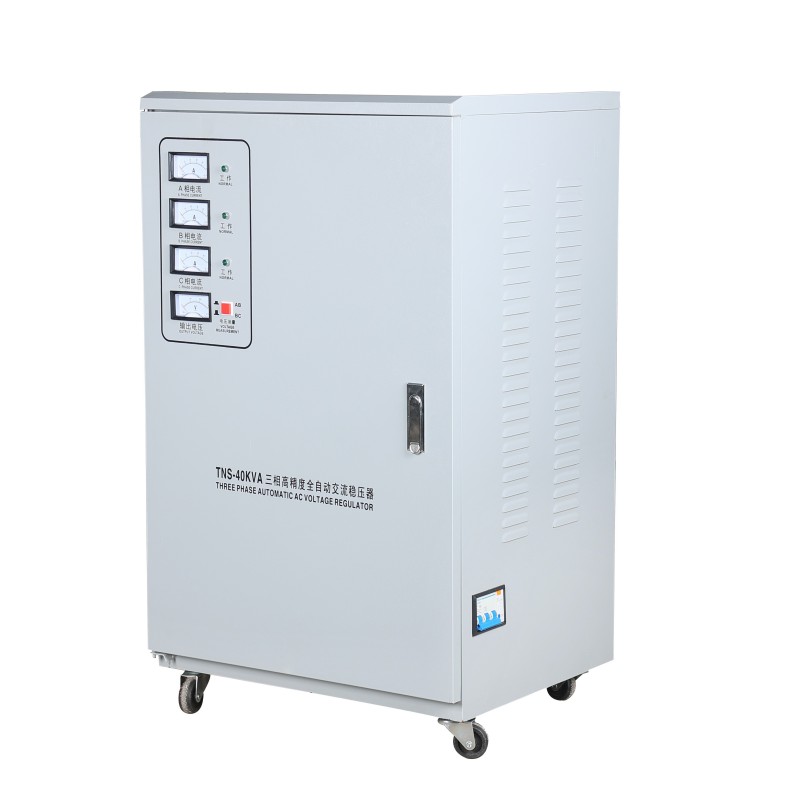
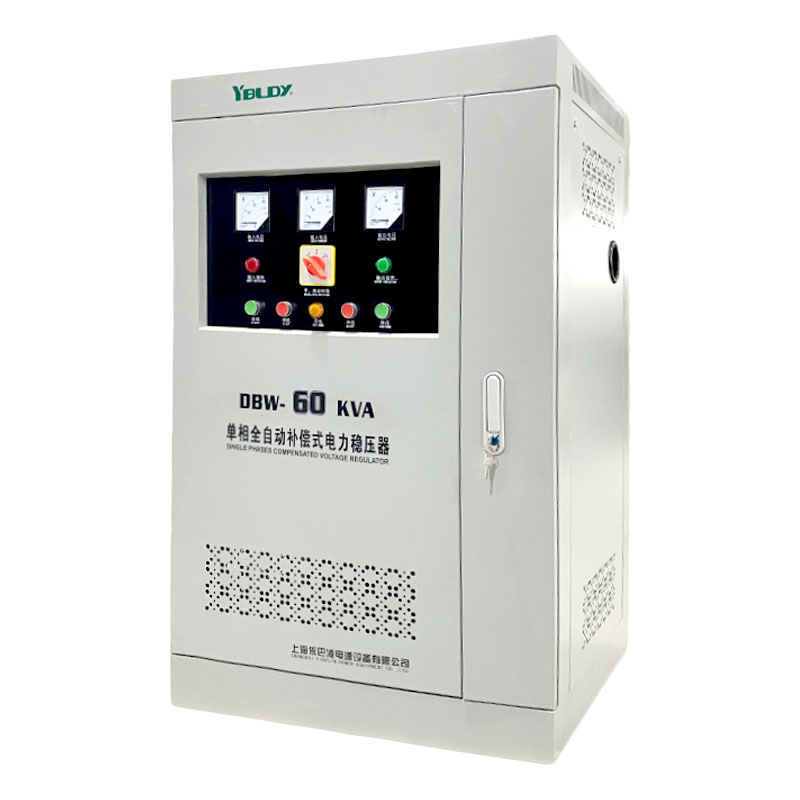
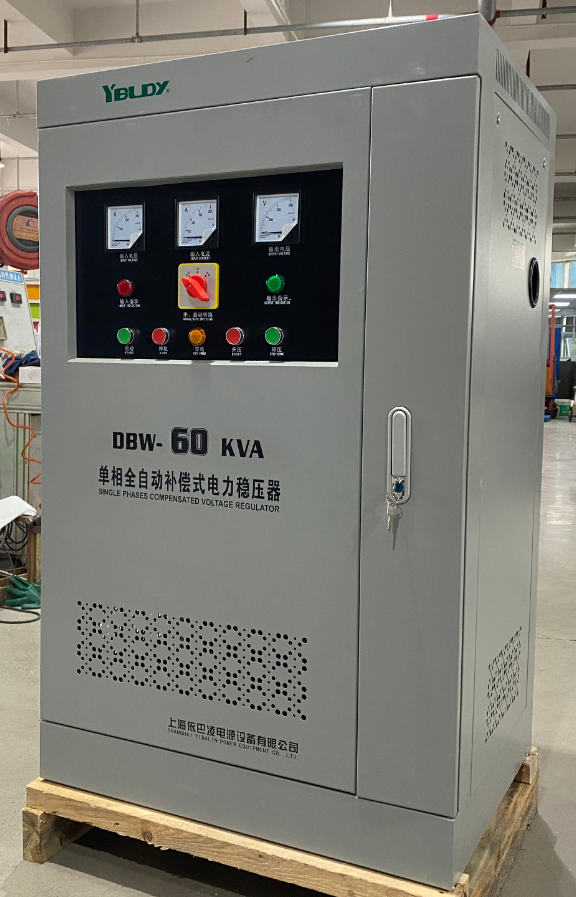
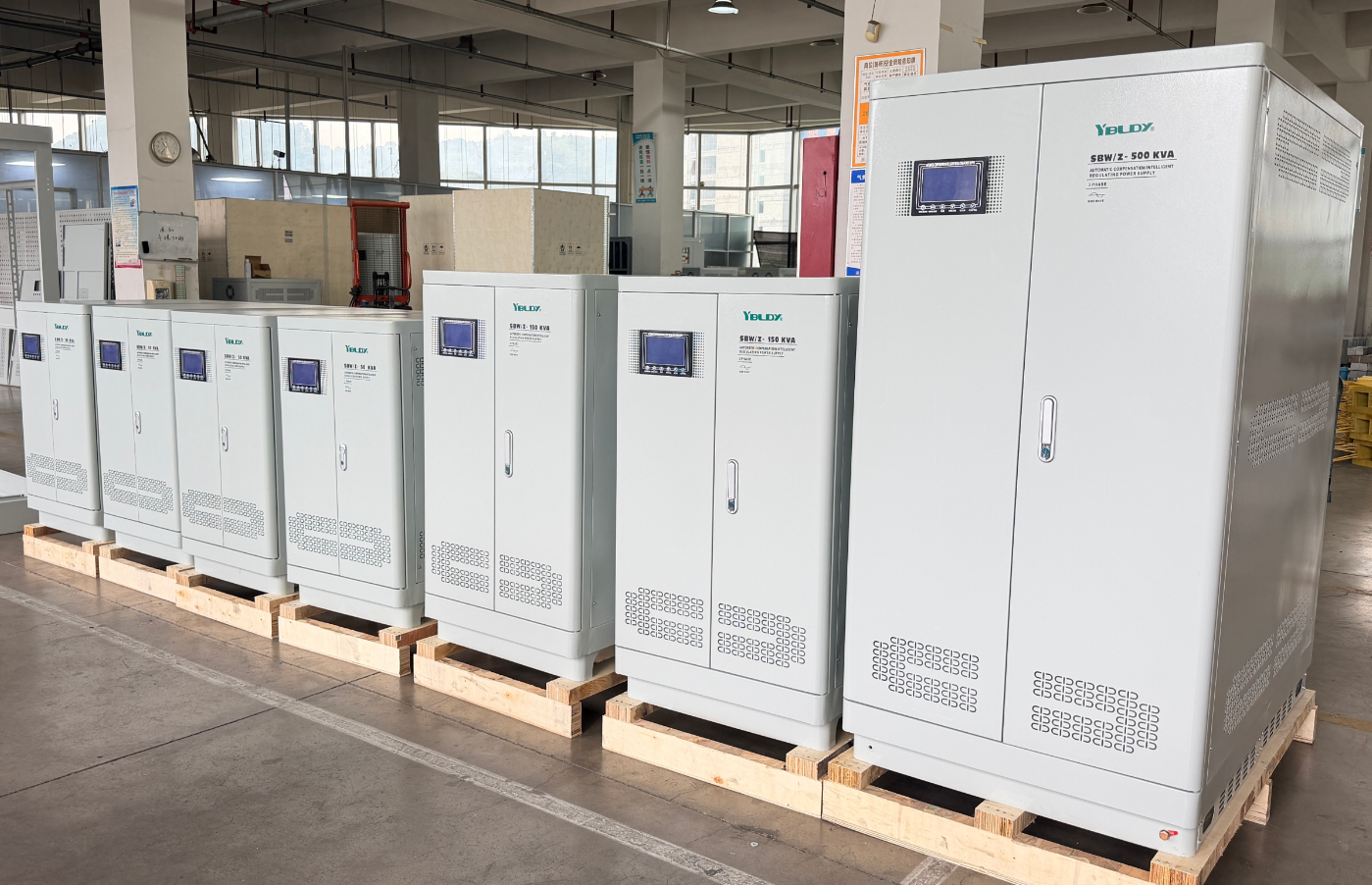
An SBW servo voltage stabilizer is a three phase automatic voltage regulator built for industrial and commercial applications where voltage stability really matters.
It’s not just a surge protector or a simple power conditioner. The SBW is a closed loop electromechanical system that watches the voltage constantly and corrects it on the fly. It makes sure sensitive equipment gets stable, regulated power — no matter what the grid is doing.
Why does that matter?
Because in modern industrial settings, voltage problems are not just an inconvenience. A voltage sag that lasts 50 milliseconds can shut down a CNC machine, corrupt data in a server, or cause a production line to stop. In high-value industries like semiconductor manufacturing, a single voltage event can destroy thousands of dollars worth of product.
The SBW stabilizer sits between the utility supply and the critical load, absorbing voltage dips, surges, and imbalances before they can affect equipment. It provides clean, stable power on demand — not just for standard operation, but to protect expensive machinery from the hidden costs of power quality issues.
How an SBW Servo Voltage Stabilizer Works
The SBW operates on the compensation principle — a servo-driven voltage correction system that works continuously without interruption.
Step 1 – Voltage sensing
A high-precision sampling circuit continuously monitors the input and output voltages. When the input voltage fluctuates (due to grid instability or load changes), the control system detects the deviation instantly.
Step 2 – Servo motor response
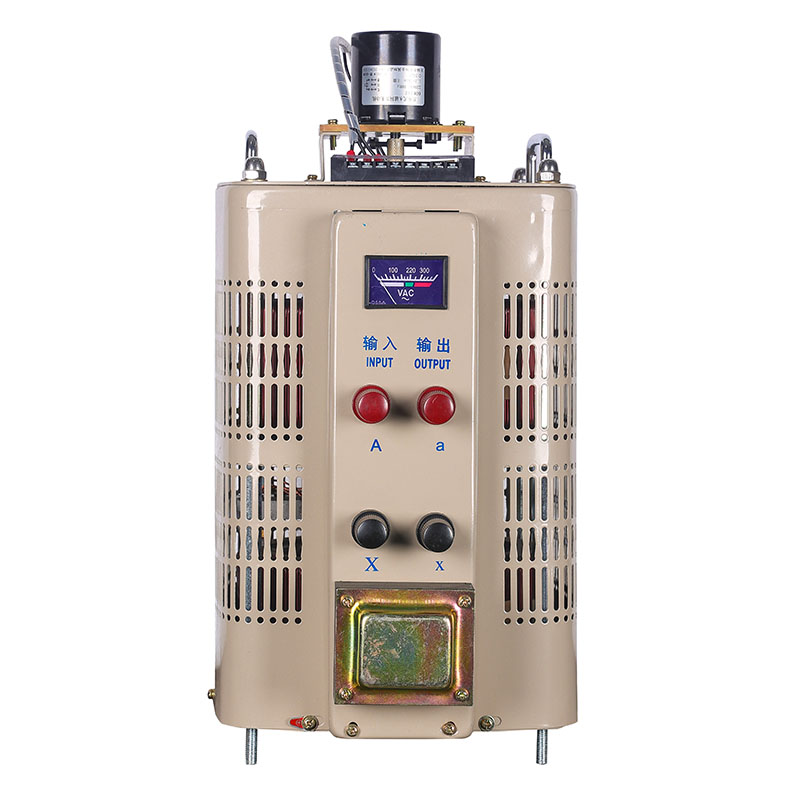
The control circuit compares the measured voltage against a stable internal reference. When the output voltage rises or falls beyond the preset threshold, a solid-state control circuit energizes the servo motor. The motor drives a brush mechanism along a continuously variable autotransformer — the "brain" directing precise mechanical action.
Step 3 – Voltage correction
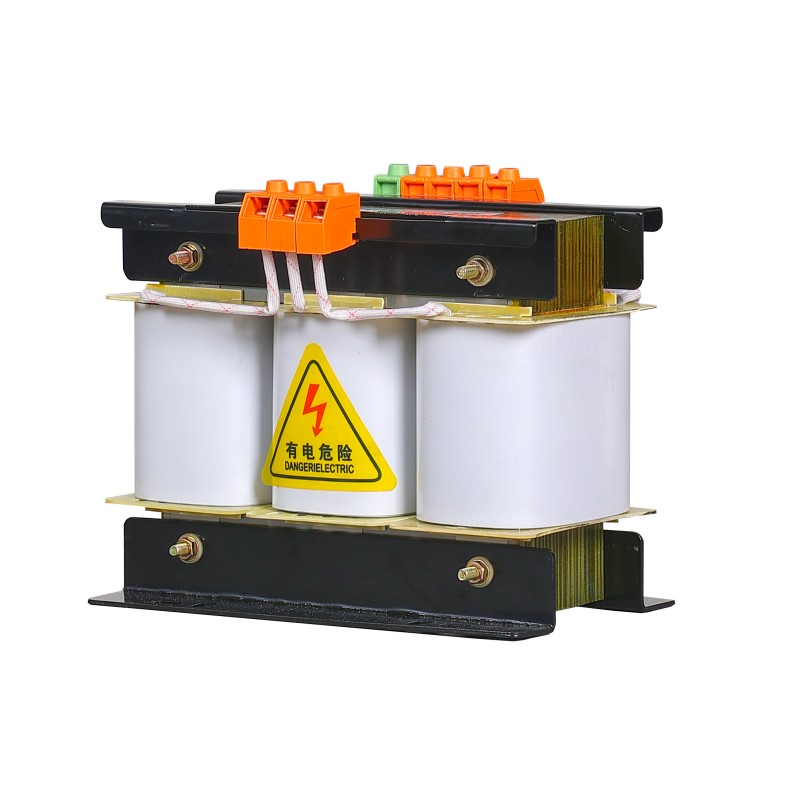
The moving carbon brush adjusts the voltage being fed to the primary of a series-connected buck-boost transformer. This compensation transformer either adds voltage (when input is low) or subtracts voltage (when input is high). The effect is smooth, seamless correction without any interruption to the load.
Step 4 – Continuous closed-loop operation
The system is fully automatic — sampling, comparing, and adjusting in a continuous loop. Correction speed is typically under 1 second for a 10% input voltage change, ensuring the output stays stable even when the grid fluctuates dramatically.
The result: stable, regulated power delivered continuously, without waveform distortion or interruption.
Common Types of SBW Stabilizers
SBW stabilizers come in several configurations to match different load requirements.
| Type | Typical Rating | Key Features | Best For |
| Standard SBW series | 10kVA – 1600kVA | Three-phase, ±3% regulation, manual/auto bypass, comprehensive protection | Industrial facilities, manufacturing plants, commercial buildings |
| Low-voltage models | Custom ratings | Extended input range for weak grids | Rural applications, areas with chronic undervoltage |
| High-precision models | 30kVA – 600kVA | ±1% regulation, faster response, independent phase regulation | Data centers, precision manufacturing, semiconductor, medical imaging |
| Custom/industrial models | 30kVA – 5000kVA | Customized voltage ranges, special enclosures, wide input tolerance | Heavy industry, mining, oil and gas, custom OEM applications |
The standard SBW series — with capacities from 10kVA to 1600kVA, 304-456V input range, and 380V ±3% output — is the most widely used configuration in industrial applications.
Why SBW Servo Voltage Stabilizers Matter
Because "good enough" power is not good enough for modern industry.
Here is what makes the SBW servo stabilizer a critical component for power-sensitive operations:
1. Large capacity, high efficiency
SBW stabilizers deliver over 95% efficiency even at full load. They are designed for industrial-scale loads — from 10kVA to over 1600kVA — making them suitable for entire factories, production lines, and facility-wide protection.
2. Zero waveform distortion
Unlike electronic regulators that can introduce harmonics, the SBW produces an output waveform identical to the input — no additional distortion. This is essential for sensitive equipment where power quality directly affects performance.
3. Wide input voltage range
Standard SBW models operate from 304V to 456V (380V ±20%), with ultra-low voltage versions available for weak-grid environments. They can handle the worst grid conditions without losing regulation.
4. Comprehensive protection
SBW stabilizers include built-in protection against:
Overvoltage and undervoltage
Overcurrent and short circuits
Phase loss and reverse phase sequence
Over-temperature and mechanical faults
5. Three-phase independent regulation
Many advanced models sample and regulate each phase individually — solving phase imbalance problems that plague three-phase industrial loads.
6. Durable construction
SBW stabilizers are built with heavy-duty components: cold-rolled grain-oriented silicon steel cores, pure copper windings, vacuum impregnation (Class F insulation), and robust mechanical enclosures . They are designed for continuous, round-the-clock operation.
7. Low maintenance
With no complex electronic switching circuits to fail, the servo-based SBW design is field-repairable and reliable over many years.
Without an SBW stabilizer, expensive equipment is at the mercy of grid instability. With one, production runs continuously, sensitive devices stay safe, and unexpected downtime becomes rare.
Choosing the Right SBW Servo Voltage Stabilizer
Selecting the right SBW stabilizer requires attention to capacity, environment, and load characteristics.
Step 1 – Determine your load capacity
Add up the power consumption of all equipment that will be connected to the stabilizer. Include startup (inrush) currents for motors and compressors.
SBW standard sizes: 10, 15, 20, 30, 50, 100, 150, 180, 200, 225, 250, 300, 320, 350, 400, 450, 500, 600, 800, 1000, 1200, 1600 kVA.
Step 2 – Check your grid conditions
| Condition | Requirement |
| Input voltage range | Standard: 304-456V (380V ±20%). Low-voltage version available for rural or weak-grid areas |
| Frequency | 50Hz or 60Hz (most models are dual-rated) |
| Phase imbalance | Choose independent phase regulation if your site has chronic imbalance problems |
Step 3 – Specify output requirements
Output voltage — usually 380V (±3% typical, ±1% for high-precision models)
Regulation speed — under 1 second for a 10% voltage change
Step 4 – Consider the installation environment
Indoor vs. outdoor — standard SBW units are indoor-rated. Outdoor installations require weatherproof enclosures (IP54 or higher).
Ambient temperature — standard operating range is -10°C to 40°C. High-temperature environments may require derating or enhanced cooling.
Altitude — above 1000m, derate capacity to account for reduced cooling.
Step 5 – Evaluate protection and control needs
Do you need a manual bypass for maintenance? (Recommended for critical facilities.)
Do you need remote monitoring and communication (RS485/Modbus)?
Will the stabilizer be connected to a building management system?
Step 6 – Check protection features
Confirm the unit includes:
Overvoltage protection (typically trips at 425V ±7V)
Undervoltage protection (typically trips at 320V ±7V)
Overcurrent / short-circuit protection
Phase loss and phase sequence protection
Over-temperature alarm
Final Thoughts
The SBW servo voltage stabilizer is not the flashiest piece of equipment in an industrial plant. It does not have a touchscreen, a software update, or a wireless connection. But try running a factory without one, and you will notice immediately.
It sits in the power room, quietly doing its job year after year. It absorbs voltage dips that would otherwise shut down CNC machines. It smooths out surges that would destroy sensitive electronics. It balances phases that would otherwise cause motors to overheat and fail prematurely.
In an era where production lines are increasingly automated and equipment is increasingly sensitive to power quality, the SBW stabilizer is not optional — it is essential.Stable power is not a luxury. For modern industry, it is a requirement.
Related News
- What ZSG Three-Phase Dry-Type Rectifier Transformer work?
- Which one is good S13 Oil-Immersed Distribution Transformer?
- How to choose JBK5 Machine Tool Control Transformer?
- How BK Machine Tool Transformer 220V works?
- Which one is good SBK Three-Phase Dry-Type Transformer?
- How to choose SBW Intelligent Servo Voltage Stabilizer?
Leave me a message