
Why Use a JMB Lighting Control Transformer?
There are overlooked yet high-risk electricity usage scenarios in factory workshops, equipment maintenance tunnels, underground utility corridors, and underground mines: portable lighting.
Workers hold lamps while operating in humid, confined, metal-enclosed spaces. Lamp cords fray from dragging, connections loosen, and bulbs break—if powered by standard 220V mains electricity, the consequences could be catastrophic.
A JMB lighting control transformer is purpose-built to solve this problem.
What Is a JMB Lighting Control Transformer?
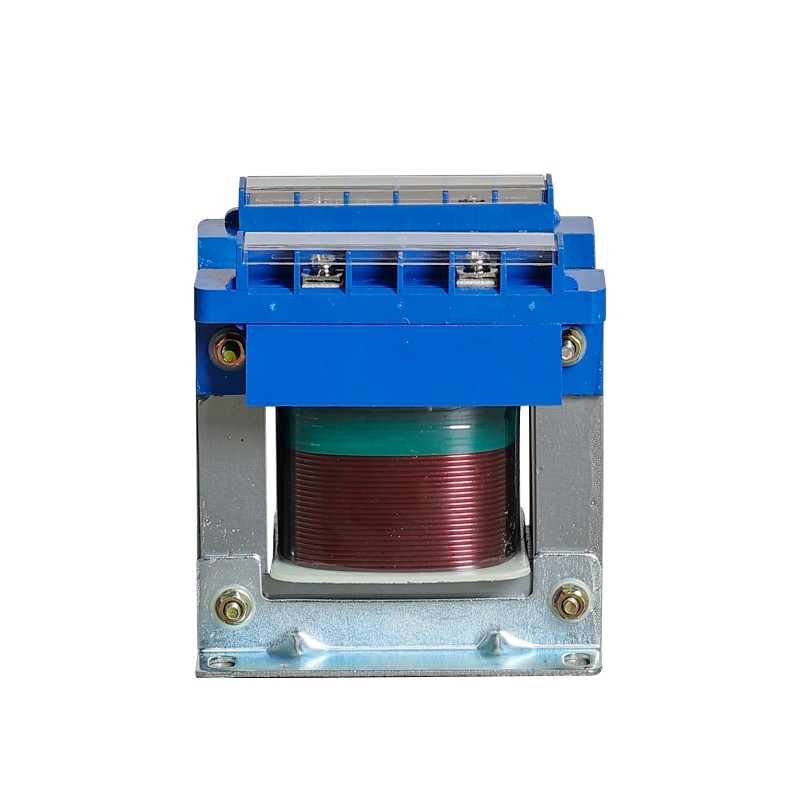
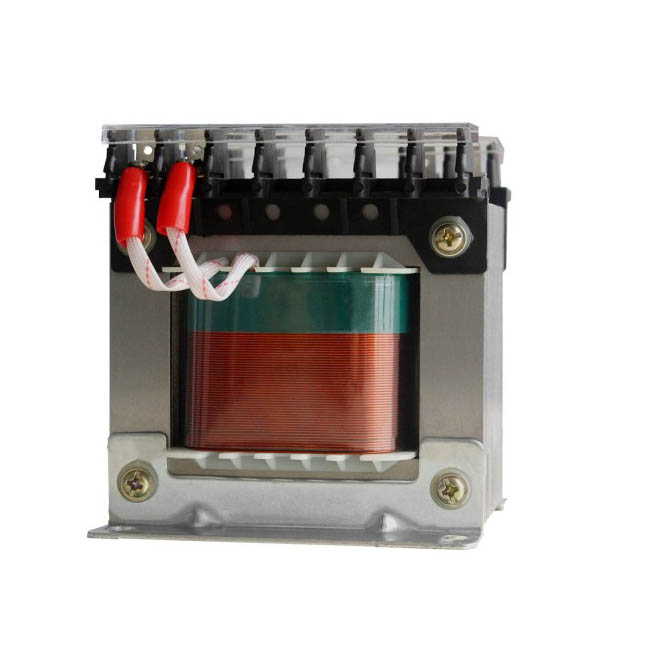
A JMB transformer is a single-phase isolated step-down transformer. Its core function is not just voltage conversion, but stepping down hazardous high voltage to safe low voltage.
Input: 220V or 380V mains electricity
Output: 12V, 24V, 36V—known as Safety Extra-Low Voltage (SELV)
Why are these voltages considered safe? At these levels, even if a person directly touches live components, the current flowing through the body is limited to a safe threshold, preventing fatal injury.
This is not just "safer"—it is intrinsically safe.
Where Is JMB Lighting Control Transformer Mandatory?
| Scenario | Why a JMB Transformer Is Mandatory |
| Equipment Maintenance & Repairs | Confined, metal-enclosed spaces such as machine interiors, behind distribution cabinets, and equipment cavities—standard voltage poses extreme danger |
| Humid Environments | Basements, pump rooms, tunnels, bathrooms, and outdoor rainy work sites—high humidity doubles electric shock risks |
| Portable Lighting | Portable lamps are dragged around, making cords prone to damage. Low-voltage lamps do not cause harm even if they leak electricity |
| Inside Metal Containers | Boilers, storage tanks, ship cabins—working inside a metal shell results in an immediate "ground short circuit" upon electric shock |
| Construction Sites & Temporary Work | Poor site conditions and non-standard wiring—safety voltage acts as the final line of defense |
| Comparison Item | Ordinary Control Transformer | JMB Lighting Transformer |
| Core Function | Voltage conversion | Voltage conversion + electrical isolation |
| Output Voltage | Multiple voltage options | Safety extra-low voltage (12/24/36V) |
| Isolation Level | Basic isolation | Reinforced insulation, complete primary-secondary isolation |
| Application Scenarios | Power supply for equipment control circuits | Portable lighting, safety lighting |
| Enclosure Protection | Basic (IP00/IP20) | Optional IP54 or higher, dustproof and rainproof |
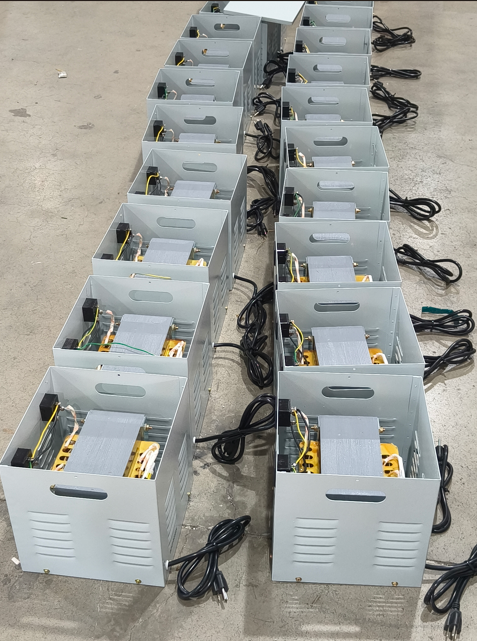
| Portability | Average | Lightweight, with a carrying handle, movable |
How Is It Different from Ordinary Transformers?
A JMB transformer is not just "any transformer that steps down voltage"—it is purpose-designed for the scenario of workers holding lamps for operation.
Technical Features: Simple but Robust
A JMB transformer is not high-tech, but its key components are uncompromising:
Pure Copper Windings: Excellent conductivity, low heat generation, and long service life.
Aluminum windings – They work, but for portable lighting, you want copper. Aluminum is less reliable when the lamp gets dragged around day after day.
High permeability silicon steel – Low no load loss means the transformer doesn't cook itself just sitting there idle.
Complete primary secondary isolation – This is a true isolation transformer, not an autotransformer. What happens on the primary side stays there. Even if the input side leaks, it doesn't reach the output.
Reinforced insulation – We leave good margin between layers and to ground. The hi pot test is stricter than the industry asks for. Because why cut corners?
Fully enclosed or metal enclosure – Keeps dust out and takes a bump now and then. For outdoor use, we go IP54 or higher. Rain? No problem.
It is built not just for "adequate performance," but with safety as the top priority.
Key Considerations for Selection
Capacity (VA)
Sum the power of all connected lamps, then add a 20–30% safety margin. Avoid tight calculations.
Output Voltage Selection
12V: Safest, but limited lamp brightness. Ideal for extremely humid or fully enclosed metal environments.
24V: Balances safety and brightness. Most commonly used.
36V: Higher brightness, still within safe voltage range. Suitable for general industrial maintenance.
Input Voltage
Confirm on-site voltage (220V or 380V) and connect terminals correctly.
Mobility vs. Fixed Installation
Portable use: Choose lightweight models with carrying handles.
Fixed installation: Select wall-mounted models.
Protection Rating
Indoor use: IP20/IP22.
Outdoor or humid environments: IP54 or higher.
Output Circuits
For multiple lamps, select multi-output models to eliminate the need for extension sockets.
A Real-World Case
At a large paper mill’s maintenance workshop, workers conduct quarterly cleaning and maintenance inside paper machines—spaces that are humid, confined, and entirely metal-structured.
Previously, 220V portable lamps were used. Frayed cords and loose connections caused several electric shock incidents, fortunately without fatalities.
Later, the entire factory switched to JMB-5KVA transformers with 36V LED portable lamps.As the maintenance supervisor put it:"Before, I was always anxious holding a lamp inside the equipment. Now with 36V, even if the lamp breaks or the cord snaps, we know we’re safe."
Previous :
Related News
- What ZSG Three-Phase Dry-Type Rectifier Transformer work?
- Which one is good S13 Oil-Immersed Distribution Transformer?
- How to choose JBK5 Machine Tool Control Transformer?
- How BK Machine Tool Transformer 220V works?
- Which one is good SBK Three-Phase Dry-Type Transformer?
- How to choose SBW Intelligent Servo Voltage Stabilizer?
Leave me a message