
How Does Electricity Travel from the Substation to the Factory? Why Is It Still the Oil-Immersed Transformer?
In the power system, there is a type of equipment that has existed for over a hundred years, with its principle remaining unchanged and its structure not being fancy, but it has been in use all along:
The oil-immersed transformer is not trendy, nor is it cool, but it can be found in every factory, every residential area, and every distribution line.
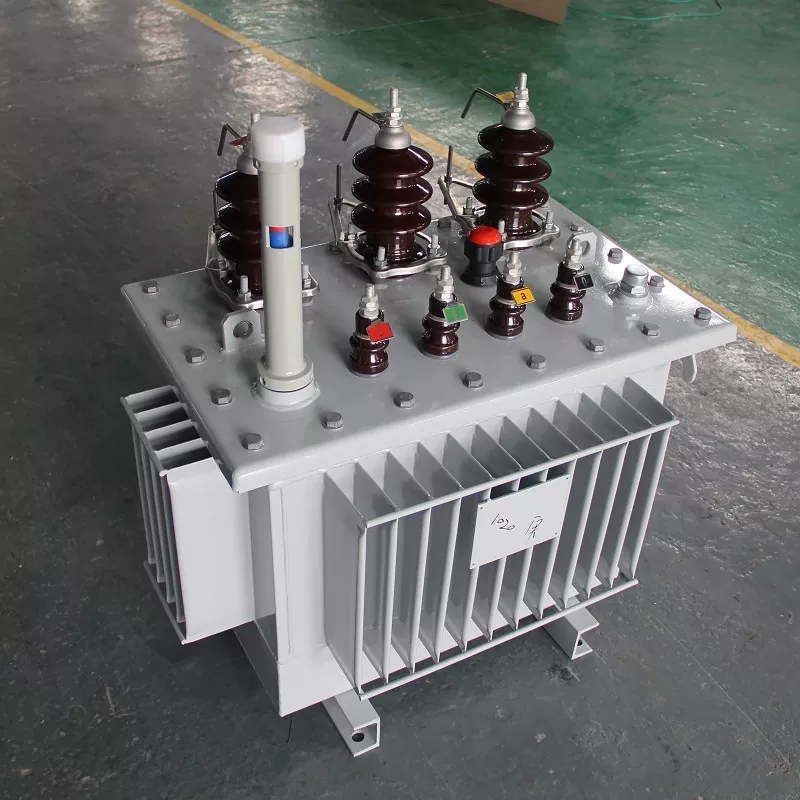
I. What exactly does the oil-immersed transformer do?
Simply put: It converts high voltage electricity into low voltage electricity, or vice versa.
The electricity coming from the power plant has a very high voltage (several tens of thousands of volts or even hundreds of thousands of volts), and it cannot be directly used for equipment. The oil-immersed transformer station reduces the voltage - to 380V for factories or 220V for homes.
In reverse scenarios, some situations require converting low voltage into high voltage (such as photovoltaic power stations and wind farms connecting to the grid), and it is also the oil-immersed transformer that does this.
The oil-immersed transformer does only one thing: voltage transformation.
It has been doing this for over a hundred years without changing its approach.
II. In the current era, why is "oil" still used?
Some people ask: Are dry-type transformers not safer? Why still use oil-immersed transformers?
The answer lies in three words: Can withstand.
|
Scene |
Advantages of Oil-immersed Transformers |
|
Outdoor, high load, long-term continuous operation |
Excellent oil heat dissipation, low temperature rise, strong overload capacity |
|
At the end of the power grid, with large voltage fluctuations |
Sturdy structure, resistant to impact, less prone to damage |
|
In large factories, mines, substations |
Can achieve very large capacity (up to several thousand kVA or even larger), lower cost |
|
In scenarios with significant power outage losses |
Long lifespan (20-30 years of normal use), high reliability |
The oil-immersed transformer is not "backward"; it is the most suitable solution in scenarios where reliability, capacity, and cost requirements are high.
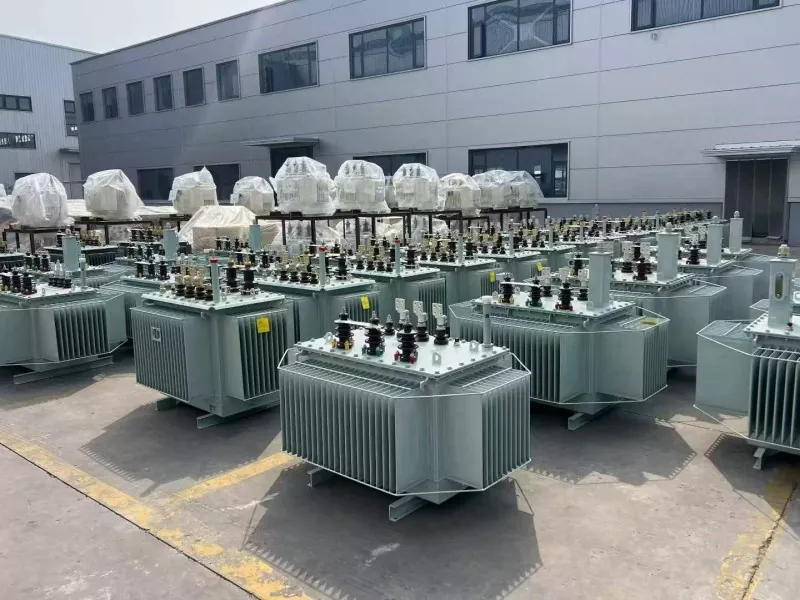
III. What exactly does the "oil" inside the oil-immersed transformer do?
It is not used for combustion; it is used for insulation and heat dissipation.
Insulation: Between the coil and the core, between the coil and the casing, between different voltage levels of the coil, it is separated by oil to prevent arcing and discharge.
Heat dissipation: When the coil heats up, the oil takes away the heat and transmits it to the oil tank wall and disperses it into the air.
This is why the oil-immersed transformer has a strong overload capacity - the oil's heat capacity is large, and during short-term overloading operation, the temperature rise is not as fast as that of dry-type transformers.
IV. Are oil-immersed transformers prone to failure?
On the contrary, the oil-immersed transformer is the most durable type of power equipment.
As long as it is not severely overloaded for a long time, not operated without oil for a long time, and not frequently subjected to lightning strikes or short-circuit impacts, a single oil-immersed transformer can have a design life of 20-30 years.
The common "problems" are actually just a few types:
Oil level drop (leakage or evaporation)
Oil deterioration (moisture or oxidation)
Capacitor, tap changer, insulation aging
Overload causing excessive temperature rise
All of these can be detected and dealt with in advance through regular inspections and oil tests.
V. The most frequently asked questions by customers when choosing an oil-immersed transformer
1. Copper or aluminum?
Copper has good conductivity, heat resistance, and a long lifespan, but it is expensive.
Aluminum is cheaper, but it has a larger volume for the same capacity and a slightly higher heat generation.
Choose which one depends on the budget and on-site requirements. But one thing to note: If it is a continuous high-load or export project, it is recommended to use copper.
2. Fully sealed or with an oil reservoir?
Fully sealed: Oil does not come into contact with air, aging is slow, and maintenance-free, suitable for outdoor use
With an oil reservoir: There is a breathing device, allowing observation of the oil level, suitable for scenarios requiring regular inspections
3. How to choose the loss grade (energy efficiency)?
S11, S13, S20... The larger the number, the lower the loss, but the price is higher.
Calculate whether the annual savings in electricity can cover the higher procurement cost - usually S13 can recover the difference in 2-3 years.
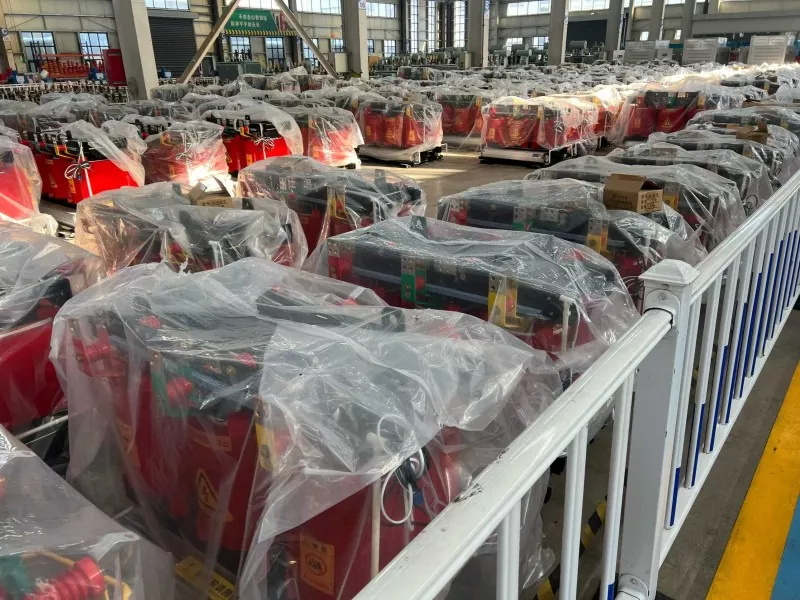
VI. Yibaling's oil-immersed transformers
We produce oil-immersed transformers not following any "black technology route", but by selecting good materials, controlling good processes, and conducting thorough tests.
Core: High magnetic permeability cold-rolled oriented silicon steel sheets, fully staggered seam stacking, low no-load loss
Winding: Pure copper (standard) or high-purity aluminum (as needed), strict interlayer insulation, strong anti-short-circuit capability
Insulating oil: High-quality transformer oil, fully tested for voltage withstand, moisture content, and dielectric loss before leaving the factory. Fuel tank: Wave-shaped sheet or sheet-type radiator, fully sealed welding, leak-proof, corrosion-proof, and dew-proof
Factory testing: Ratio variation, DC resistance, insulation resistance, no-load loss, load loss, power frequency withstand voltage... Each unit is tested, no sampling inspection. Applicable to:
Factory power distribution, community substation
Mining, chemical, paper, textile industries
Solar power boosting, wind power grid connection
Export support, foreign aid projects
Capacity: 30kVA - 3150kVA
Voltage: 10kV / 0.4kV as the main option, supporting non-standard customization
VII. Summary in one sentence
The oil-immersed transformer is not the most fashionable one, but it is definitely one of the most reliable power distribution equipment in "difficult battles" such as large capacity, high load, outdoor environment, and long-term operation.
Electricity is borrowed from the sky and it supports the ground.
If you have any selection requirements for oil-immersed transformers (capacity, voltage, energy efficiency grade, fully sealed or with oil storage tank, export certification), you can contact the Yibaling Power Technology Team at any time.
Related News
- What ZSG Three-Phase Dry-Type Rectifier Transformer work?
- Which one is good S13 Oil-Immersed Distribution Transformer?
- How to choose JBK5 Machine Tool Control Transformer?
- How BK Machine Tool Transformer 220V works?
- Which one is good SBK Three-Phase Dry-Type Transformer?
- How to choose SBW Intelligent Servo Voltage Stabilizer?
Leave me a message