
Not All Transformers Are "Cube-Shaped"?
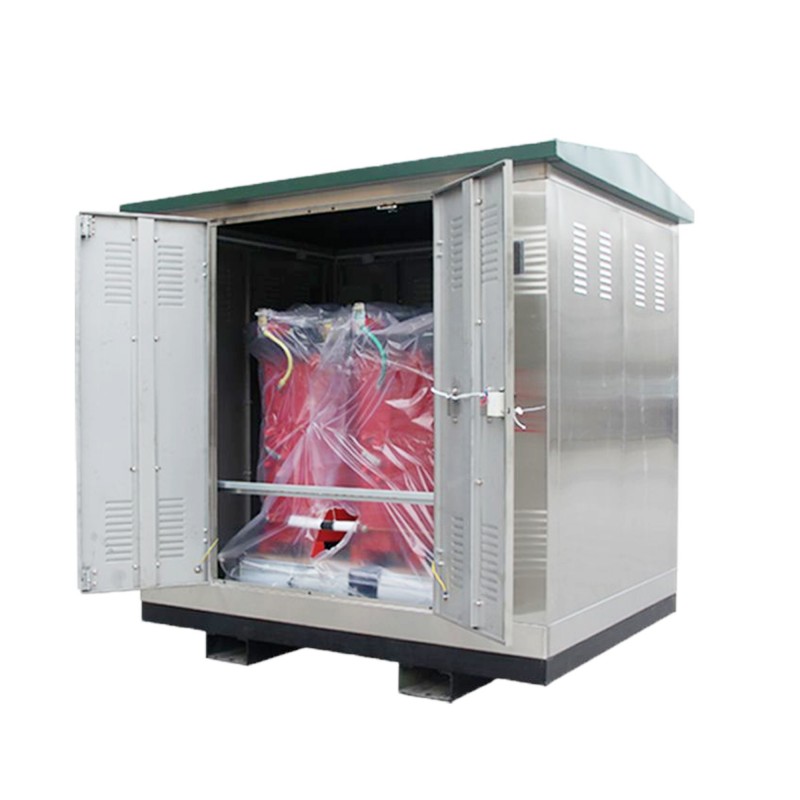
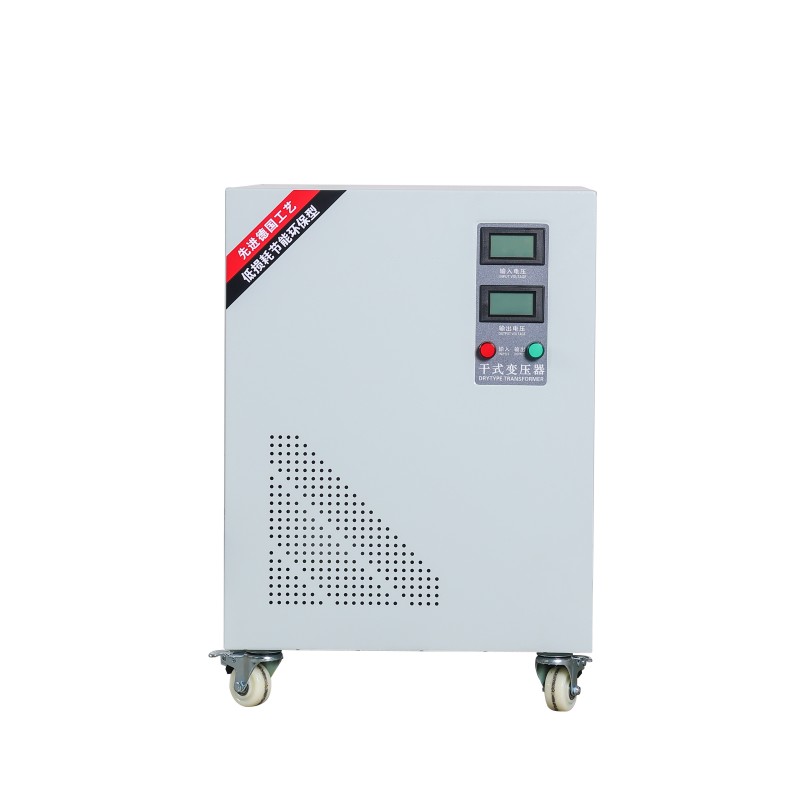
Most people picture a transformer as a big, boxy chunk of iron that sits there humming.
But not all transformers look like that.
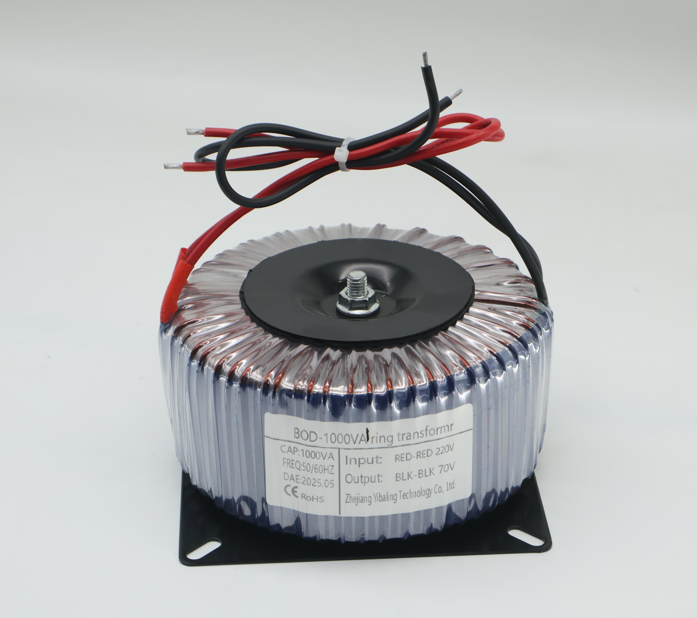
There's another kind — the toroidal transformer.
It looks like a donut. Hollow in the middle. The wire is wound evenly around the whole ring, not just around one leg. Totally different from the usual block style ones.
What makes toroidal transformers different from the ordinary ones?
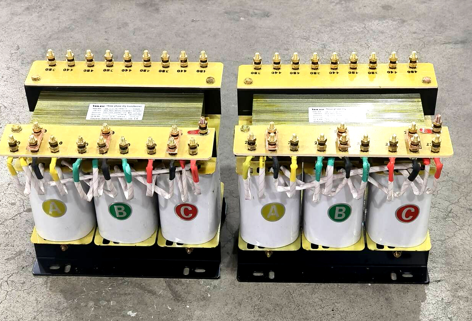
A regular EI transformer has a core made of stacked silicon steel sheets, shaped a bit like the Chinese character "日". The coils go around the center leg. It's simple. It's cheap. But it has some built in downsides:
Leaks a fair amount of magnetic field
Not all that efficient
Big and heavy
Hums at mains frequency
A toroidal transformer, on the other hand, uses a core made from one long strip of silicon steel rolled into a ring — no joints, no gaps. The magnetic circuit is completely closed. The wire is wound evenly around the whole ring, not just one leg.
That difference in construction leads to real performance gains.
1. Minimal Magnetic Leakage
Joints in the core of EI transformers break the magnetic circuit, causing part of the magnetic flux to leak out. Thanks to its joint-free closed core, the toroidal transformer produces extremely low magnetic leakage and causes far less interference to surrounding sensitive equipment such as audio power amplifiers and precision instruments.
2. High Efficiency
At the same power rating, the core loss of toroidal transformers is lower than that of EI types. When using identical materials, their efficiency can reach over 95%, a substantial improvement over conventional models.
3. Compact size & light weight
The toroidal design is simply more efficient. For the same power rating, a toroidal transformer is about 30% to 40% smaller and lighter than an EI type. That matters when space is tight or weight matters — think audio gear, measuring instruments, medical devices.
4. Low operating noise
That hum you hear from ordinary transformers mostly comes from the core joints vibrating. Toroidal cores have no joints. So they're naturally quiet. In a recording studio, a lab, or a home hi fi system, you notice the difference.
5. Strong overload resistance
The toroidal core sheds heat well. Temperature rise stays even across the whole unit. When you need to push it hard for a short while, it can take it.
Typical Applications of Toroidal Transformers
| Application Scenarios | Reasons for Choosing Toroidal Transformers |
| Hi-Fi Audio Systems & Power Amplifiers | Low magnetic leakage and low noise, preventing interference with audio signals |
| Medical Equipment | Compact size, light weight and low leakage current |
| Precision Instruments & Meters | Negligible magnetic interference for clean output signals |
| Communication Equipment & Power Supplies | High efficiency, low temperature rise and high reliability |
| Automation Equipment & Control Cabinets | Compact structure and flexible installation |
| High-end Household Appliances | Quiet operation, high efficiency and long service life |
In short, if you need quiet, efficient, and low interference power, toroidal transformers are hard to beat.
But they're not perfect.
Higher cost – More complicated to make, so they cost more than EI types.
Big inrush current – When you first turn them on, they can draw several times their normal current. Make sure your switch and fuse can handle it.
Hard to repair – If a coil burns out, you usually replace the whole thing. Taking it apart is a pain.
Longer lead time – Most toroidal transformers are built to order. Non standard voltages and powers take time.
Bottom line: If you just need something cheap and rugged, and you don't care much about leakage or a little hum, go with an EI transformer. If you want better performance, smaller size, and quiet operation, toroidal is the way to go.
Related News
Leave me a message