
What Is an SBW Intelligent Compensation Voltage Stabilizer and Why Is It Important?
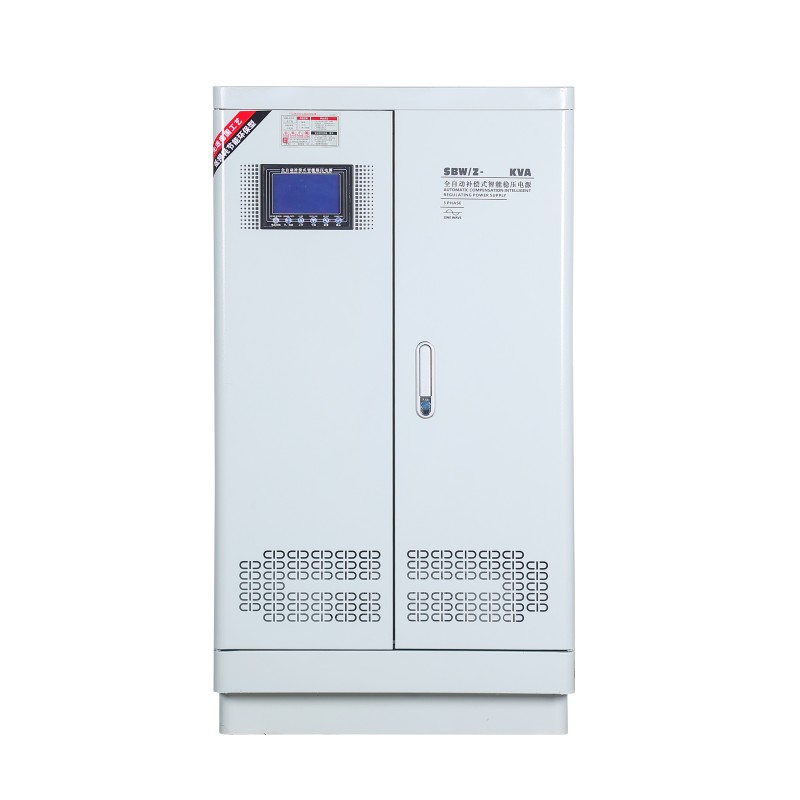
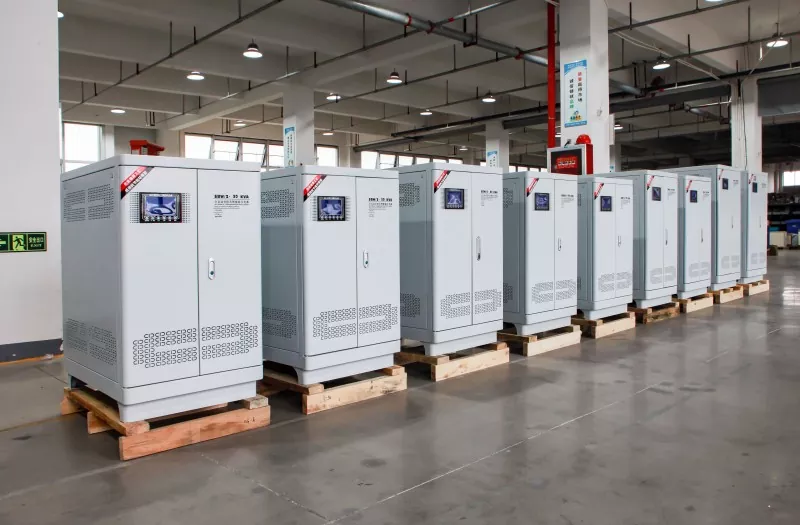
An SBW intelligent compensation voltage stabilizer is an advanced three-phase automatic voltage regulation device that combines compensation technology with intelligent digital control to deliver stable, clean power for industrial, commercial, and medical applications.
Unlike traditional servo type stabilizers that rely on mechanical carbon brushes moving across transformer windings, the SBW uses a compensation transformer that adds or subtracts voltage as needed — a faster, more efficient, and more durable approach.
Why does that matter?
Because modern industrial equipment — CNC machines, medical imaging systems, data centres, and automated production lines — is increasingly sensitive to voltage fluctuations. A voltage sag that lasts a fraction of a second can shut down a production line, corrupt data, or produce unusable medical images.
The SBW sits between the utility supply and the critical load, absorbing sags, surges, and imbalances before they reach sensitive equipment. It monitors, corrects, and protects — continuously and automatically.
In short: it turns unstable grid power into reliable industrial power.
How an SBW Intelligent Compensation Stabilizer Works
The SBW uses a compensation principle — but with intelligence.
Step 1 — Voltage sensing
High precision sampling circuits monitor the input voltage on each phase continuously. The control system detects any deviation from the setpoint instantly.
Step 2 – Intelligent control
Voltage data gets fed into an industrial grade microprocessor — usually something like an STM32 or similar chip. It crunches the numbers, figures out how much correction is needed, and sends commands to the compensation system. Many models use PID digital control with true RMS sampling, so even if the input waveform is badly distorted, the measurements stay accurate.
Step 3 – Voltage compensation
Based on the computation, the control system adjusts the voltage going into the compensation transformer. This transformer is connected in series with the main circuit — when its secondary winding adds or subtracts voltage, the output voltage changes accordingly, all without any interruption.
If the input voltage drops by 10%, the compensation transformer adds 10% to bring it back up. If it surges by 10%, the transformer subtracts 10% to pull it down. The output stays steady — within ±1% to ±3% of the setpoint — without breaking a sweat.
Step 4 – Continuous monitoring
The whole system runs in a closed loop — sensing, calculating, compensating, and checking — over and over, in real time. Typical response time is under 1 second for a voltage change, and some models can react in as little as 20 milliseconds. That's fast enough to catch most grid hiccups before they even reach your equipment.
Step 5 — Phase independent compensation
For three phase models, compensation can be applied independently to each phase. This means a voltage sag on one phase does not affect the others — critical for three phase equipment where phase imbalance causes motor heating and reduced efficiency.
The result: stable, balanced power delivered continuously — without distortion or interruption.
Common Types and Capacities of SBW StabilizersSBW stabilizers come in a wide range of capacities and configurations to match different load requirements.
| Capacity Range | Typical Application |
| 10 – 50 kVA | Small factories, machine tools, medical equipment, communication stations |
| 80 – 200 kVA | Medium industrial plants, commercial buildings, data centres |
| 250 – 500 kVA | Large factories, hospital complexes, manufacturing facilities |
| 600 – 1000 kVA | Heavy industry, mining, large commercial facilities |
| 1250 – 3000 kVA | Major infrastructure, data centres, power-intensive applications |
| Feature | Options |
| Phase | Single phase (DBW) or three phase (SBW) |
| Input voltage | 380V ±20% (standard) — also available for 220V, 400V, 415V, 440V, 480V |
| Output voltage | 380V (three phase) or 220V (single phase) — ±10% adjustable |
| Stabilisation accuracy | ±1% – ±5% (typically ±2% for standard models) |
| Efficiency | ≥98% (power rating 50kVA and above) |
| Frequency | 50Hz/60Hz |
| Display type | Digital or LCD/LED indicator |
Input voltage range:
Standard: 304V – 456V (380V ±20%)
Wide range: ±30% or ±40% available on request
Why SBW Intelligent Compensation Stabilizers Matter
Because "good enough" power is not good enough for modern industry.
Here is what makes the SBW a critical component for power sensitive operations:
1. High efficiency
SBW stabilizers deliver ≥98% efficiency at full load — much higher than most electronic voltage regulators. Wasted energy is minimal, which reduces operating costs and cooling requirements.
2. No waveform distortion
Unlike some electronic stabilizers that introduce harmonics, the SBW produces an output waveform identical to the input — no additional distortion. For sensitive equipment like medical imaging systems or laboratory instruments, this is essential.
3. Wide input range
Standard SBW models operate from 304V to 456V (380V ±20%), with even wider ranges available for weak grid environments. This means the stabilizer can handle the worst grid conditions without losing regulation.
4. Comprehensive protection
SBW stabilizers include integrated protection for:
Over voltage and under voltage
Over current and short circuits
Phase loss and phase sequence
Over temperature
Mechanical faults
5. Independent phase compensation
This is especially important for three phase industrial loads. When one phase dips, only that phase gets corrected — the others stay as they are. This prevents motors from overheating due to phase imbalance and stops equipment from acting up in strange ways.
6. Intelligent control with digital display
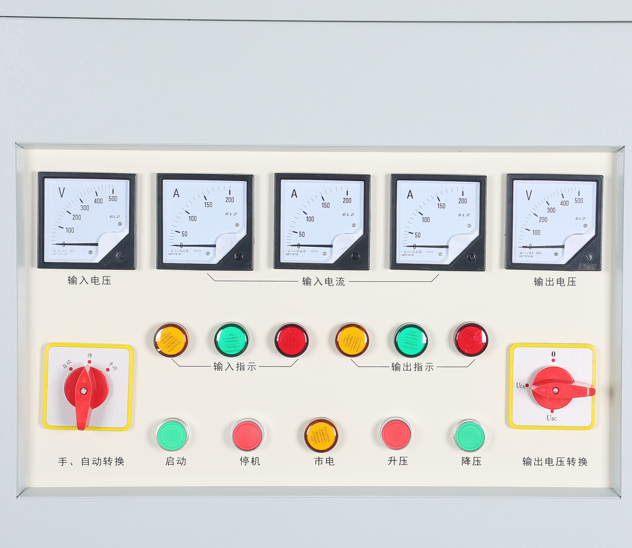
Modern SBW units come with microprocessor control. The front panel shows input voltage, output voltage, current, power, and fault status. Many models also support RS485 or Modbus communication, so you can hook them up to a building management system for remote monitoring.
7. Bypass function
Most SBW stabilizers include a manual bypass switch. When you need to do maintenance, you can switch the load over to direct mains power without cutting the supply — essential for places like hospitals and data centres where downtime isn't an option.
8. Adaptable to any load
SBW stabilizers can handle resistive loads (heaters, lighting), inductive loads (motors, transformers), and capacitive loads (capacitor banks, electronics). They cover just about anything you throw at them.
9. High overload capacity
Typically, SBW units can handle 150% of rated current for one minute, and 120% for ten minutes. That extra margin is critical when you're starting up large motors or compressors.
Without an SBW stabilizer, your expensive equipment is at the mercy of the grid. With one, production keeps running, sensitive devices stay safe, and unexpected downtime becomes a lot less common.
Choosing the Right SBW Stabilizer
Selecting an SBW stabilizer requires attention to capacity, environment, and load characteristics.
Step 1 — Determine your load
Add up the power consumption of all equipment that will be connected. Include startup (inrush) currents for motors and compressors. Apply a margin — typically 20 30% for future expansion.Step 2 — Check your grid conditions
| Condition | Requirement |
| Input voltage range | Standard: 304 456V (380V ±20%). Wide range option available |
| Frequency | 50Hz/60Hz (most models are dual rated) |
| Phase imbalance | Check if your site has chronic imbalance problems — if so, choose independent phase compensation |
Step 3 — Specify output requirements
Output voltage — typically 380V for three phase
Stabilisation accuracy — ±2% standard, ±1% for high precision models
Response time — under 1 second standard; faster options availableStep 4 — Consider the installation environment
| Condition | Requirement |
| Indoor/outdoor | Standard units are indoor rated. Outdoor requires weatherproof enclosures (IP33 or higher) |
| Ambient temperature | Standard: -10°C to +40°C. Derating required outside this range |
| Altitude | Above 1000m, derate capacity (approximately 10% per 1000m) |
| Humidity | ≤90% (non condensing) |
Step 5 — Evaluate protection and control needs
Manual bypass — essential for critical installations
Communication — RS485/Modbus for remote monitoring
Digital display — for real time voltage, current, and fault information
Automatic bypass — available for instant transfer if internal faults occur
Step 6 — Check manufacturer test reports
A reputable supplier should provide:
Insulation resistance test
Dielectric withstand test
No load loss measurement
Voltage regulation test
Overload capability test
Step 7 — Confirm service and warranty
Warranty period — typically 1 2 years with extended options
Technical support — installation guidance and remote diagnostics
Spare parts availability — especially for larger custom units
Final Thoughts
The SBW intelligent compensation voltage stabilizer is not the flashiest component in an industrial power system. It does not have a touchscreen, a software update, or a wireless connection. But try running a critical production line, a medical imaging system, or a data centre without one, and you will notice immediately.
It sits in the power room, quietly doing its job, year after year. It absorbs voltage dips that would otherwise shut down CNC machines. It smooths out surges that would destroy sensitive electronics. It balances phases that would otherwise cause motors to overheat and fail prematurely.
What it delivers is simple but essential: reliable, stable power — when and where you need it.
And in an era where production lines are increasingly automated and equipment increasingly sensitive to power quality, reliable power is not optional. It is the foundation of consistent operation.
Related News
- What ZSG Three-Phase Dry-Type Rectifier Transformer work?
- Which one is good S13 Oil-Immersed Distribution Transformer?
- How to choose JBK5 Machine Tool Control Transformer?
- How BK Machine Tool Transformer 220V works?
- Which one is good SBK Three-Phase Dry-Type Transformer?
- How to choose SBW Intelligent Servo Voltage Stabilizer?
Leave me a message