
Why Is a Voltage Regulator Needed?
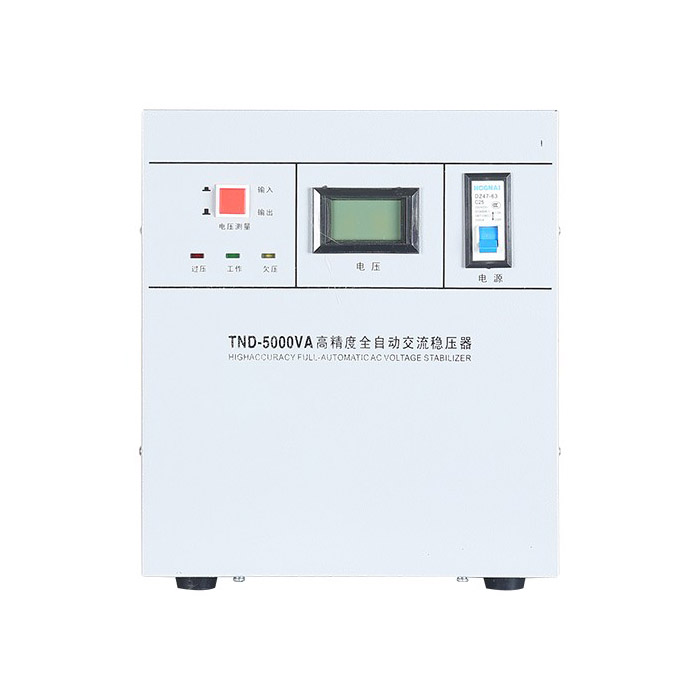
When it comes to voltage issues, many people first think of using a voltage stabilizer.
However, in some scenarios, you don’t need to stabilize the voltage, but to adjust it to different values — for example, gradually raising it from 0V to 220V, or lowering 220V to 110V to power old equipment.
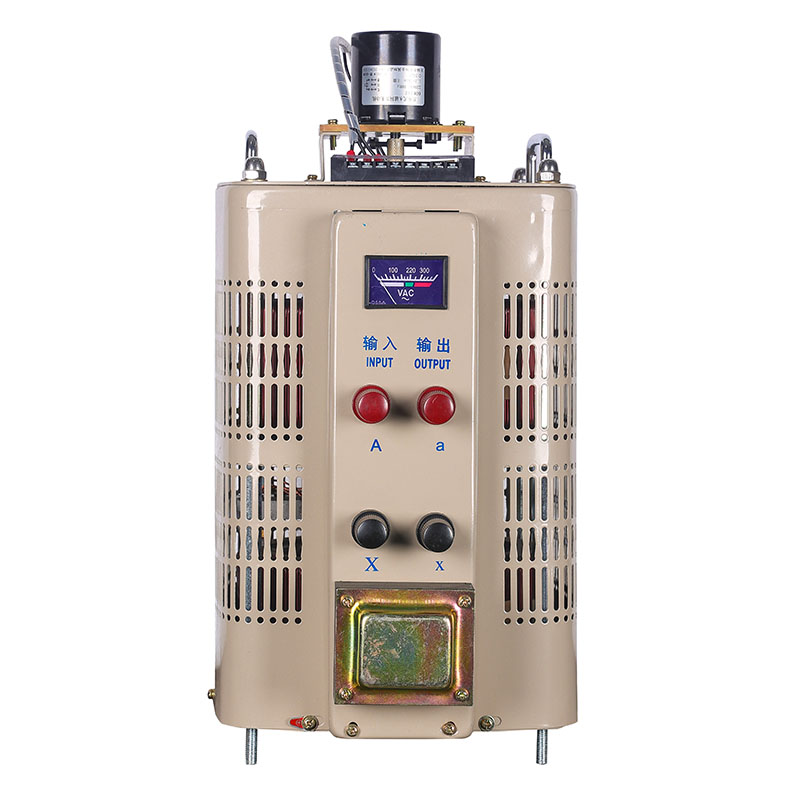
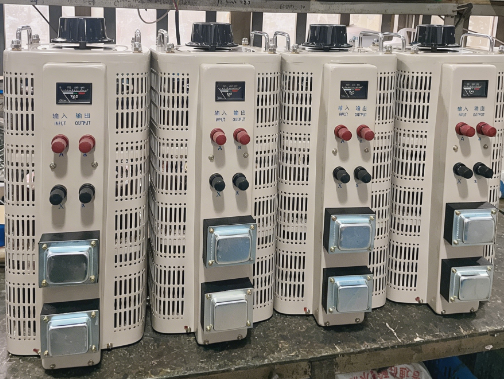
In such cases, a TDGC2 Contact-type Voltage Regulator is more suitable than a stabilizer.
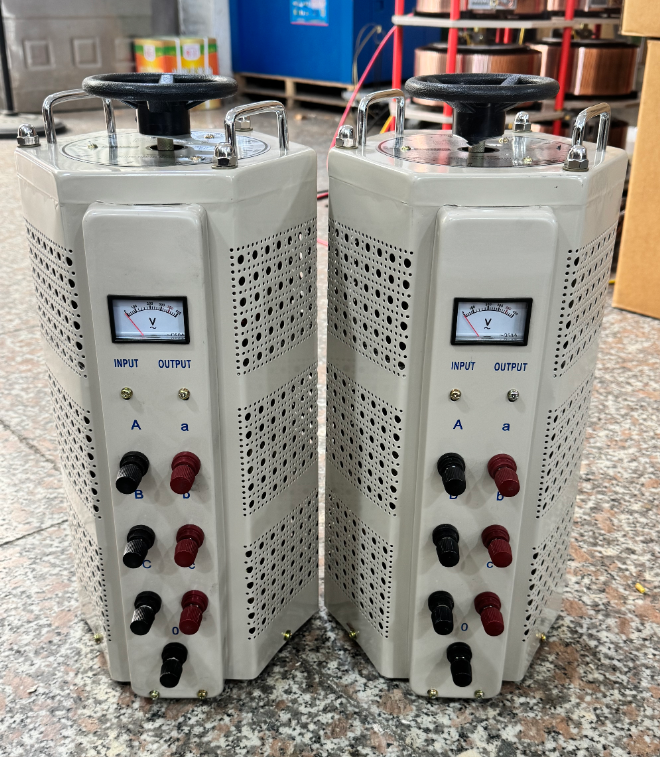
A single-phase TDGC2 Contact-type Voltage Regulator is not for automatic stabilization; it is manually operated and continuously adjustable. You just turn the knob to get the voltage you want. Simple. No menus, no programming, no confusion.
So what is a TDGC2 Contact-type Voltage Regulator?
It’s a manually adjustable transformer – some people call it a contact voltage regulator.
Inside, it’s pretty straightforward: a toroidal core, a copper winding, and a carbon brush that slides along the winding. When you rotate the knob, the brush moves. That changes how many turns are active in the output coil, which changes the output voltage.
No electronics, no display, no software. Just you, the knob, and the voltage you need.
This allows the voltage to be adjusted continuously from 0V to the required value.
It adjusts voltage, it does not stabilize it.
Key Application Scenarios
|
Scenario |
Why Use a TDGC2 Contact-type Voltage Regulator |
|
Laboratories & R&D Testing |
Gradually apply voltage from 0V to test equipment performance under different voltages |
|
Maintenance Workshops |
Power old 110V equipment or imported devices with mismatched voltages |
|
School Teaching |
Demonstrate electromagnetic induction and voltage regulation principles intuitively and safely |
|
Small-Scale Production |
Adjust power for heating tubes, light bulbs, and small motors (far cheaper than frequency converters) |
|
Product Aging Testing |
Simulate different voltage conditions to test product durability |
|
On-Site Emergencies |
Obtain non-standard voltages on demand |
In short: it is essential wherever manual voltage adjustment is required.
Single-Phase Voltage Regulator VS Voltage Stabilizer
|
Comparison Item |
Single-Phase Voltage Regulator |
Single-Phase Voltage Stabilizer |
|
Function |
Manual voltage adjustment (set to desired value) |
Automatic voltage stabilization (fixed 220V output) |
|
Input Voltage |
Fixed (e.g., 220V) |
Wide range (e.g., 150V–260V) |
|
Output Voltage |
Continuously adjustable: 0–250V |
220V ±3%–±5% |
|
Response Speed |
Manual adjustment (slow) |
Automatic response (millisecond-level) |
|
Application Scenarios |
Testing, maintenance, teaching, power adjustment |
Protect precision equipment; unstable voltage environments |
|
Price |
Low |
Moderate |
They are not substitutes for each other: stabilizers solve voltage instability, while regulators solve the need for different voltages.
Technical Features: Simple Yet Durable
While not high-tech, single-phase voltage regulators offer irreplaceable advantages:
Pure copper winding: Excellent conductivity, low heat generation, long service life
Toroidal core: Low magnetic leakage, high efficiency, compact size
Carbon brush regulation: Stepless continuous adjustment, smooth operation
Strong overload capacity: Withstands instantaneous surges, less prone to damage
No electronic components: Resists lightning, harmonics, and dust
Low cost: One unit lasts for many years
It is not the "smartest" device, but often the most durable.
Selection Guidelines
Adequate capacity: Motor and bulb loads may have high starting current. Select a capacity of 1.5 × load power.
Output voltage range: Standard 0–250V; custom ranges available.
Manual or electric: Manual for low power; electric adjustment for high power or remote control.
Isolation option: Standard models are autotransformers (input/output connected); choose isolated models for safety isolation.
A Real-World Example
An appliance manufacturer’s R&D department conducted aging tests on a switching power supply, requiring operation at voltages from 180V to 260V to determine failure points.
Initially, they planned to buy a voltage stabilizer but found its fixed output could not be adjusted.
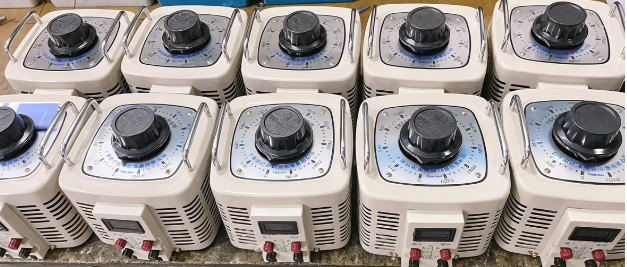
They switched to a 3kVA TDGC2 Contact-type Voltage Regulator, manually adjustable to any voltage. The tests were completed smoothly, and an engineer commented:
"Simple, but it really works."
Single-phase voltage regulators are not new — they have been around for decades.
Their enduring value lies in their quiet presence: in laboratories, workshops, classrooms, and beside old equipment.
Not all voltage issues require automatic stabilization. Often, what you need is manual, continuous, adjustable voltage.This is exactly what a single-phase voltage regulator does.
Related News
- What ZSG Three-Phase Dry-Type Rectifier Transformer work?
- Which one is good S13 Oil-Immersed Distribution Transformer?
- How to choose JBK5 Machine Tool Control Transformer?
- How BK Machine Tool Transformer 220V works?
- Which one is good SBK Three-Phase Dry-Type Transformer?
- How to choose SBW Intelligent Servo Voltage Stabilizer?
Leave me a message