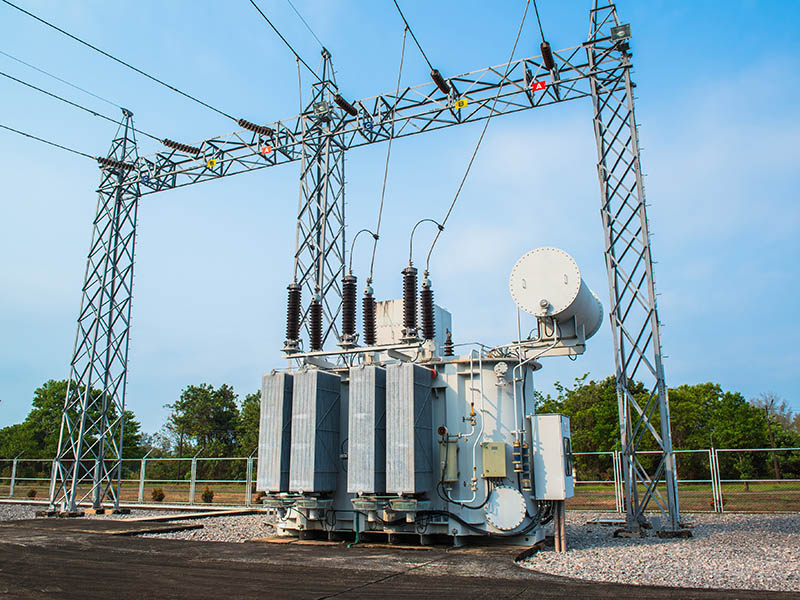

How SBK Auto transformer Works?
– Unlocking the Secret Behind That Handy Voltage Box
Walk into almost any factory floor, and you’ll spot a square metal box with “SBK” printed on its label. It sits quietly in a corner, but it solves a headache that keeps popping up: you’ve got a shiny new machine imported from abroad, yet its voltage rating doesn’t match your local grid. Plug this box in between, and the machine hums to life. That’s the SBK auto transformer at work.
So what’s actually going on inside?
Let’s skip the heavy textbook jargon and break it down in plain language.
One coil, two jobs
A regular isolation transformer has two separate windings – primary and secondary – that are electrically insulated from each other. Power travels across by magnetic induction, but the input and output circuits never touch.
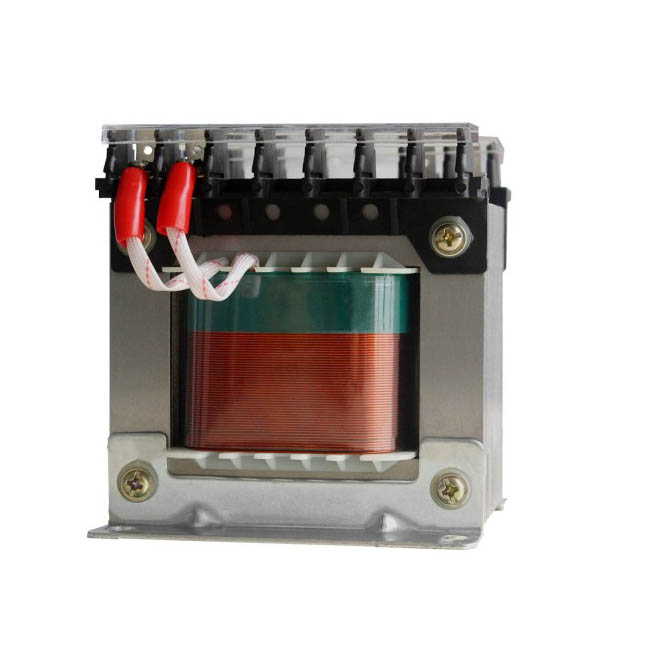
The SBK auto transformer takes a more economical approach. It uses only a single continuous winding, with several tap points brought out along its length. You connect the input to one section of the coil, and the output to another section.
Think of it like a long rope: you tie a knot somewhere in the middle. Hook one end to the power source, and pick up your output from a different spot – the voltage changes because you’re using only part of the rope. Since the input and output share a large chunk of the same winding, the transformer relies on both magnetic coupling and a direct electrical connection.
Step up or step down? It all depends on where you tap.
Here’s a concrete example. Suppose you apply 380V across the entire winding, but you take the output from a tap at the 200V position – you get 200V out. That’s step down. Flip it around: feed 200V into that section and pull 380V from the full winding, and you’ve got step up.
The physics is plain old electromagnetic induction – the AC current creates a changing magnetic field, which induces voltage all along the coil. Move the tap, move the voltage ratio. Simple, straightforward, and rock solid.
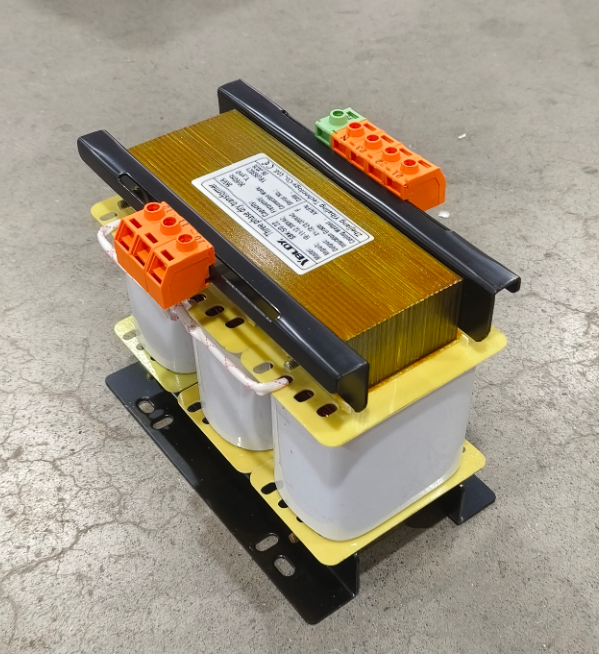
Why do so many equipment makers swear by SBK Auto transformer?
Three big reasons.
First, it saves material and money. Because part of the winding does double duty, you need less copper (or aluminium) and a smaller core than an isolation transformer with the same power rating. That means a lighter, more compact unit at a lower cost.
Second, higher efficiency, lower heat. Less copper loss and less iron loss translate into less wasted energy. Over time – especially for large units in the hundreds or thousands of kVA – the electricity savings really add up.
Third, it’s a versatile fix for “foreign voltage” gear. Many precision machine tools, servo drives, injection moulding machines, and electronics come from Japan, Europe, or the US, with nominal voltages like 200V, 220V, 110V, or 100V. Our local grids usually put out 380V/220V. The SBK series lets you customise multiple tap combinations, so you can dial in exactly the voltage your equipment “likes to eat”.
A word of caution: it’s not an isolation transformer
This is important. The SBK auto transformer does not provide electrical isolation between input and output. Because the windings share a common section, the primary and secondary are electrically connected. If you need galvanic isolation for safety, noise filtering, or shock protection, you should choose a true isolation transformer. But if your sole need is voltage conversion – and you’re cost conscious – the SBK is an extremely efficient choice.
Where do you actually find SBK Auto transformer in real life?
Besides the machine tools and imported equipment I mentioned, you’ll also see SBK transformers in lighting distribution panels, front end stages for rectifiers, charging stations, tunnel and subway power systems, elevator control cabinets in high rise buildings – pretty much anywhere you need to shift voltage levels without requiring isolation.
To wrap it up
The SBK auto transformer isn’t rocket science. At its core, it’s just a single tapped winding and good old electromagnetic induction. It uses fewer materials, wastes less energy, and solves one of the most common voltage mismatch headaches you’ll find on the shop floor. No fancy gimmicks – just a solid, practical workhorse that keeps running quietly for years. And that, in my book, is exactly what good industrial gear should be.
Related News
Leave me a message