
Why is SG Three-Phase Dry-Type Transformer so common?
Equipment Arrives, Power Doesn't Match
When imported equipment comes into a plant, the worst fear isn't complex commissioning — it's problems the moment power is applied. A machine tool from Europe has 400V/50Hz on its nameplate, but the domestic workshop grid runs 380V. Looks like only a 20V difference, yet undervoltage protection on the drive, servo alarms, and unstable PLC power modules all show up. Worse, some equipment also carries control circuits needing 220V or lower — one transformer has to serve several voltage levels at once. The SG series three-phase dry-type transformer is built for exactly this job.
Isolated Windings: Not the Same as Auto-Transformers
SG auto-transformer and SBK often get lumped together in conversation, but there's a key structural difference: the SG's primary and secondary windings are isolated. Grid-side interference, harmonics, and common-mode noise don't pass directly to the equipment side. For scenarios sensitive to power quality — precision machine tools, medical equipment, PLC control systems — isolated windings provide an extra layer of protection that auto-transformer construction doesn't.
Of course, isolation also means larger size and higher cost than an auto-transformer of the same capacity. Whether to choose isolation depends on what the equipment requires. If it's simply voltage matching and the equipment side isn't sensitive to grid interference, the auto-transformer option is more economical. If the equipment is precision control equipment, or the site's grid environment is electrically noisy, isolated windings are worth the extra cost.
Capacity and Voltage: Broad Coverage
The SG auto-transformer series starts at 0.15kVA, with standard models covering 0.5, 1, 2, 3, 5, 10, 15, 20, 30, 50, and 100kVA, going up to 300kVA or higher. Input voltage is commonly 380V, with 400V, 415V, 440V, 480V, and 660V also available. Outputs can be customized to 220V, 200V, 190V, 110V, and 36V. It handles both 50Hz and 60Hz.
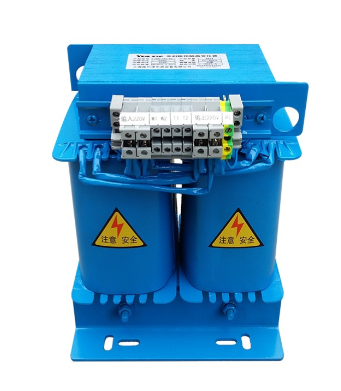
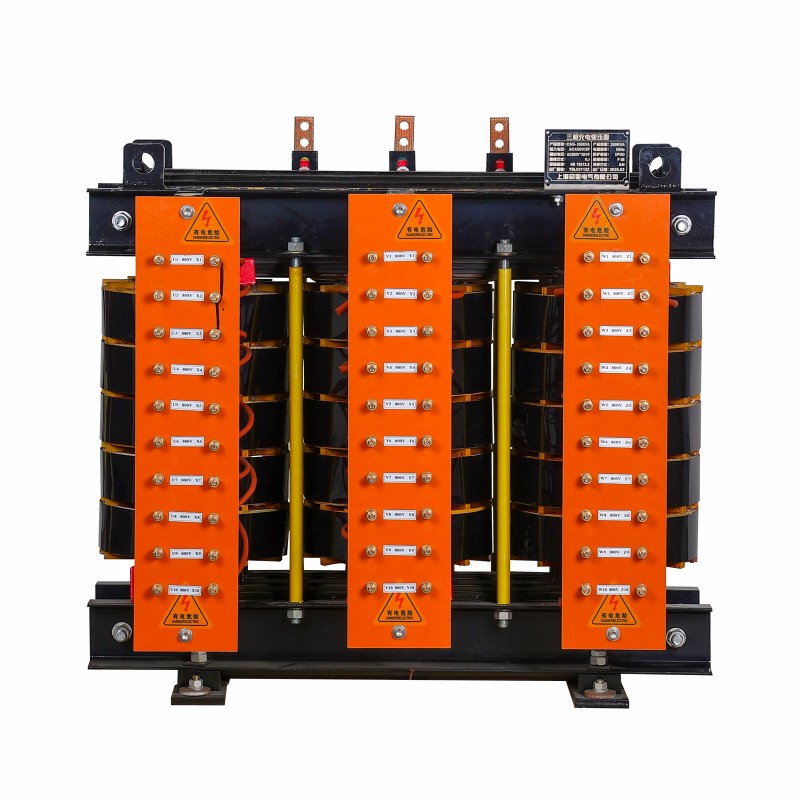
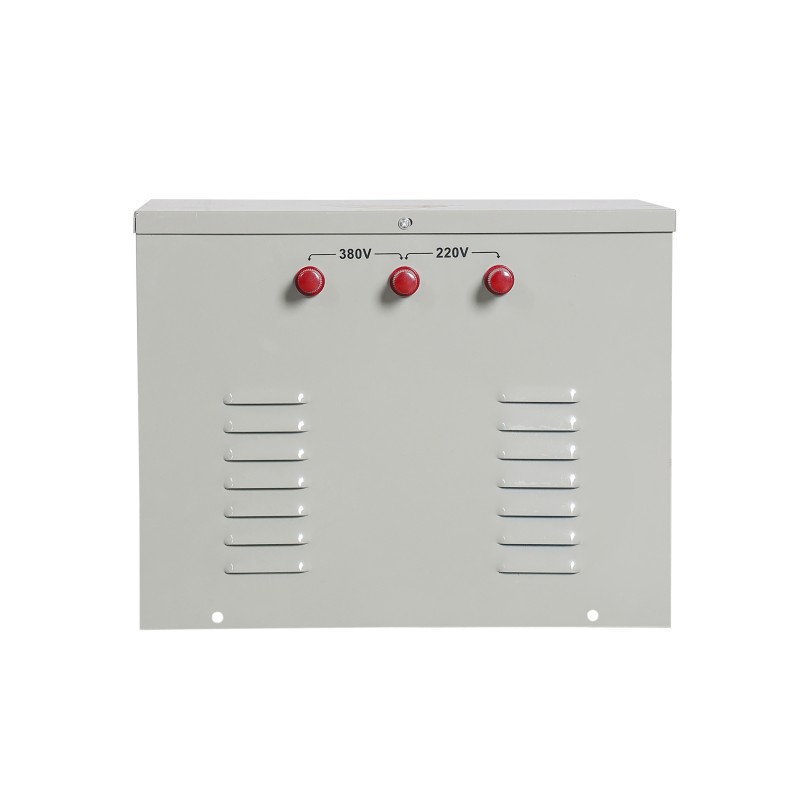
On vector groups, Y/yn0 is the standard configuration, with other connections available on request. Protected-type enclosures have cable entry holes for convenient wiring. Open type has no enclosure — compact and well-ventilated, it fits into electrical cabinets without taking up much space.
Core and Insulation: Determines Durability
The core uses stacked cold-rolled silicon steel laminations — standard practice for dry-type transformers, with loss and noise control at normal levels for this price range. Insulation class F or H is available. Class H handles 180°C, so the transformer won't develop insulation problems when workshop temperatures run high or short-term overload occurs.
On winding material, copper is the baseline. In imported equipment matching, the equipment itself is high-value — saving a few bucks on copper in the transformer isn't worth it. Copper windings offer far more solid temperature rise control and long-term stability than aluminum on continuously running production lines.
Open Type or Protected Type: Depends on Where It Goes
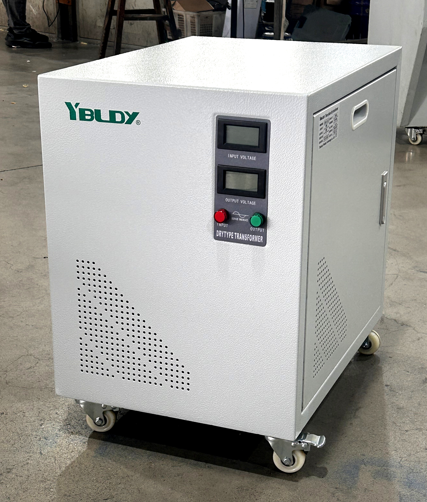
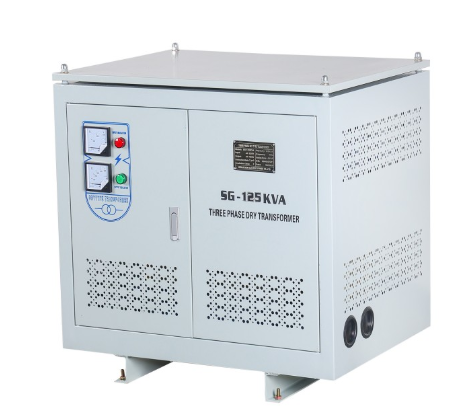
The SG auto-transformer series comes in open and protected configurations. Open type has an exposed body with good heat dissipation, suitable for mounting inside electrical cabinets or in separately protected spaces. Protected type adds a steel box enclosure for dust and foreign object resistance, with cable entry holes pre-drilled so wiring doesn't require removing the enclosure.
Protected type can be fitted with voltmeters and ammeters as needed, and models above 80kVA can add axial fans and casters. Casters are handy for scenarios needing temporary mobility, like equipment commissioning or temporary production lines. Adding voltage and current meters means inspections don't require bringing a separate multimeter — just a glance at the panel.
Applications Are Fairly Clear
The SG's main battlefield is imported equipment matching. Machine tools, injection molding machines, laser equipment, and printing machinery from Europe, Japan, and the US have rated voltages that don't match the domestic grid — the SG handles voltage matching and isolation in one unit. Second is control power, local lighting, and indicator power for machine tools and mechanical equipment — standard applications.
When specifying, don't cut capacity too close. The power on the equipment nameplate is a rated value, but motor starts and transformer inrush current can push actual current well beyond rated. Leaving 20% to 30% margin is the safer approach. Also, if the equipment side needs multiple voltage outputs — 220V and 110V simultaneously, for example — spell out the winding allocation when ordering so the manufacturer can design accordingly.
Before installation, confirm grid voltage matches the nameplate, ensure reliable grounding, and leave adequate ventilation space. Dry-type transformers rely on air convection for cooling — don't cram one into a cabinet corner where it can't breathe.
Related News
- When can we find TSGC2 Contact-type Voltage Regulator?
- Why is Online Soft Starter Convenience or Trouble?
- When use Three Phase High-power Voltage Regulator?
- How TDGC2J Single-Phase Contact Voltage Regulator work?
- When Voltage Drops to 160V, Can TND Fully Automatic AC Voltage Stabilizer Still Work?
- Where is BK Industrial Control Transformer?
Leave me a message

News Recommendations